Managing feedback in collaborative apps is a pain. Users leave comments everywhere, and someone has to manually categorize them, figure out what's urgent, and summarize the key points for the rest of the team. AI collaboration SDKs handle this automatically with auto-tagging and summarization built in. We're breaking down which SDKs give you these features without making you build everything from scratch.
TLDR:
AI collaboration SDKs auto-tag comments as bugs or feature requests and summarize threads
Velt includes native AI auto-tagging and summarization plus 20+ collaboration components
Liveblocks, Tiptap, and Ably lack built-in AI capabilities for tagging or summarization
Velt is a JavaScript SDK that adds AI-powered collaboration features to web apps in weeks
What are AI-Powered Collaboration SDKs for Auto-Tagging and Summarization?
AI collaboration SDKs are developer tools that add intelligent, real-time collaboration features to your app. They go beyond basic data synchronization by using AI to automatically organize and contextualize user interactions. These features often perform to key functions:
Auto-tagging. This allows AI to categorize collaborative content without manual work. When users leave comments or feedback, the SDK identifies whether it's a bug report, feature request, design note, question or any custom tag you provide.
This classification happens in real time, routing feedback to the right teams. AI-driven tagging and content-discovery engines trim information-search time by 35%, showing improvement from automated categorization.
AI summarization. This condenses lengthy comment threads, recordings, or transcripts into digestible overviews. Users get quick summaries of key points and decisions instead of reading through dozens of messages, which helps teams stay aligned in apps with high discussion volume.
How We Ranked AI-Powered Collaboration SDKs
We assessed each SDK based on five criteria that matter most to development teams building collaborative apps.
First, feature completeness: the depth of auto-tagging capabilities, quality of AI summarization, and range of collaboration components beyond basic commenting. The collaboration software market's projected growth shows demand for solutions that go beyond point tools.
Second, integration ease and developer experience. We looked at documentation quality, setup complexity, and time to ship collaborative features to production.
Third, pricing transparency and scalability. We assessed whether pricing models align with actual usage and whether costs remain predictable as apps grow.
Finally, infrastructure reliability (uptime guarantees and performance at scale) and data control options. Self-hosting collaboration data matters for companies with compliance requirements or strict data policies.
Best Overall AI-Powered Collaboration SDK: Velt
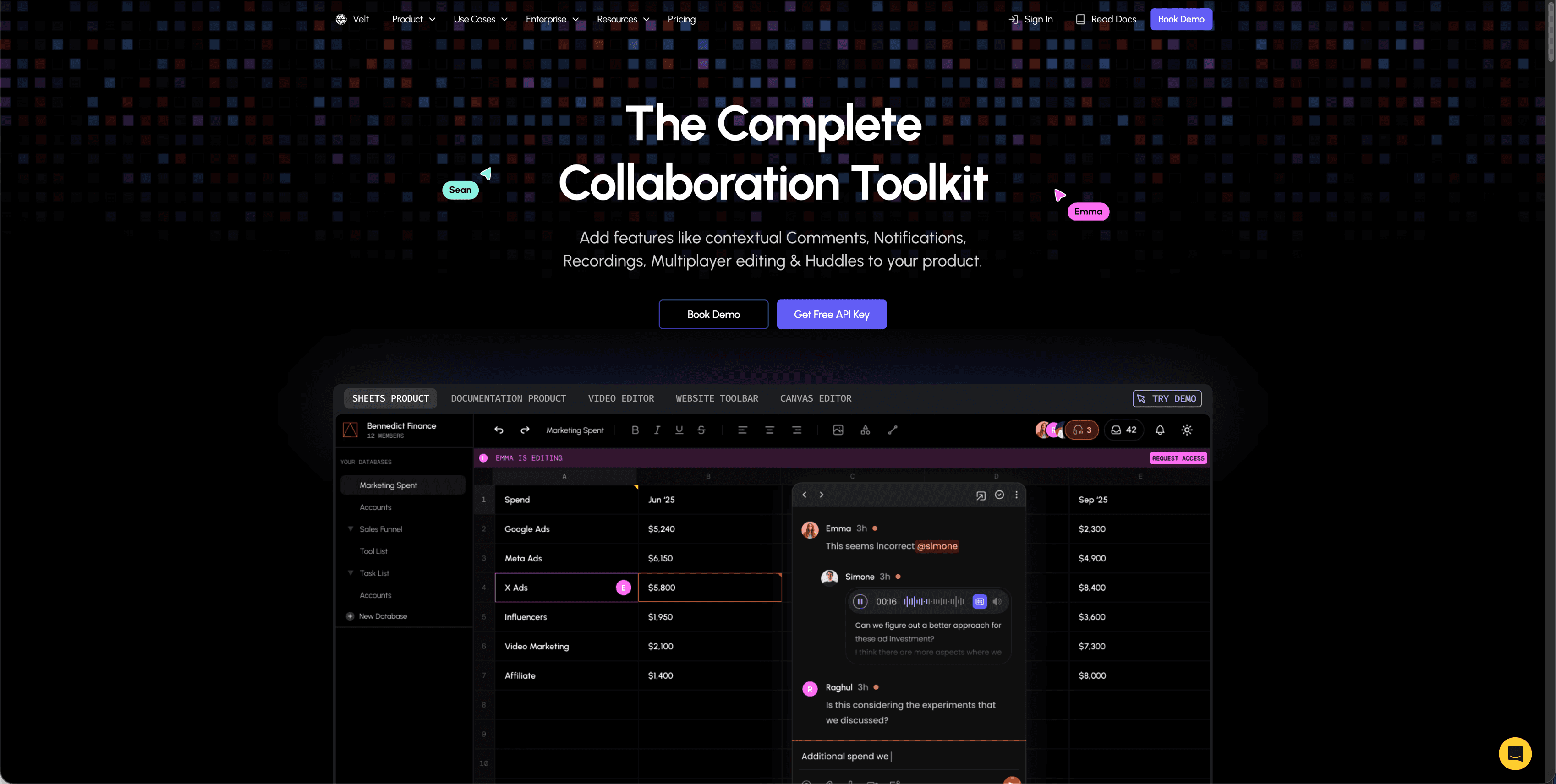
Velt is a JavaScript SDK that delivers AI-powered collaboration features with both infrastructure and UI components included. The AI works across the collaboration workflow, automatically tagging and categorizing comments to identify bug reports, feature requests, and design notes. It generates summaries of comment threads and recordings while providing automatic transcription for voice and video feedback.
The SDK includes over two dozen collaboration components: contextual commenting SDK, real-time presence and co-editing, audio/video recording, huddles for voice chat, in-app notifications with @mentions, and activity analytics. The UI is customizable to match your app's design.
For enterprise requirements, Velt provides 99.999% uptime, data self-hosting, SOC 2 Type II compliance, and HIPAA BAA capability. Pricing is based on Monthly Active Collaborators who actually use features, not all connected users.
Liveblocks
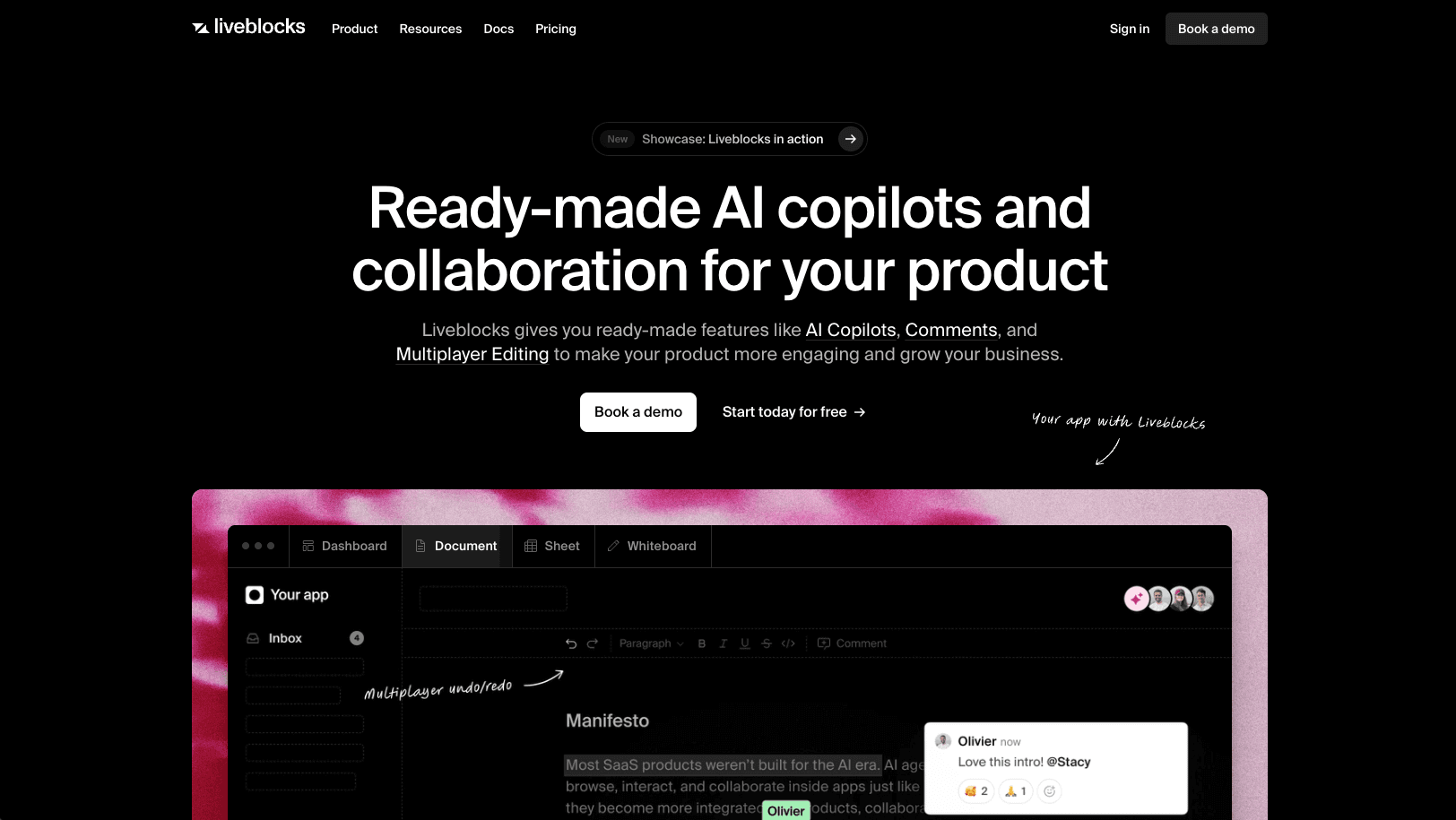
Liveblocks provides real-time collaboration infrastructure for web apps, offering APIs and components for multiplayer experiences.
Key Features
Liveblocks provides a number of collaboration features in their SDK:
Real-time presence and cursor tracking
Commenting system with thread support
CRDT-based data synchronization for multiplayer editing
Frontend components for collaboration UI
Limitations
The main limitations: no native AI capabilities for auto-tagging or summarization, no advanced features like recordings or huddles, MAU-based pricing that scales unpredictably, 99.9% uptime versus enterprise-grade 99.999%, and manual handling of dynamic anchoring and positioning logic.
The Bottom Line
Liveblocks suits teams building collaborative design tools or document editors who need real-time synchronization and prefer building their own UI layer.
Tiptap
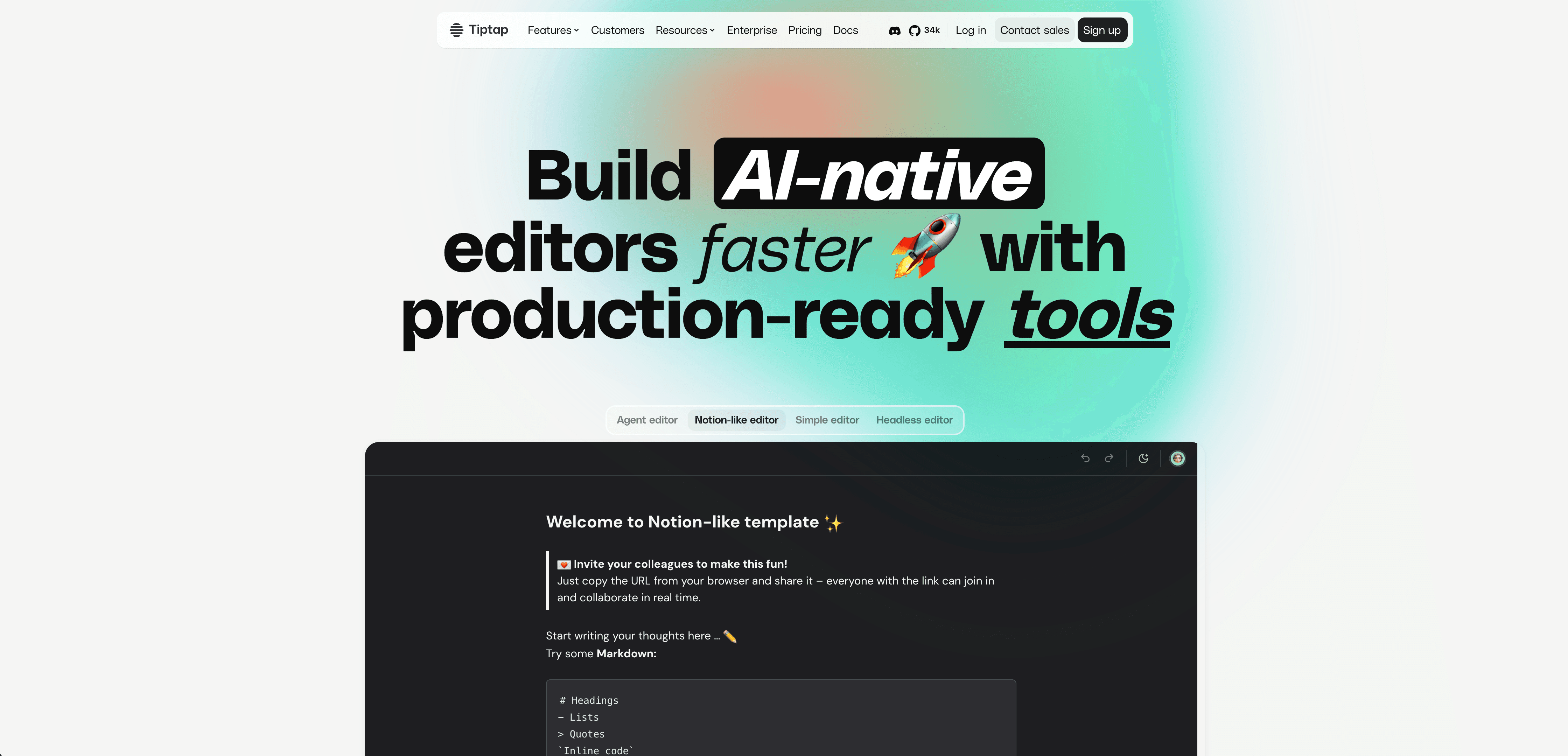
Tiptap Cloud is a text-sync engine for collaborative text editing within the Tiptap editor environment.
Key Features
Tiptap provides a number of collaboration features in their SDK:
Multiplayer text editing with CRDT synchronization
Basic comments functionality within the editor
AI-editing UX features inside the Tiptap environment
Editor-focused collaboration infrastructure
Limitations
The limitations are clear for broader use cases. Tiptap Cloud stays limited to the editor layer and doesn't power collaboration across entire apps. You won't get notifications infrastructure, AI auto-tagging, or AI summarization outside the editor context. It lacks collaboration features like cursors, presence indicators, huddles, or recordings beyond text editing. There's no option for self-hosted data, and the per-document pricing model misaligns with how enterprise teams actually use collaborative features.
The Bottom Line
Tiptap Cloud works for development teams already using the Tiptap editor who need to add collaborative editing capabilities within their text editing workflows.
Ably
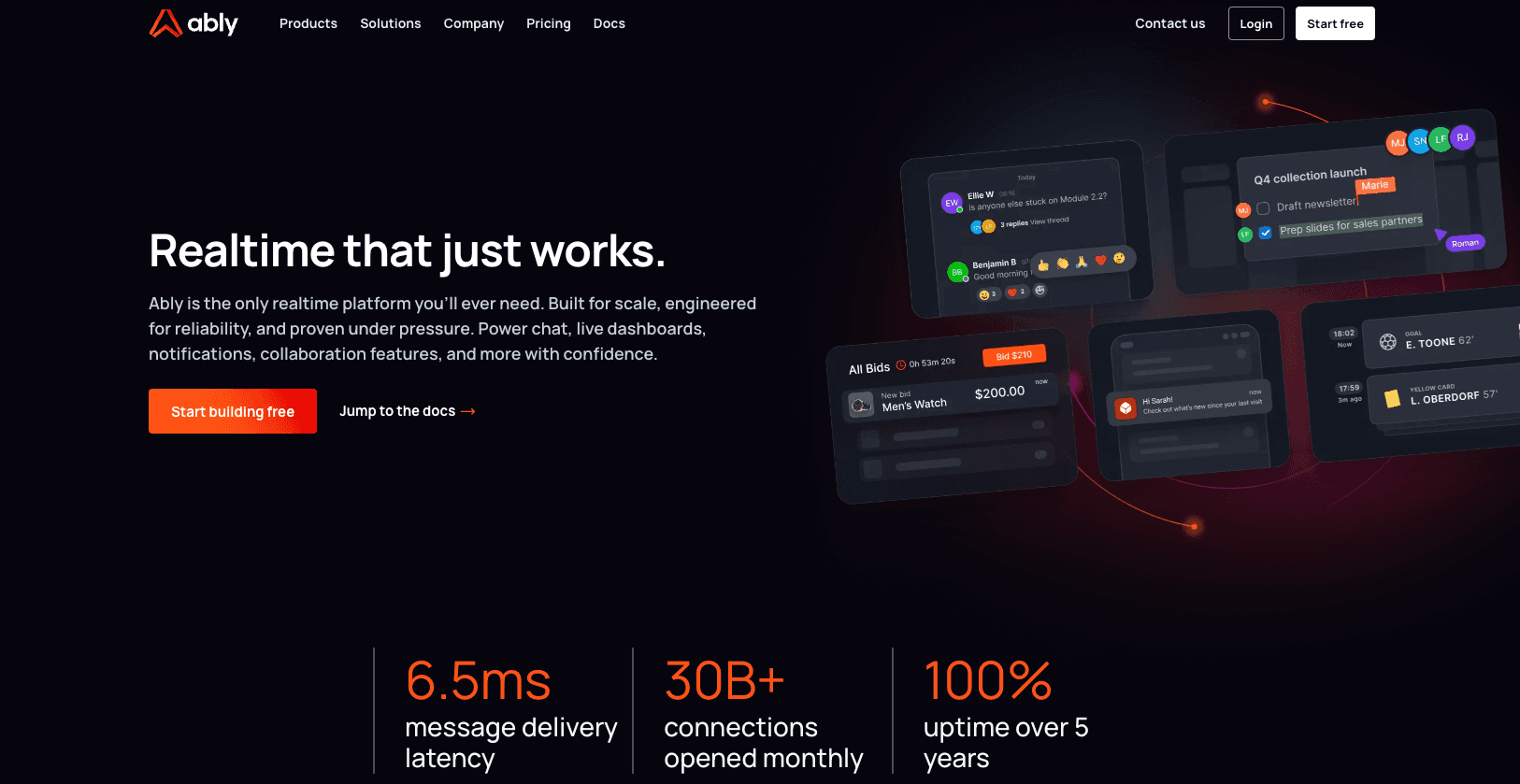
Ably is a real-time messaging infrastructure provider that offers pub/sub APIs and WebSocket connections for building live features in apps.
Key Features
Ably provides a number of collaboration features in their SDK:
Real-time pub/sub messaging infrastructure with WebSocket and HTTP streaming connections for delivering messages between clients and servers
Message history and presence channel APIs that track which users are currently active in a given channel
Global edge network designed to deliver messages reliably at scale across distributed users
Limitations
The service doesn't include AI capabilities for auto-tagging or summarization. Teams must build collaboration features (comments, notifications, presence) using raw messaging primitives. There are no pre-built UI components or collaboration-specific data models for managing threads, users, and permissions.
The Bottom Line
Ably works for teams building custom real-time features from scratch who need reliable message delivery infrastructure and have resources to build collaboration UI and logic on top of raw messaging APIs.
Feature Comparison Table of AI-Powered Collaboration SDKs
Feature | Velt | Liveblocks | Tiptap | Ably |
|---|---|---|---|---|
AI Auto-Tagging | Yes | No | No | No |
AI Summarization | Yes | No | No | No |
Complete Collaboration Suite | Yes | Partial | Editor-only | Infrastructure-only |
Pre-Built UI Components | Yes | Yes | Editor-focused | No |
Data Self-Hosting | Yes | No | No | No |
Enterprise Uptime SLA | 99.999% | 99.9% | Not specified | 99.95% |
Pricing Model | MAC | MAU | Per document | MAU |
Velt is the only SDK with native AI auto-tagging and summarization. Liveblocks and Ably require separate implementations for AI features, while Tiptap restricts AI functionality to editor contexts. For self-hosted data requirements, Velt is also the sole option that supports enterprise compliance needs.
Why Velt is the Best AI-Powered Collaboration SDK
Velt is the only SDK that combines native AI intelligence with a complete collaboration stack. You get auto-tagging and summarization built in, not as separate services to integrate. Other SDK options force tradeoffs:
Low-level infrastructure providers like Ably require months of custom development.
Feature-specific tools like Tiptap and Liveblocks lack AI capabilities entirely.
Velt eliminates this gap by delivering both the AI layer and the full collaboration suite. The practical advantage, though, is speed to production. Velt handles the infrastructure, UI components, and AI features so you can ship collaborative capabilities in weeks instead of quarters.
Final thoughts on AI-enabled collaboration SDKs
The right AI collaboration SDK eliminates the choice between building everything custom or settling for basic features. Auto-tagging and summarization work best when they're native to your collaboration stack, not bolted on afterward. You'll ship faster and your users get smarter features without the integration headaches. Starting with AI built in beats retrofitting it later.
FAQ
How do I choose the right AI collaboration SDK for my app?
Start by identifying whether you need just infrastructure or a complete solution with UI components and AI features. If you're building from scratch and have development resources, infrastructure-only options like Ably work. For faster implementation with built-in AI auto-tagging and summarization, choose an SDK like Velt that includes both backend and frontend components.
Which AI collaboration SDK works best for teams without machine learning expertise?
Velt is designed for teams without ML expertise, providing auto-tagging and summarization out of the box without requiring AI implementation work. Other options like Liveblocks and Ably don't include native AI capabilities, meaning you'd need to integrate separate AI services or build custom models.
Can I self-host collaboration data for compliance requirements?
Only Velt supports data self-hosting among the SDKs listed, allowing you to store collaboration data in your own cloud while meeting compliance requirements like HIPAA or SOC 2. Liveblocks, Tiptap, and Ably operate on managed infrastructure without self-hosting options for data storage.
What's the difference between MAU and MAC pricing models?
MAU (Monthly Active Users) charges for all users who connect to the service, even if they don't collaborate. MAC (Monthly Active Collaborators) only charges for users who actually perform collaboration actions like commenting or editing. MAC pricing typically costs less since only about 20% of users actively collaborate in most apps.
How long does it take to implement AI-powered collaboration features?
Implementation time varies by SDK complexity. Complete solutions like Velt can go live in weeks with minimal code, while infrastructure-only options like Ably require months of custom development to build UI components, collaboration logic, and AI integrations on top of raw messaging APIs.