


Best Headless Collaboration APIs for Custom UI Development (December 2025)
Compare headless collaboration APIs for custom UI development in December 2025. Velt, Liveblocks, Pusher, and more. Real-time features, pricing, and security.

Adding real-time collaboration to your app sounds straightforward until you start building it. Between WebSocket management, conflict resolution, presence tracking, and UI components, you're looking at a serious engineering investment. Custom UI collaboration tools promise to cut that timeline down by handling the infrastructure while letting you design the experience, but they vary wildly in what they actually provide out of the box.
TLDR:
- Headless collaboration APIs separate infrastructure from UI, letting you build native-looking features.
- Velt provides both real-time infrastructure and pre-built UI components for faster implementation.
- Infrastructure-only APIs like Pusher require building all collaboration UI yourself.
What Makes a Headless Collaboration API Different from Traditional Solutions
Traditional collaboration tools bundle infrastructure, UI, and workflows into a single package. Slack or Microsoft Teams give you their pre-built interface with limited customization beyond themes and basic settings.
Headless collaboration APIs, on the other hand, separate back-end from front-end. They provide the real-time sync engine, data storage, and collaboration logic through APIs while leaving UI implementation to you. You control how collaboration features look and behave in your application, matching your design system and existing UI patterns.
The trade-off is build time. You handle UI development while the API manages the underlying infrastructure. This works when you need collaboration that feels native to your product instead of added on top.
Velt
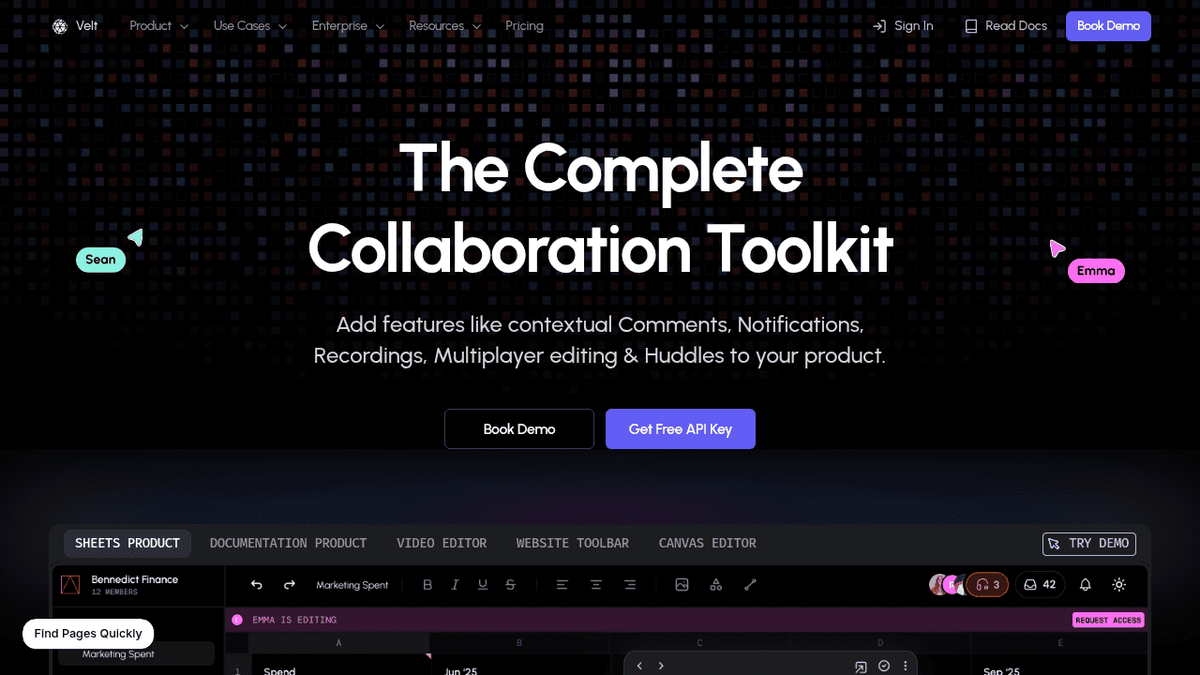
Velt provides a collaboration SDK with both real-time infrastructure and pre-built UI components. You get contextual commenting, live presence indicators, audio/video recordings, in-app huddles, and notifications without building from scratch.
The SDK includes over two dozen collaboration components. Comments attach to specific UI elements with annotation functionality. Presence features show active users and their cursors in real time. Recording capabilities function like Loom, with automatic transcription and AI-generated summaries. Huddles provide quick voice or video calls inside your application.
Each component is customizable to match your design system. You can adjust styling, behavior, and layout while Velt manages sync logic, data storage, and server infrastructure.
Liveblocks
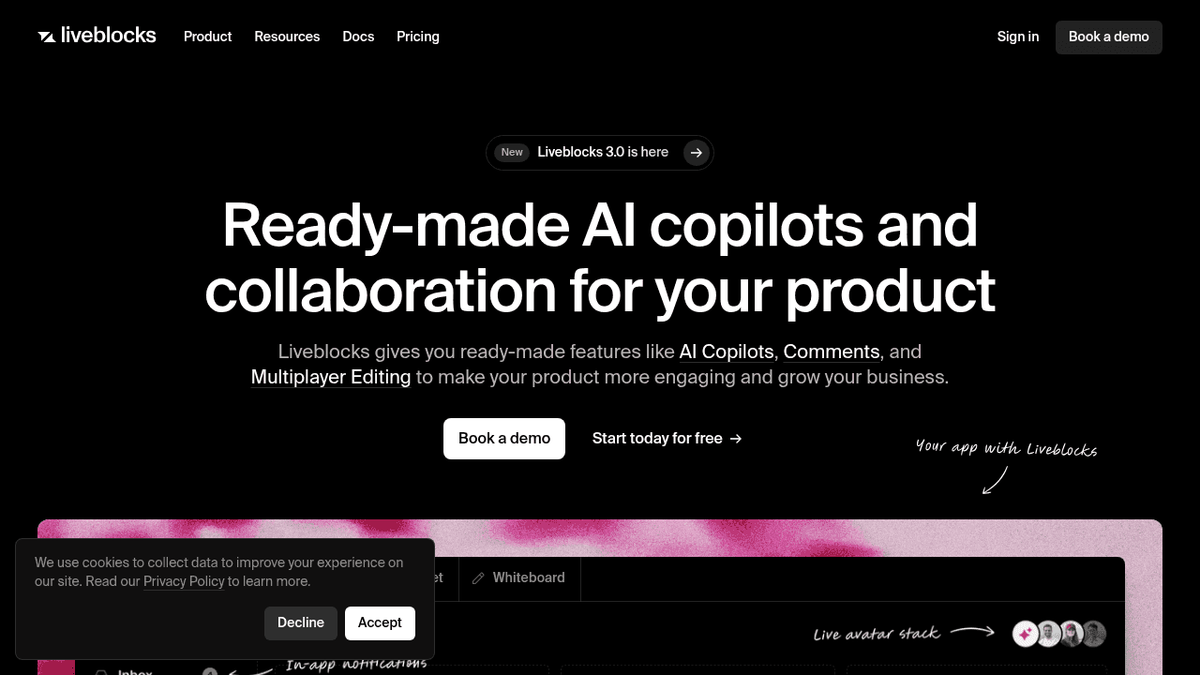
Liveblocks focuses on real-time collaboration infrastructure for multiplayer experiences. Their API handles presence awareness, live cursors, and shared data synchronization with some pre-built UI components.
Key Features
The service offers conflict-free data types for real-time editing, managing state updates across multiple users. Their commenting functionality and presence APIs track who's viewing or editing content.
The Bottom Line
This infrastructure model requires developers to write their own UI code while Liveblocks manages WebSocket connections, data replication, and conflict resolution. Liveblocks suits teams with strong front-end capabilities who need specific control over collaboration appearance.
Real-Time Infrastructure APIs (Pusher, Ably, PubNub)
Pusher, Ably, and PubNub provide WebSocket connections, pub/sub channels, and presence tracking without collaboration-specific features.
Key Features
These services handle message delivery, automatic reconnection, and connection management at scale. Presence channels show who's online, while pub/sub messaging broadcasts updates to subscribed clients.
The Bottom Line
You'll need to build comment threads, cursor positions, notification systems, and collaboration UI yourself. These tools provide messaging primitives, not collaboration APIs. This approach works when real-time needs extend beyond collaboration, such as chat systems, live dashboards, IoT device communication, or multiplayer games where generic messaging serves multiple functions.
Text Editor Collaboration APIs (Tiptap)
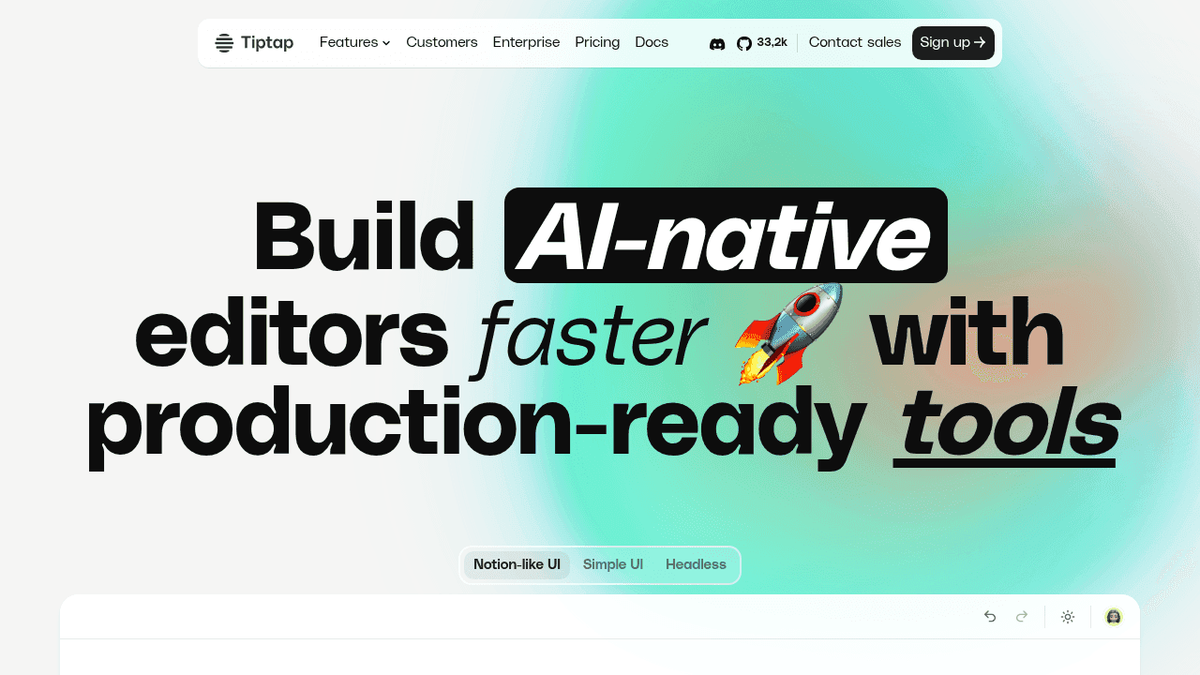
Tiptap vs other collaboration solutions shows that Tiptap specializes in collaborative rich text editing. The API provides a text editor framework built on ProseMirror with real-time collaboration through Yjs, a conflict-free data type library that handles simultaneous editing.
Key Features
Yjs manages parallel transformation, so when two people type in the same paragraph, their changes merge correctly without overwriting each other. Tiptap handles cursor positions, text selection highlighting, and change tracking within documents. The focus is granular text manipulation instead of collaboration features like commenting or screen recording.
The Bottom Line
This specialization works well for applications centered on document creation: content management systems, wiki editors, or writing apps. When your core feature is text editing, these APIs provide deep functionality for that specific use case without requiring you to build conflict resolution logic.
Customization and White Labeling Capabilities
Pre-built UI components reduce time to launch but restrict design flexibility. Infrastructure APIs give full design control but require building all visual elements. Each solution tackles customization differently:
- Velt components support white-labeling through layout and CSS overrides, behavior modifications, and feature controls. The UI adapts to existing design systems without sacrificing collaboration functionality, balancing speed with brand consistency.
- Liveblocks provides hooks and data primitives with light weight visual components. You build React components that consume their state management APIs for complete control over appearance and interactions.
- Pusher, Ably, and PubNub operate at the messaging layer without UI elements. Notification badges, comment threads, and presence indicators require custom development.
- Tiptap's editor allows customization through extensions and styling. You control toolbar layout and formatting buttons while the text collaboration logic stays intact.
Integration and Extensibility Features
Webhooks trigger workflows in external systems when collaboration events occur. A new comment or screen recording can notify your backend, update a CRM, or push data to analytics dashboards. How does each solution tackle integration and extensibility?
- Velt includes webhooks for collaboration events and direct integrations with Slack and Microsoft Teams. Comment threads route to team channels, and recordings store in your S3 bucket. REST APIs export collaboration data to your database.
- Liveblocks supports webhooks for room events and storage mutations. Their REST API reads and modifies collaboration data server-side for content moderation or database syncing.
- Real-time infrastructure APIs like Pusher, Ably, and PubNub integrate with serverless functions. You can process messages before delivery or route them through custom logic, though this requires additional setup.
- Tiptap's collaboration backend stores document state. Integration happens at the application layer, where you control how text changes sync with other systems.
Security and Compliance Considerations
Enterprise applications need strict access controls to limit who views or modifies collaboration data. Velt provides per-document permissions, user-level access rules, and data isolation per customer. SOC 2 Type II certification and HIPAA BAA availability support regulated industries like healthcare and finance.
All major providers encrypt data in transit and at rest. The difference is hosting flexibility. Velt supports on-premises data hosting and regional data residency for companies with data sovereignty requirements. This matters when compliance frameworks mandate specific geographic storage or prohibit third-party cloud hosting.
Liveblocks, Pusher, Ably, and PubNub operate as multi-tenant cloud services. Access controls exist at the application level, but self-hosting options are limited or unavailable. Teams needing air-gapped environments or custom infrastructure face constraints.
Pricing Models for Headless Collaboration APIs
Collaboration APIs typically follow usage-based pricing that tracks monthly active users or API calls. Complete solutions like Velt charge based on users performing collaboration actions, whereas others like Liveblocks charge based on end-users accessing collaboration features or connecting their servers, with business tiers covering thousands of active users and custom enterprise pricing for larger deployments.
Infrastructure-focused APIs such as Pusher, Ably, and PubNub bill on messages sent, concurrent connections, or bandwidth consumed. Costs scale with real-time activity volume instead of user counts, which can become expensive for high-frequency applications.
The key pricing difference lies in feature scope. Complete collaboration stacks bundle multiple capabilities into one price point, while infrastructure services require purchasing or building separate tools for notifications, recordings, and comment systems. Factor in development time savings when comparing costs, as pre-built components eliminate months of engineering work compared to building UI layers on top of infrastructure-only APIs.
Why Velt Offers the Most Complete Solution
Most teams underestimate the complexity of building collaboration features. Collaboration APIs are gaining traction as companies realize internal development takes quarters of engineering time, not weeks.
Infrastructure APIs like Pusher give you messaging primitives. You still write thousands of lines of front-end code for comment threads, presence indicators, notification menus, and recording interfaces. Point solutions handle one feature well but leave gaps. Assembling Liveblocks for presence, Tiptap for text editing, and a recording API creates integration overhead.
Velt delivers both layers. The SDK includes infrastructure for real-time sync, data storage, and conflict resolution alongside pre-built customizable UI components. You get contextual comments, live cursors, screen recordings with AI transcription, in-app huddles, and notification systems that work together without custom integration work.
The enterprise collaboration market continues expanding as users expect collaborative experiences in every application. Customers report shipping collaboration features in weeks instead of the months required with infrastructure-only approaches.
Final thoughts on selecting collaboration tools
The right collaboration API depends on what you're willing to build yourself versus what you need ready to go. Custom UI collaboration tools give you both the infrastructure layer and components that work out of the box. You can customize everything to match your brand without starting from scratch. Consider your team's bandwidth and how quickly you need to ship before choosing between complete solutions and infrastructure primitives.
FAQ
What is a headless collaboration API?
A headless collaboration API provides real-time sync infrastructure and collaboration logic through back-end services while leaving front-end UI implementation to your development team. Unlike traditional tools that bundle everything together, headless APIs let you build collaboration features that match your existing design system and user experience.
How long does it take to implement collaboration features with pre-built components versus infrastructure-only APIs?
Pre-built component solutions like Velt can be implemented in weeks, while infrastructure-only APIs require months of development time to build UI layers for comments, notifications, presence indicators, and recording interfaces. Teams using infrastructure APIs often write thousands of lines of front-end code before launching collaboration features.
Can I customize the appearance of pre-built collaboration components to match my brand?
Yes, solutions like Velt support white-labeling through layout and CSS overrides, behavior modifications, and feature controls that adapt to your design system (example). You maintain brand consistency while getting functional collaboration features without building everything from scratch.
What security features should I look for in a collaboration API for enterprise applications?
Look for per-document permissions, user-level access controls, data encryption in transit and at rest, SOC 2 Type II certification, and HIPAA BAA availability for regulated industries. Self-hosting options and regional data residency matter if your compliance requirements mandate specific geographic storage or air-gapped environments.
How do collaboration API pricing models differ between complete solutions and infrastructure providers?
Complete collaboration solutions charge based on monthly active users accessing collaboration features, bundling multiple capabilities into one price. Infrastructure providers bill on messages sent, concurrent connections, or bandwidth consumed, which scales with activity volume and often requires purchasing separate tools for notifications, recordings, and comment systems.