

How AI Content Generators Created a 5x Review Backlog (And What to Do About It) (May 2026)
AI content generators created 5x review backlogs for teams. Learn why review capacity can't scale like content production and what to do about it. May 2026
AI tools made content creation instant, but review capacity hasn't moved. The result is a structural backlog that no amount of process tweaking will fix. What's missing is review and approval infrastructure built directly into your product.
Last updated: May 1, 2026
TLDR:
- AI tools let teams produce 10x more content, but human reviewers still process ~400 pieces per hour before accuracy drops
- Review backlogs grew 3-5x within six months of AI adoption across content, compliance, and ops teams
- Slack and email fragment approval chains with no audit trail or formal sign-off tracking
- Velt embeds review and approval infrastructure directly into your product with contextual comments, approval workflows, and audit logs
Why AI Content Generators Created a 5x Review Backlog
AI tools like Jasper, Copy.ai, and ChatGPT let small teams produce content at a scale that would have required entire departments five years ago. The problem is that output volume scaled instantly while review capacity didn't. One writer can now generate ten times the drafts, but a human editor still takes the same amount of time per piece. Studies show content teams using AI generators report review backlogs growing 3x to 5x within the first six months of adoption.
The Fundamental Asymmetry Between Creation and Verification

Content generation scales with compute. Human verification scales with headcount, and headcount doesn't move fast.
A writer using AI can produce ten drafts in the time it used to take to write one. But a reviewer still takes the same amount of time per draft. Their job requires reading carefully, catching brand violations, checking facts, applying legal constraints, and making judgment calls. None of that gets faster when your AI tooling improves.
That's the asymmetry. Generation is now cheap and instant. Review is still slow and expensive. Every gap between the two is a piece of content sitting in a queue, waiting on a human who has too many other pieces in front of it.
What Happens When Your Review Queue Grows Faster Than Your Team
When the queue grows faster than headcount, you face a binary trap: throttle creation to match review capacity (negating the ROI of AI tools) or let content ship without full review (accepting compliance and quality risk).
Both happen constantly. Often in the same week.
The downstream ripple is predictable. A delayed piece holds up a campaign, which pushes a launch window, which cascades into quarterly pipeline numbers. Meanwhile, reviewers bury themselves in context-switching between unrelated pieces and make worse calls as fatigue accumulates. Missed deadlines and reviewer burnout are the same backlog expressing itself in different parts of the org.
The quieter cost is quality erosion. Research shows AI-generated content achieves only 25% higher engagement rates when properly reviewed versus unreviewed content, yet rushed approvals start looking like real approvals.
Standards drift. When something ships with a factual error or a brand violation, the cleanup cost dwarfs whatever was saved by moving fast.
How Different Industries Are Experiencing the Review Bottleneck
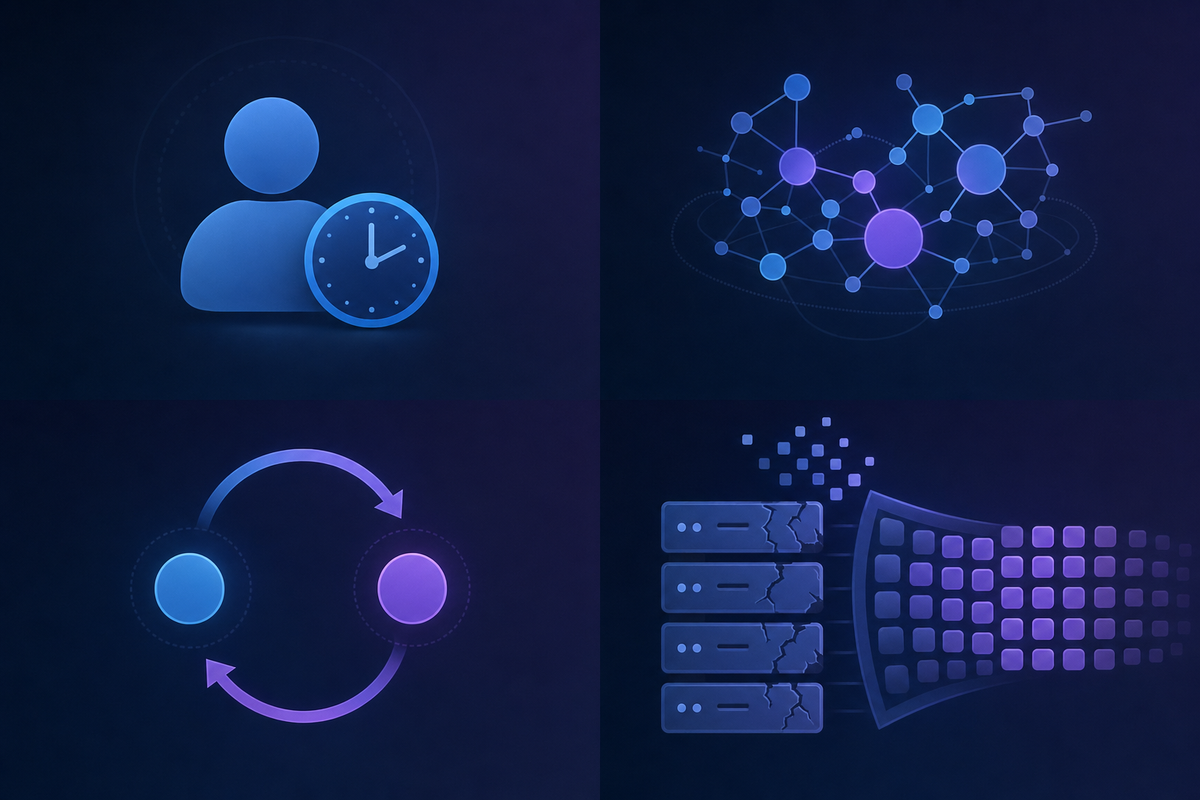
The AI content review backlog hits differently depending on what you're building. In content production and sales enablement, marketing teams report output volumes increasing 3-5x in the past year, with review capacity staying flat. Compliance teams in FP&A face a similar squeeze: AI-drafted financial disclosures require legal sign-off, but legal hasn't grown headcount to match. In internal tools, product teams are shipping AI-generated copy and UI text faster than design and legal can review it. The bottleneck looks the same across all of them: generation is instant, but human review is still measured in days.
Four Structural Reasons Review Capacity Doesn't Scale Like Content Production
Review capacity doesn't scale with content volume because the two rely on completely different inputs. Content production gets cheaper and faster as AI tooling improves. Review stays expensive because it requires human judgment.
Four structural reasons why:
- Each piece needs a qualified reviewer, and that person's time is fixed. You can't parallelize human attention the way you can parallelize LLM inference.
- Review requires context that accumulates over time: brand history, prior decisions, legal constraints. New reviewers can't just jump in.
- Feedback loops between reviewer and writer add latency that compounds across a backlog.
- Most review tooling wasn't built for asynchronous, high-volume queues. It was built for one-to-one editing.
The Hidden Costs of Unreviewed or Poorly Reviewed Content
Shipping content to clear the backlog moves risk downstream. Brand damage from off-voice copy accumulates quietly until a piece goes viral for the wrong reason. Compliance violations are faster: one unchecked claim in a financial or health-adjacent context can invite regulatory scrutiny that far outpaces any speed gain from moving quickly.
Google actively downgrades AI-generated content that lacks meaningful editorial review. Review shortcuts compound into ranking losses over months. And when a reader catches a factual error before your team does, they don't file a support ticket. They leave, and they tell someone.
Approval Infrastructure as the Missing Layer in AI-Assisted Workflows
Every systemic problem eventually gets a systemic solution. Databases solved data persistence. Auth solved identity. Payment APIs solved transactions. Teams stopped reinventing each layer and started treating it as infrastructure.
The AI content review backlog fits that same pattern. It's a missing layer: a place where content enters a formal review state, gets routed to the right reviewer, collects contextual feedback, and requires documented sign-off before anything ships. Project management tools track tasks. They don't track approval states, reviewer assignments, or audit-ready decision logs.
That gap is what review and approval infrastructure fills.
Why Traditional Collaboration Tools Weren't Built for Review-Heavy Workflows
Slack was built to move information between people, not to track whether that information reached a formal decision. There's no concept of "in review" vs. "approved," no way to surface who signed off, or when. Email fragments feedback across threads and versions blur fast. When something ships with an error and you need to reconstruct the approval chain, you're sifting through inboxes. The architecture of these tools was never meant to hold the weight of formal review. That's a tooling mismatch, not a workflow problem.
| Tool Category | What It Was Built For | Review Capacity Limitation | Missing Infrastructure |
|---|---|---|---|
| Slack | Moving information between people in real-time | No formal approval states. Feedback fragments across threads with no version control or audit trail. | Approval workflows, reviewer assignment, decision logs, contextual anchoring |
| Asynchronous one-to-one or one-to-many messaging | Threads blur across versions. Reconstructing approval chains requires sifting through inboxes. | In-context feedback, approval state tracking, structured review queues | |
| Project Management Tools | Task tracking and timeline management | Track tasks, not approval states. No contextual feedback anchored to content elements. | Reviewer routing, content-anchored comments, formal sign-off documentation |
| Velt | Review and approval infrastructure for SaaS products | Scales review capacity without adding headcount by embedding contextual comments, approval workflows, and audit trails directly in your product. | Nothing. Ships with comments, approvals, presence, notifications, audit trails, and recording. |
Building Review Capacity Into Your Product, Not Around It
When feedback lives inside the product where content lives, reviewers stop hunting for the right version across tabs. Context sticks. Approval states are visible without digging through threads. Each individual review gets cheaper, and that's how capacity scales without adding headcount. This is the core argument for building review and approval infrastructure directly into your product. Velt gives you exactly that: comments, approval workflows, presence, notifications, audit trails, and recording, wired into your app instead of bolted on from outside.
How Velt Embeds Review and Approval Infrastructure Directly Into SaaS Products
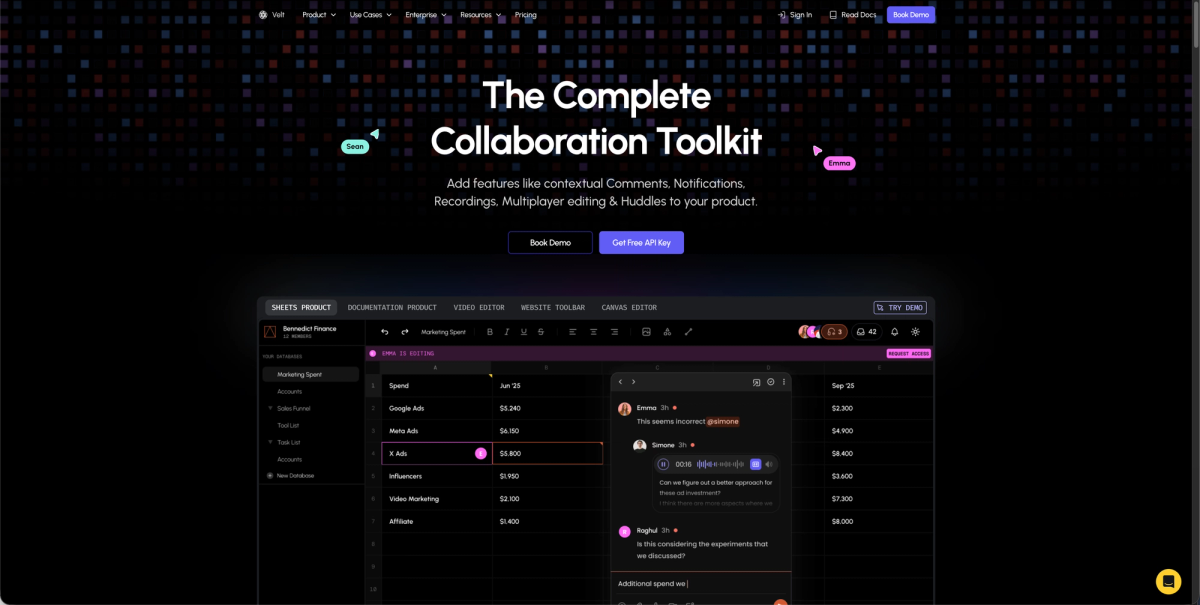
Velt is review and approval infrastructure. Teams in content production, compliance, and internal tools drop it in and get contextual comments, approval workflows, and audit trails without building them from scratch. That's how you absorb 5x content volume without 5x review delays.
Final Thoughts on Scaling Review Capacity for AI-Generated Content
You can't fix AI content review backlogs by working harder or hiring faster. The problem is architectural: generation happens in your product, but review happens everywhere else. Velt solves this by putting comments, approvals, and audit trails directly where your content lives. Context stays attached, reviewers stop hunting across tools, and capacity scales without adding headcount. Schedule a demo to walk through your specific use case.
FAQ
Can you handle AI-generated content review without increasing headcount?
Yes. Building review infrastructure directly into your product lets each reviewer handle more volume without adding delays. Velt gives you contextual comments, approval workflows, and audit trails that reduce per-review time by keeping feedback anchored to the content itself, not scattered across Slack and email threads.
AI content review backlog vs traditional editorial backlog?
The AI content review backlog is structurally different because generation scales instantly while review capacity stays fixed. Traditional editorial backlogs grew linearly with team output. AI tools let one writer produce 10x the drafts overnight, creating 3-5x backlogs within months. The gap isn't process, it's that human review has cognitive limits AI generation doesn't.
What happens when review queues grow faster than your team can approve?
You face a binary trap: throttle AI content creation to match review capacity (negating the ROI of your AI tools) or ship content without full review (accepting compliance and quality risk). Both options show up in the same workflow, often in the same week. The real cost is delayed campaigns, reviewer burnout, and quality erosion.
How do compliance teams handle AI-generated content at scale?
Compliance review requires documented approval states, reviewer assignments, and audit-ready decision logs. Traditional collaboration tools like Slack and email don't track formal approval chains or who signed off when. Velt provides approval workflows and audit trails built into your product so legal and compliance teams can review AI-generated financial disclosures, marketing claims, and internal documentation without reconstruction headaches.
Why don't project management tools solve the review bottleneck?
Project management tools track tasks. They don't track approval states, contextual feedback anchored to specific content elements, or audit-ready sign-off chains. Review infrastructure requires a different layer: a place where content enters formal review, gets routed to qualified reviewers, collects feedback in context, and requires documented approval before shipping. That's what Velt provides.