


Velt vs Liveblocks 2025
Compare Velt's 25+ pre-built collaboration features vs Liveblocks' backend-focused approach. See why Velt cuts build time from weeks to 10 lines of code.
Both Liveblocks and Velt help teams add real-time collaboration to their applications, and both handle the basic requirements well enough. But the real difference shows up when you consider whether you want to build your collaboration features from scratch or get them ready-made. Most teams assume they understand the development effort involved, but collaboration SDK implementation often requires far more frontend work than expected. Here's what you need to know about choosing between backend-only infrastructure versus a complete collaboration solution.
TLDR:
- Liveblocks provides backend infrastructure for real-time apps but requires major frontend development
- Liveblocks offers more flexibility but demands more technical implementation time
- Velt is a plug-and-play commenting SDK that is the best of both worlds with 25+ collaboration features
- Velt reduces implementation to 10 lines of code while Liveblocks requires thousands
- Velt offers self-hosting options for compliance while maintaining full feature parity

What is Liveblocks and How Does it Work?
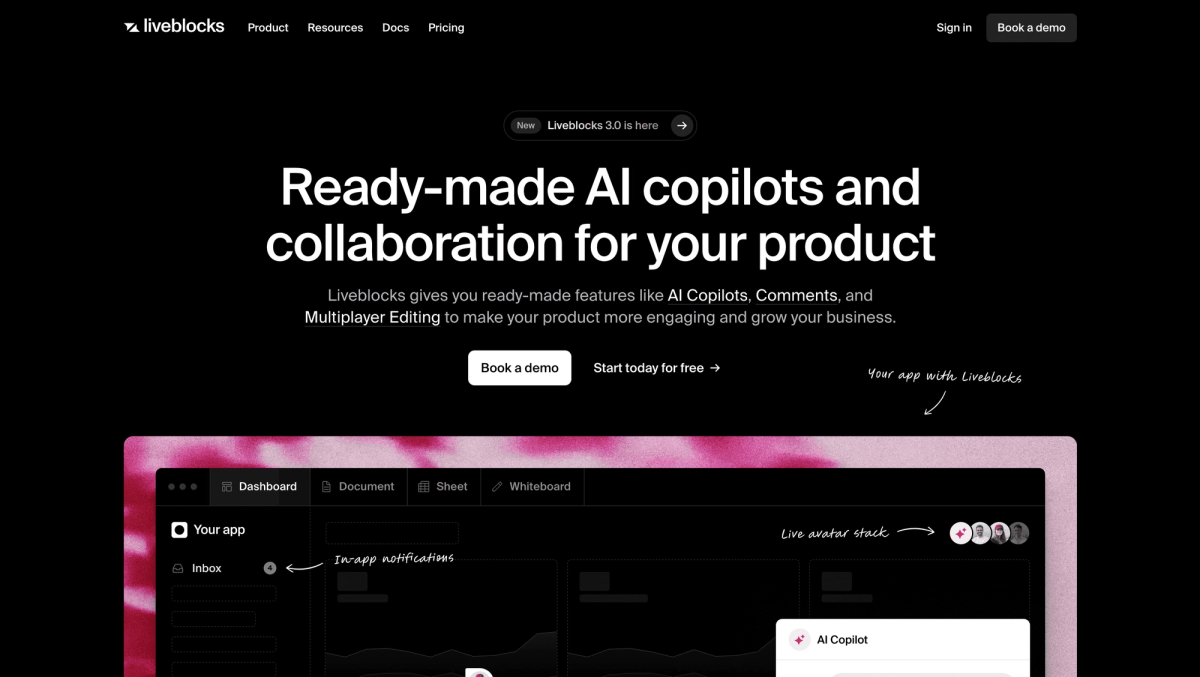
Liveblocks gives you ready-made features like AI Copilots, Comments, and Multiplayer Editing to make your product more engaging and grow your business. The platform provides backend infrastructure for building real-time collaboration features into web applications.
Liveblocks positions itself as the collaboration infrastructure platform for building real-time applications. They focus on core collaboration infrastructure: real-time data synchronization, user presence, and storage. They provide building blocks for adding collaboration, including document storage, version history, and integration features with comments and notifications systems.
The platform operates primarily as a backend service that handles WebSocket infrastructure and data persistence. However, here's the catch: Liveblocks primarily focuses on backend infrastructure. You'll still need to build most of your frontend UI from scratch.
This means a lot of development time for features like comment threads, user avatars, notification systems, and interactive elements. Teams often find this reality after initial prototyping phases, once they need production-ready collaboration experiences.
Understanding customizing commenting SDKs becomes important when looking at the UI development work required for backend-only solutions.
What is Velt and How Does it Work?
Velt is a complete collaboration layer that drops into any JavaScript stack with both frontend components and backend infrastructure included. Unlike other solutions that provide only backend APIs, Velt offers a complete SDK with 25+ pre-built collaboration features.
These features include realtime presence, contextual comments, video huddles, screen recording with AI transcription, and live state synchronization. The platform uses a component-based approach where developers can add features like <VeltComments /> or <VeltPresence /> directly into their React, Vue, Angular, or Svelte applications.
Behind these components is scalable WebSocket infrastructure, CRDT-based data synchronization, and optional self-hosting for compliance requirements. Velt supports both high-level UI components for rapid implementation and low-level APIs for custom experiences.
The platform handles complex networking scenarios including automatic reconnection, offline queuing, and conflict resolution while providing complete customization through template variables, custom data, conditional display, and behavioral modifications.
Learning what a commenting SDK is helps explain this complete approach to collaboration infrastructure that goes beyond basic backend services.

Feature Comparison: Backend vs Full-Stack Solutions
The feature gap shows up when you need complete collaboration tools. While both platforms handle their core competencies well, teams often need additional features like live huddles, video recording, AI transcription, and contextual workflows.
| Feature Category | Liveblocks | Velt |
|---|---|---|
| Backend Infrastructure | ✅ Strong | ✅ Strong |
| Frontend Components | ❌ Limited | ✅ 25+ pre-built |
| Video/Audio Calls | ❌ Not included | ✅ One-click huddles |
| Screen Recording | ❌ Not included | ✅ With AI transcription |
| Self-hosting | ❌ Not available | ✅ Self-Hosting for sensitive customer Data |
| Framework Support | React focused | React, Vue, Angular, Svelte & Vanilla JavaScript |
Liveblocks provides decent foundation pieces but requires major frontend development work. Teams often underestimate the overall development required to create complete polished collaboration experiences and workflows.
For teams with dedicated engineering, PM and design resources dedicated to collaboration roadmap, this approach offers flexibility. But if you're looking for a faster path to market, you might want to consider solutions that provide both frontend and backend components in one package.
Velt covers the complete collaboration range with pre-built components for presence indicators, contextual commenting systems, voice/video huddles, screen recording with AI transcription, live cursor tracking, notification centers, and view analytics.
Teams get production-ready UI components that can be styled to match their brand or used as headless functionality. These commenting SDK use cases show how complete feature sets allow diverse collaboration scenarios.
Development Complexity and Implementation Time
The implementation approach between these platforms creates vastly different development experiences. Our comparison shows real examples of code complexity across different collaboration SDKs, and the differences are pretty dramatic.
Liveblocks handles the backend infrastructure needed for real-time collaboration, including conflict resolution, data synchronization, and user presence management. However, teams need to invest major engineering resources in building UI components, handling edge cases, and creating polished user experiences.
Here's what typical Liveblocks implementation looks like:
You'll spend weeks building custom comment threads, user avatars, notification systems, presence indicators, and handling all the edge cases that come with real-time collaboration UI. That's before you even think about advanced features like video calls or screen recording.
Velt reduces implementation to 10 lines of code for most features. The platform includes both frontend components and backend infrastructure, eliminating the need to build custom UI elements. Teams can implement features like contextual commenting, live presence, or video recording in minutes rather than weeks.
The architectural difference impacts both initial development time and ongoing maintenance requirements. While Liveblocks offers flexibility for teams with engineers dedicated to collaboration features, most product teams benefit from Velt's integrated approach that handles both frontend and backend complexity.
Check out our implementation comparison to see more details on and direct comparisons between collaboration SDK approaches.

Scalability and Infrastructure Limitations
Scalability extends beyond just concurrent connections to include data storage, feature completeness, and development resources. Liveblocks provides reliable WebSocket infrastructure built to handle traffic on collaborative experiences and scale to hundreds of thousands of users.
The infrastructure approach also differs in compliance and deployment options. Velt offers self-hosting options for organizations requiring data residency or strict compliance standards, while maintaining the same feature set across hosted and self-hosted deployments.
Teams looking at Liveblocks alternatives often find these scaling limitations during production planning phases.
Why Velt is the Better Choice
Velt solves the fundamental challenge that teams often underestimate the overall development effort required to create complete polished collaboration experiences and workflows. While Liveblocks provides solid backend infrastructure, the hidden complexity lies in frontend development, UI/UX design, and feature integration.
The platform advantage becomes clear when considering total development effort. Velt's 25+ pre-built features eliminate months of engineering work that would otherwise be required to build commenting systems, presence indicators, video calling, and recording functions.
Teams get production-ready components that handle edge cases, accessibility, and cross-browser compatibility. For organizations requiring compliance or data residency, Velt's self-hosting options provide flexibility without sacrificing features.
The platform maintains feature parity between hosted and self-hosted deployments, so teams don't face architectural limitations as compliance requirements evolve. The cost structure also favors full usage with Velt's higher base limits supporting real production workloads rather than those of beta products and development experiments.
Need to switch platforms? Our migration guide provides step-by-step guidance for moving from Liveblocks to Velt.
How to Choose the Right Collaboration Platform
When choosing collaboration platforms, consider whether your team has dedicated resources for building custom UI components and managing frontend complexity. Teams choosing Liveblocks should plan for substantial frontend development work and ongoing maintenance of custom UI components.
This approach works best for organizations with specific design requirements and engineering resources dedicated to collaboration features. You'll need developers comfortable with WebSocket management, real-time state synchronization, and complex UI interactions.
Velt suits teams wanting rapid deployment with full feature sets. The platform handles both frontend and backend complexity while maintaining customization flexibility through extensive theming options and API access.
Organizations requiring compliance features, self-hosting, or rapid scaling benefit from Velt's integrated approach. Consider feature requirements beyond basic commenting and presence. If your roadmap includes video calls, screen recording, advanced notifications, or analytics, consider whether building these features makes sense for the engineering investment.
FAQ
How long does it take to implement each platform?
Liveblocks backend integration takes a few days, but building production-ready UI components typically requires 4-8 weeks of frontend development. Velt implementation usually takes 1-2 days for complete collaboration features including UI components.
Which platform offers better customization options?
Liveblocks offers unlimited customization since you build all UI components from scratch, but this requires major development resources. Velt provides extensive customization through template variables, custom data, conditional display, and theming while maintaining rapid implementation.
What are the main cost differences?
Beyond subscription pricing, consider development costs. Liveblocks requires substantial frontend engineering investment, while Velt eliminates most custom development work. Velt also provides higher base limits (200M comments vs 2,000) reducing upgrade pressure.
Can I self-host either platform?
Velt offers options for self-hosting data with full feature parity for compliance requirements. Liveblocks currently doesn't provide self-hosting options, which may limit choices for organizations with strict data residency requirements.
Final thoughts on choosing the right collaboration platform
Velt eliminates the months of custom development that Liveblocks requires. You get 25+ production-ready features in just 10 lines of code instead of building everything from scratch. Get started with Velt and ship collaboration features today, not next quarter.