

Review and Approval Workflows: The Missing Layer in SaaS Products (April 2026)
Learn how approval workflow SDKs fix the review bottleneck in SaaS products by keeping state, comments, and audit trails in-app. April 2026 guide.
Creation happens in seconds. Review takes days. Your product handles the first part, then hands approval off to email chains and Slack threads that break context every time. Approval workflow SDKs attach approval states, comment threads, and audit logs directly to the objects in your app so reviewers never leave to complete a workflow. If your users ship content, financial documents, or business plans, the approval layer is where velocity dies. This post shows you how to fix that without building it from scratch.
TLDR:
- Review cycles average 3.6 days in most orgs because approval still runs on Slack and email.
- An approval workflow SDK keeps state, comments, and audit trails inside your product, not external tools.
- Production approval infrastructure requires state management, routing logic, audit logs, and permission inheritance.
- Velt ships contextual comments, approval chains, and immutable audit trails as drop-in SDK components.
Last updated: April 17, 2026
Why Approval Workflows Have Become the Critical Bottleneck in SaaS Products
AI has made creation fast. Review hasn't kept up.
Teams are shipping more content, more business plans, and more financial documents than ever before. But the approval side of that equation still runs on Slack threads, email chains, and calendar invites. Pricing approval cycles take an average of 3.6 days in most organizations, with some stretching past two weeks. Organizations that implement formal approval processes cut approval cycle times by days. That's an infrastructure problem, not a people problem. The bottleneck used to be generation. Now it's sign-off. Most SaaS products weren't built with that in mind. They handle the create side well, then hand the review step off to external tools that carry no context, no audit trail, and no formal approval state.
That gap is where deals stall, compliance risks accumulate, and product velocity quietly dies. Approval workflows are no longer a backlog item. They're the missing layer in the product itself.
What Makes an Approval Workflow SDK Different from Standalone Tools
Standalone approval tools ask your users to leave the product. An SDK keeps them in it.
Tools like DocuSign or Monday.com handle approvals, but they're destinations. Your users context-switch out of your app, into someone else's, complete a step, and come back. The thread of context breaks every time. Feedback from two weeks ago lives in an email. Sign-off confirmation lives in a different tab. Nobody remembers why a decision was made. An approval workflow SDK, on the other hand, works differently. It attaches approval states, comment threads, and audit trails directly to the objects inside your app. The reviewer sees the document, the conversation, and the approval button in one place. No export, no redirect, no re-explaining what version you're on.There's also a data angle. With standalone tools, your approval history lives in their system. With an SDK, it lives in yours. For compliance-heavy products, that's not a minor detail.
The table below looks at the different review and approval approaches, the pros and cons, and what each is best for.
| Approach | Context Preservation | Implementation Time | Data Ownership | Maintenance Burden | Best For |
|---|---|---|---|---|---|
| Approval Workflow SDK (Velt) | Full context stays in-app. Comments, status, and audit trails bind to your entity IDs. No tab switching. | Days. Drop in components, configure webhooks, bind to existing object model. | Approval history, comments, and audit logs live in your infrastructure. You control retention and export. | Zero ongoing maintenance. SDK handles state sync, CRDT resolution, notification routing, and audit capture. | SaaS products where review happens on domain objects (reports, plans, content). Compliance-heavy verticals requiring defensible audit trails. |
| Standalone Tools (DocuSign, Monday.com) | Context breaks on every handoff. Users export from your app, review elsewhere, return with disconnected feedback. | Weeks. Integration requires mapping your objects to their data model, managing OAuth flows, syncing state bidirectionally. | Approval data lives in vendor system. Access via their API with rate limits and retention policies you don't control. | Low for the approval layer itself, but high for keeping state in sync between systems. Version conflicts common. | Contract signing, external vendor approvals, processes that don't require tight product integration. |
| Build In-House | Full control over UX and context flow, assuming you build it correctly. Most teams underestimate scope. | 6+ months. Requires comment threading, CRDT sync for real-time updates, webhook infrastructure, permission model, audit logging, notification system. | Complete ownership. Approval data schema and retention fully under your control. | High and ongoing. You own state management bugs, sync conflicts, permission edge cases, audit compliance updates, and notification delivery reliability. | Products with extremely custom approval logic that no SDK supports, or where in-house infra is a competitive moat. |
The Architecture of Review and Approval Infrastructure
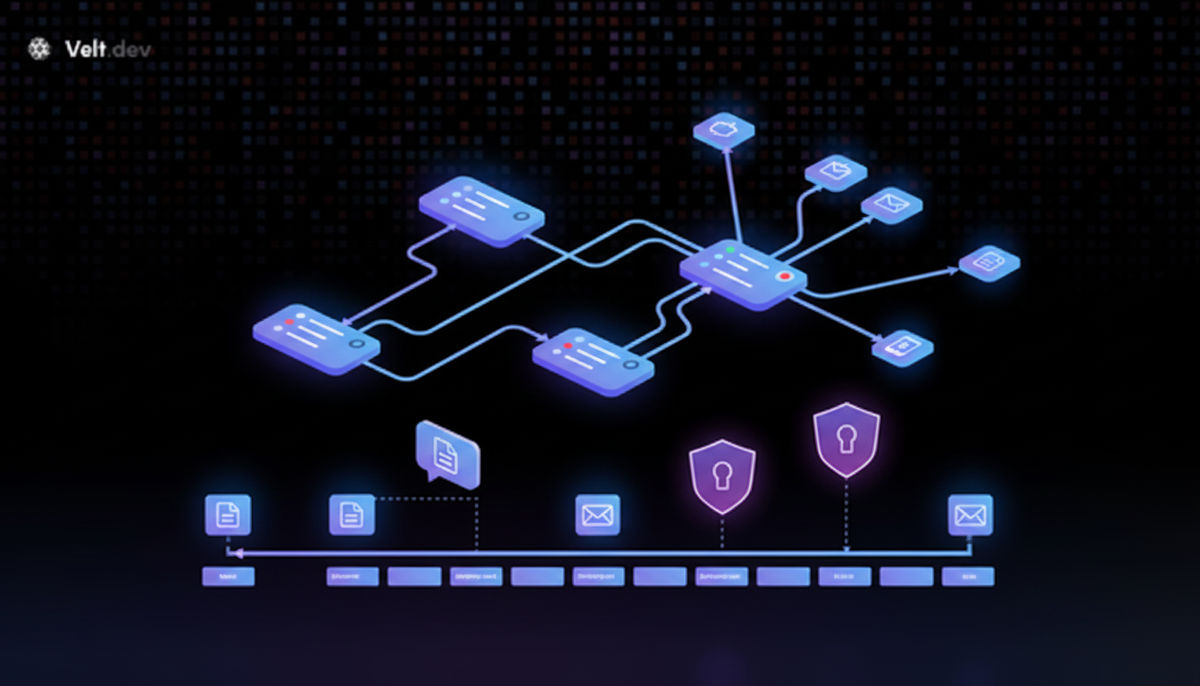
Production-ready approval workflows have more moving parts than most teams initially account for. A status dropdown gets you nowhere close. Radically simplifying workflow processes requires rethinking how work gets done end-to-end. Every component listed below depends on the others to function correctly, from Velt comments to audit trails.
Here are the layers that make up proper review and approval infrastructure:
- Approval state management: each reviewable object needs a trackable state (pending, in review, approved, rejected) that persists and updates in real time across all uses, a core collaborative editor feature that keeps all reviewers synchronized.
- Routing logic: who gets notified, in what order, and under what conditions based on role or assignment.
- Contextual comments: feedback anchored to the specific element being reviewed, not floating disconnected in a sidebar.
- Notification delivery: @mentions, status changes, and assignment events pushed via email, Slack, or in-app channels.
- Audit trail capture: immutable logs of who approved what, when, and from which prior state.
- Permission inheritance: reviewers see only what they're allowed to see, without requiring per-object token management.
Skip audit trails and you have no compliance story. Skip permission inheritance and enterprise deals stall in procurement. This is why approval workflows belong to infrastructure, not a feature you bolt on in a sprint.
Core Features Every Approval Workflow SDK Should Provide
Every approval workflow SDK looks similar on a spec sheet. The difference shows up in production, when a workflow breaks because delegation wasn't programmatic, or a compliance audit reveals gaps in the audit trail. Choosing the right comments SDK directly impacts the quality of your review infrastructure. Here's what actually matters:
- Configurable approval chains
- Assignment and delegation
- Status tracking and resolution management
- Audit logs
- Human-in-the-loop gates
Configurable Approval Chains
Not every approval needs the same path. Sales collateral might need one sign-off. A financial report might need three, in sequence. Look for support of both single-approver and multi-step chains, with conditional routing based on role, document type, or assignment rules.
Assignment and Delegation
Reviewers get reassigned. The SDK should expose programmatic assignment APIs beyond a static dropdown. Inline delegation, "assigned to me" filters, and unassigned flagging reduce the chance a review stalls because one person missed a notification.
Status Tracking and Resolution Management
Every reviewable object needs a persistent state: pending, in review, approved, rejected, updating in real time across all users. Resolution tracking should tie to specific users and timestamps captured in activity logs. You need to know who closed a thread and when.
Audit Logs
Teams underestimate this until a compliance review surfaces the gap. Audit logs should capture comment creation, edits, deletions, status changes, and access events, granular enough to generate a compliance report and accessible via REST API.
Human-in-the-Loop Gates for AI Workflows
71% of leaders identified human-in-the-loop approvals as their top AI governance priority for 2026. As AI agents draft financial documents and update business plans autonomously, someone still needs to sign off before those outputs go live.
The approval gate determines whether an AI-generated draft publishes, gets flagged, or routes to a specific person based on risk level. Velt is building AI review agents for exactly this use case. The same infrastructure handling human-to-human approvals handles AI-to-human handoffs, with the same audit trail, permission model, and notification layer.
Implementation Patterns: Building Approval Workflows into Your Product
Four integration patterns cover most approval workflow use cases in production SaaS apps. Picking the right pattern depends on how your data model is structured and where you need governance enforced. Here's how each one works in practice:
- Bind approval state to domain objects
- Configure webhooks
- Integrate UI components selectively
- Gate publishing behind approval state
Bind Approval State to Domain Objects
Skip generic "document" abstractions. Bind approval state directly to your existing entity IDs: slide-id, report-id, sku-id. Velt attaches comment threads, status, and audit records to those IDs so state travels with the object, not the URL.
// npm install @veltdev/react

import { VeltProvider, VeltComments, VeltCommentTool, useVeltClient } from '@veltdev/react';
import { useEffect } from 'react';

// 1. Wrap your app with VeltProvider
export default function App() {
  return (
    <VeltProvider apiKey="YOUR_API_KEY">
      <ReportReviewPage reportId="report-q1-2026" />
    </VeltProvider>
  );
}

// 2. Bind Velt to your domain object ID
// Comments, approval status, and audit logs all attach to this ID
function ReportReviewPage({ reportId }) {
  const { client } = useVeltClient();

  useEffect(() => {
    if (client) {
      client.setDocument(reportId, { documentName: 'Q1 Financial Report' });
    }
  }, [client, reportId]);

  return (
    <div>
      <VeltComments />    {/* comment threads bind to reportId */}
      <VeltCommentTool /> {/* lets reviewers annotate any element */}
      <YourReportContent />
    </div>
  );
}

// 3. Gate publish behind approval state (server-side — Node.js / Express)
app.post('/reports/:id/publish', async (req, res) => {
  const approval = await fetch(
    `https://api.velt.dev/v1/documents/${req.params.id}/approval`,
    { headers: { Authorization: `Bearer ${process.env.VELT_API_KEY}` } }
  ).then(r => r.json());

  if (approval.status !== 'APPROVED') {
    return res.status(403).json({ error: 'Pending approval' });
  }
  // proceed with publish
});
// npm install @veltdev/react
import { VeltProvider, VeltComments, VeltCommentTool, useVeltClient } from '@veltdev/react';
import { useEffect } from 'react';
// 1. Wrap your app with VeltProvider
export default function App() {
return (
<VeltProvider apiKey="YOUR_API_KEY">
<ReportReviewPage reportId="report-q1-2026" />
</VeltProvider>
);
}
// 2. Bind Velt to your domain object ID
// Comments, approval status, and audit logs all attach to this ID
function ReportReviewPage({ reportId }) {
const { client } = useVeltClient();
useEffect(() => {
if (client) {
client.setDocument(reportId, { documentName: 'Q1 Financial Report' });
}
}, [client, reportId]);
return (
<div>
<VeltComments /> {/* comment threads bind to reportId */}
<VeltCommentTool /> {/* lets reviewers annotate any element */}
<YourReportContent />
</div>
);
}
// 3. Gate publish behind approval state (server-side — Node.js / Express)
app.post('/reports/:id/publish', async (req, res) => {
const approval = await fetch(
`https://api.velt.dev/v1/documents/${req.params.id}/approval`,
{ headers: { Authorization: `Bearer ${process.env.VELT_API_KEY}` } }
).then(r => r.json());
if (approval.status !== 'APPROVED') {
return res.status(403).json({ error: 'Pending approval' });
}
// proceed with publish
});Configure Webhooks for Routing
Approval events should trigger your existing notification infrastructure. Configure webhooks to fire on status changes and @mentions, then route to Slack, email, or your internal queue. Velt exposes these as clean webhook payloads, not opaque callbacks. For full webhook configuration options and API reference, see our webhooks and API documentation.
Integrate UI Components Selectively
You don't need to replace your UI. Drop in the approval status badge, comment thread, and assignment dropdown as discrete components. Each one connects to the same underlying state layer, so they stay in sync without custom glue code.
Gate Publishing Behind Approval State
The step most teams miss: block the publish action until approval state resolves. Read the approval state from Velt's REST API server-side before your publish endpoint runs. No approval, no publish. That's the actual governance layer.
Use Cases: Where Approval Workflows Unlock the Most Value
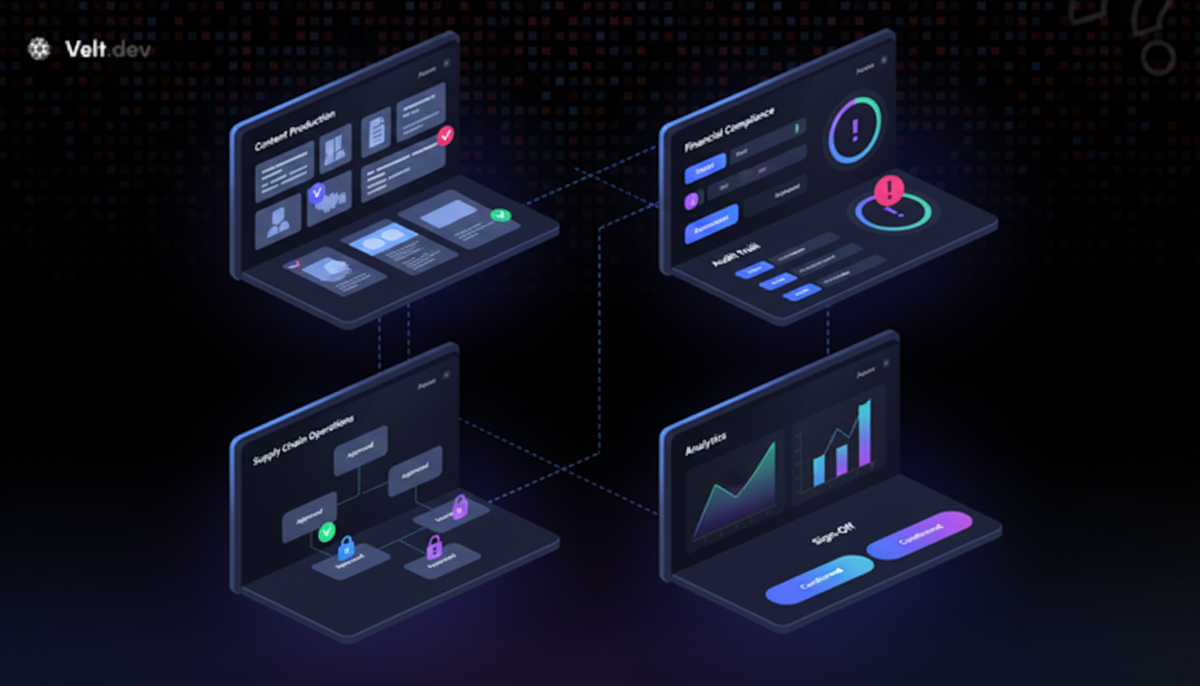
Approval workflows deliver the most value where review failures have real consequences. These four categories show where the ROI concentrates:
- Content production and sales enablement
- Compliance and financial workflows
- Supply chain and operations
- Analytics and insights
Content Production and Sales Enablement
Marketing and sales teams publish at scale, and unchecked content carries brand and legal risk. Stensul cut email review cycles from 8 days to 3 after implementing Velt. In-app commenting SDK use cases like this show how reviewers leaving feedback directly on the asset and approvers clicking one button to sign off can collapse revision rounds fast.
Compliance and Financial Workflows
Financial documents require timestamped, attributed sign-off before they leave the system. Approval workflows in FP&A tools give procurement and legal teams a defensible audit trail without chasing sign-offs across email threads.
Supply Chain and Operations
Business plans get approved in Slack, then nobody can reconstruct why a purchasing decision was made. Embedding approval state into logistics and procurement tools keeps the decision record with the data it was based on.
Analytics and Insights
Dashboards surface a finding. Someone needs to approve the recommendation before it becomes a budget action. In-app approval workflows let that sign-off happen on the chart itself, with the full context still visible.
How Velt Ships Review and Approval Infrastructure for SaaS Products
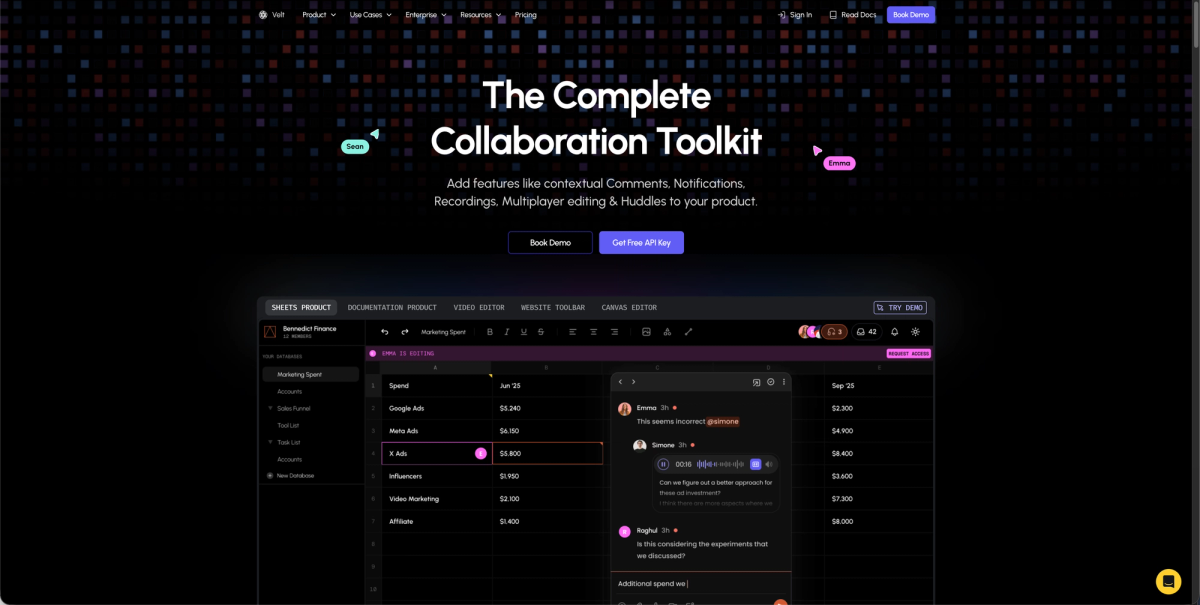
Velt is the implementation layer for everything this post describes. Drop in the SDK and you get contextual comments bound to your entity IDs, configurable approval chains, real-time status updates, and immutable audit logs, without building any of it yourself. Velt is the implementation layer for everything this post describes. Drop in Velt and you get contextual comments bound to your entity IDs, configurable approval chains, real-time status updates, and immutable audit logs, without building any of it yourself.
The component model is modular. Use the approval status badge alone, or combine it with the comment thread, assignment dropdown, and notification hooks. Each piece connects to the same underlying state layer. No custom sync logic required. For teams looking at different SDKs, our Velt vs Liveblocks comparison breaks down the architectural differences for document collaboration workflows.
For compliance use cases, Velt's audit trail captures every status change, comment edit, and access event, accessible via REST API and detailed enough to generate a report on demand. SOC 2 Type II and HIPAA BAA are included, not add-ons. If you're assessing other collaboration SDKs, our Liveblocks alternative guide covers the key differences in architecture and compliance features.
Leadpages integrated Velt in days, not the 6+ months their engineering team had estimated for an internal build. trumpet saw roughly 10% higher user engagement post-integration.
If the patterns in this post match what you're building, docs.velt.dev is where to start.
Final Thoughts on Treating Approval Workflows as Infrastructure
Building approval workflow infrastructure in-house means your team owns state management, audit logging, webhook routing, and permission inheritance indefinitely. Velt gives you those layers as an SDK so approval chains live inside your product, not scattered across Slack threads and email chains. The integration takes hours, not months, and you keep full control over your data model. If approval bottlenecks are stalling your roadmap, schedule a Velt demo to see how it maps to your objects.
FAQ
What's the best way to add approval workflows to a SaaS product in 2026?
An approval workflow SDK like Velt integrates directly into your product so reviewers stay in-context instead of switching to external tools. You get approval state management, contextual comments, audit trails, and notifications without building any of it yourself.
Approval workflow SDK vs building internal review tools?
An SDK ships in days and includes audit logs, permission inheritance, and notification routing out of the box. Building internally takes 6+ months and requires maintaining comment threading, CRDT sync, webhook infrastructure, and compliance-ready audit trails.
How do you implement human-in-the-loop gates for AI workflows?
Bind approval state to the AI-generated object (document, report, plan) using your existing entity IDs, then block the publish action server-side until approval resolves. Velt handles the approval UI, notifications, and audit trail while your backend enforces the gate.
What features should an approval workflow SDK include?
Multi-step approval chains with conditional routing, programmatic assignment and delegation APIs, real-time status tracking across all users, immutable audit logs accessible via REST API, and permission inheritance so reviewers see only what they're authorized to access.
Can approval workflows reduce compliance risk in financial software?
Yes. Approval workflows create an immutable audit trail of who approved what, when, and from which prior state. For FP&A and compliance tools, that record is accessible via REST API and detailed enough to generate reports during audits without reconstructing decisions from email threads.