

5 Types of Review Workflows and When Each Breaks Down (April 2026)
Learn the 5 review workflow types (sequential, parallel, hierarchical, conditional, hybrid) and exactly where each breaks down at scale. April 2026 guide.
Last updated: April 23, 2026
Most teams don't choose review and approval infrastructure based on what their content needs. They default to whatever their existing tools offer, scaling the process until sequential reviews stall the pipeline or parallel workflows create endless contradiction loops. Fixing these bottlenecks requires matching your review structure directly to your compliance and velocity requirements.
TLDR:
- Match your review workflow to your compliance needs. Use sequential gates for compliance-heavy content and parallel lanes for fast-moving creative work.
- Stop making executives bottlenecks. Delegate hierarchical approval steps to senior individual contributors unless a signature is legally required.
- Adopt a hybrid approach for enterprise compliance. Run non-conflicting reviews in parallel before routing content through a sequential legal checkpoint.
- Integrate Velt as your review and approval infrastructure. Anchor comments directly to DOM elements and track every decision with immutable audit logs.
Sequential Review Workflow (And Why It Stalls at Scale)
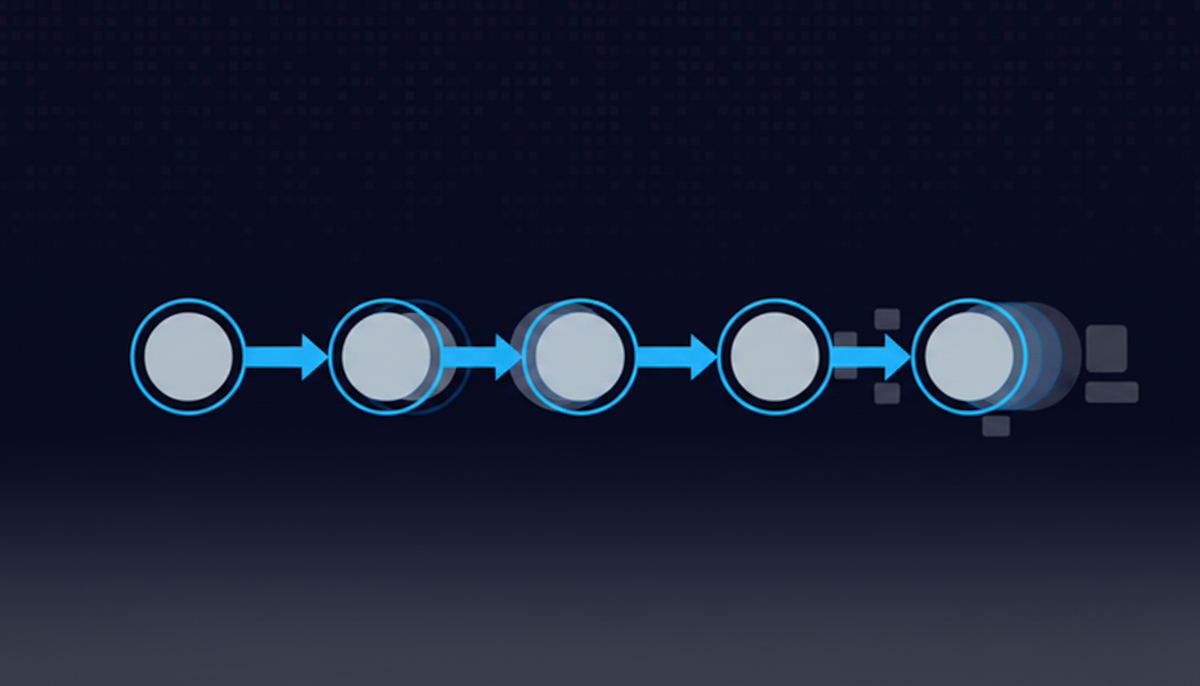
In a sequential review workflow, content moves through a fixed chain of reviewers, one at a time, in a predetermined order. Reviewer A approves before Reviewer B even sees it. Simple in theory. Brutal in practice once volume grows.
The core problem is compounding. Each reviewer's delay doesn't slow down one piece of content. It pushes back every piece behind it in the queue. Legal waits on marketing. Compliance waits on creative. Each handoff adds friction that multiplies across the pipeline.
"Sequential review trades parallelism for accountability. That tradeoff makes sense for ten pieces of content. It falls apart at a hundred."
At scale, the wait-for-one-person model just doesn't hold. It's a structural problem built into the workflow itself, not something you fix with better tooling or clearer deadlines.
Where It Still Makes Sense
Sequential review isn't always wrong. There are specific scenarios where the ordered handoff is the right call:
- Compliance-sensitive content where each reviewer's sign-off is a legal prerequisite for the next, and you need a clear audit trail showing who approved what and when.
- High-stakes documents where a later reviewer's judgment depends on seeing the earlier reviewer's notes first, like a legal team that needs to read compliance flags before adding their own.
- Small teams running low volume, where the bottleneck risk is low enough that the accountability upside outweighs the slowdown.
Outside those cases, sequential review tends to be the default choice instead of the deliberate one.
Parallel Review Workflow (And When Conflicting Feedback Kills Momentum)
Parallel review sends content to multiple stakeholders at the same time. Everyone reviews simultaneously, so the calendar math looks great: instead of five sequential reviewers taking five days each, you collapse three weeks into one.
The catch shows up when legal says "remove this claim," brand says "keep it, it's core messaging," and the content owner has no framework for resolving the conflict. Without a clear decision hierarchy defined before review starts, conflicting feedback creates revision loops. The author ends up arbitrating stakeholder disagreements, which isn't their job.
Where It Works and Where It Doesn't
Parallel review holds up when roles are defined upfront. Who has veto power? Who's advisory only? Without answers to those questions before the cycle begins, you're not running a parallel workflow. You're running a committee.
It works well for:
- Campaigns with distinct ownership lanes (legal reviews for risk, brand reviews for tone) where feedback tracks don't overlap and each reviewer operates within a clearly scoped domain.
- Teams with a named decision-maker who has final authority to resolve conflicts when stakeholder opinions collide.
It breaks down when every stakeholder assumes equal weight, producing contradictory edits with no resolution mechanism in place. The author becomes the tiebreaker by default. This stalls the entire cycle and often produces watered-down content that satisfies no one.
Hierarchical Approval Workflow (And Where Control Becomes a Bottleneck)
Hierarchical approval workflows route content up the org chart before anything ships. A manager approves, then a director, then a VP. Each tier adds a layer of authority and, inevitably, a layer of latency.
The accountability logic is sound. Centralized control catches errors before they're public and keeps brand or compliance standards consistent across teams. Where it breaks is when executives become the approval layer for decisions that don't require their judgment. A VP signing off on a product one-pager that three other reviewers already cleared isn't governance. It's a bottleneck wearing a governance costume.
When Tiered Authority Makes Sense
- Industries with compliance requirements where sign-off authority is legally defined and cannot be delegated, making each approval tier a compliance requirement instead of a process preference.
- High-visibility external communications where executive context genuinely changes the output instead of merely adding a signature.
- Decisions carrying cross-functional budget or legal implications that only someone with that scope of ownership can clear.
Outside those cases, the tier structure should be questioned. Approval authority delegated to senior individual contributors moves faster and rarely sacrifices quality. The key distinction: reserve executive review for decisions only executives can make.
Conditional (Rule-Based) Workflow (And the Complexity Tax)
Conditional workflows route content automatically based on predefined rules. If the content targets a compliance-heavy market, it goes to compliance. If it's a paid ad, it routes to legal. If it's internal only, it skips both. On paper, this is the smartest workflow type: low-risk content moves fast, high-risk content gets scrutiny, and no one wastes time reviewing things they don't need to see.
The problem is maintenance. Rules encode assumptions about how your business works today. When those assumptions change, and they always do, someone has to update the logic. A new product category, a market expansion, a rebrand. Any of these can break routing rules in ways that aren't obvious until something ships without the right review.
Where the Complexity Tax Compounds
Edge cases are where things break down. Rules handle the predictable distribution of content well. But hybrid assets (like something that is both customer-facing and a compliance document) don't fit neatly into predefined lanes. Teams end up forcing these into a single category or manually overriding the system. This defeats the purpose of automation.
Conditional workflows make sense when:
- Your content types are stable and clearly categorized with minimal overlap between routing lanes.
- You have someone who owns the rule logic and actively updates it as business requirements shift.
- Volume is high enough that manual routing would create a genuine bottleneck, making automation worth the configuration overhead.
When rules grow past a certain threshold of complexity, the workflow itself needs a review cycle. That's usually the sign to simplify the routing logic or shift toward a hybrid approach.
Hybrid Review Workflow (And Why It Works for Enterprise Compliance)
Hybrid workflows skip the "one size fits all" approach. They combine sequential gates, parallel reviews, and conditional routing based on what each stage actually needs.
For enterprise compliance teams, that's precision, not unnecessary complexity. In practice, most growing marketing teams adopt this approach, using hybrid workflows where some reviews run in parallel while final sign-off stays sequential.
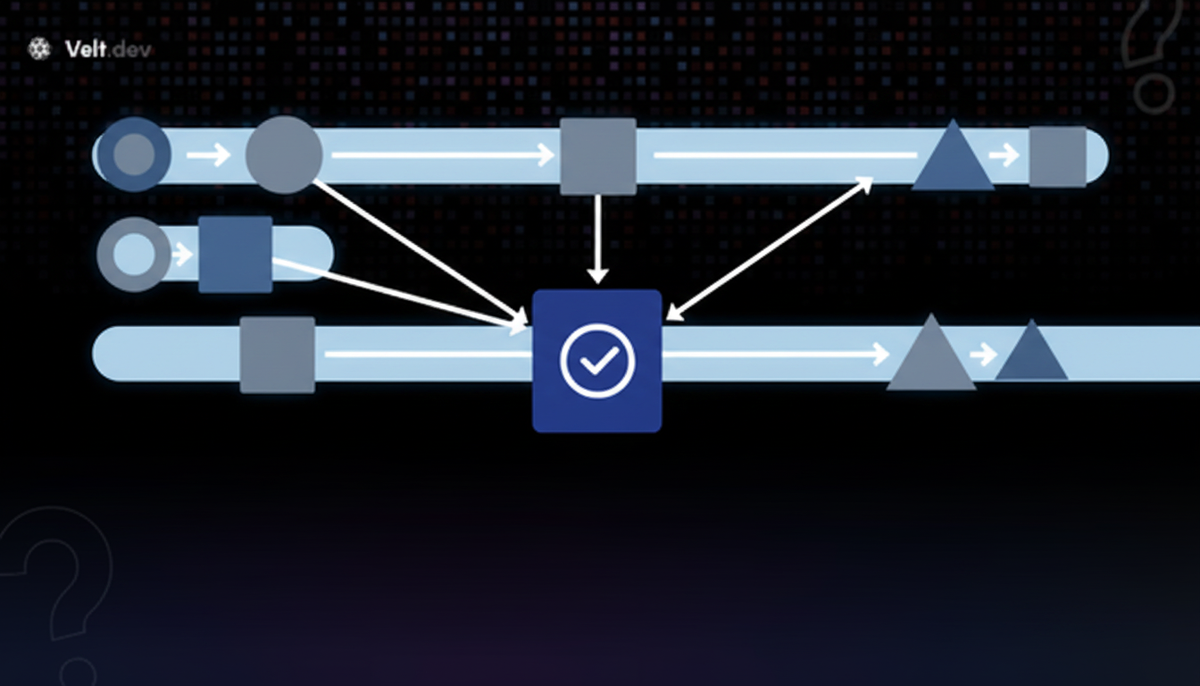
The structure typically looks like this: parallel review runs first across non-conflicting stakeholders (brand, creative, product). Then content hits a sequential compliance checkpoint before final sign-off. Speed where oversight isn't required. Control exactly where it is.
Why Industries with Compliance Requirements Default Here
In financial services, healthcare, and legal-adjacent content production, a single workflow pattern rarely covers the full review surface. Creative feedback doesn't need the same gate structure as a compliance sign-off. Forcing both through the same pattern either slows down low-risk content or under-reviews high-risk content. Given that more than 80% of compliance teams still rely on manual processes and spreadsheets, structured hybrid workflows offer a path beyond ad hoc tracking.
Hybrid workflows solve this by letting stage requirements drive the structure. Parallel lanes handle creative and brand in tandem. A sequential gate handles legal or compliance sign-off after. Conditional rules determine which content hits the compliance layer at all.
The tradeoff is coordination overhead. Hybrid workflows require clear ownership at each stage transition. Without that, the handoff between parallel and sequential phases creates the same ambiguity that kills parallel-only reviews. Organizations running hybrid workflows well tend to document stage owners explicitly along with reviewers, keeping transitions clean even as volume scales.
| Workflow Type | Best Use Cases | Key Advantage | Main Bottleneck |
|---|---|---|---|
| Sequential Review | High-compliance content. Small teams with low volume. | Clear accountability. Explicit audit trails. | Compounding delays. One absent reviewer stalls the queue. |
| Parallel Review | Clear ownership lanes. Designated final decision-maker. | Speed. Cuts weeks into days. | Conflicting feedback. Risk of endless revision loops. |
| Hierarchical Approval | Legally defined sign-offs. High-visibility external communications. | Centralized control. Consistent standards. | Executives become bottlenecks for low-level decisions. |
| Conditional (Rule-Based) | High volume. Predictable, distinct categories. | Speed for low-risk work. Scrutiny where needed. | High maintenance. Edge cases break routing logic. |
| Hybrid Workflow | Enterprise compliance. Managing diverse content. | Parallel speed for creative, sequential gates for compliance. | Handoff complexity. Requires explicit stage ownership. |
How Velt Eliminates Workflow Bottlenecks with Review and Approval Infrastructure
Every workflow type described above breaks down at the same underlying points: feedback loses context, approvals scatter across tools, and no one can reconstruct who approved what or when.
Velt's review and approval infrastructure targets each of those directly. Contextual comments bind to DOM elements via data IDs, so feedback stays attached to the exact piece of content being reviewed regardless of layout changes. No more "see my Slack message about the third paragraph" ambiguity.
Velt's approval workflows handle configurable routing, assign-to interfaces, and resolution tracking out of the box. Sequential gates, parallel assignments, conditional routing based on content type. Velt supports all of it without requiring teams to build approval state management from scratch.
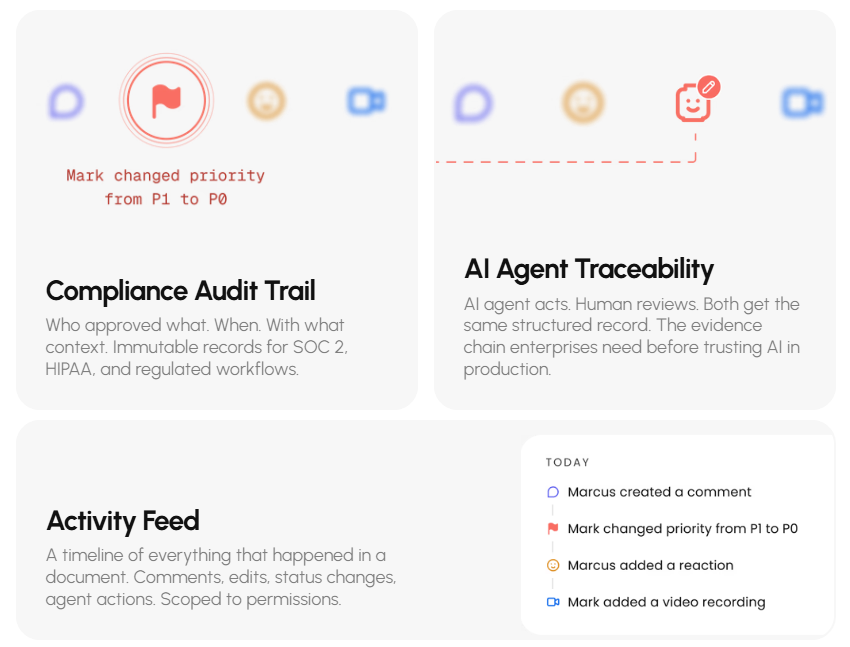
Audit logs cover every decision with immutable, timestamped records: comment creation, edits, deletions, access requests, and presence changes. For compliance-heavy workflows in financial services or high-stakes content production, that's the full decision trail, not a high-level summary of approvals.
Programmatic composer control lets teams customize the review interface to match their specific workflow pattern. Whether that's a simple sequential handoff or a multi-stage hybrid approval chain, the review and approval infrastructure stays consistent. The workflow shape is yours to define.
Final Thoughts on Workflow Design for Review Teams
Your content review workflow breaks down the same way at scale: feedback loses context, approval states scatter across tools, and nobody can trace who signed off on what. Sequential, parallel, hierarchical, conditional, or hybrid structures all hit these bottlenecks unless the underlying infrastructure keeps decisions attached to the content itself.
Book a demo to see how Velt handles contextual comments, configurable routing, and audit trails across any workflow pattern you need. The right workflow isn't about choosing one structure forever. It's about having the flexibility to change how content moves through review as your team and compliance requirements shift.
FAQ
How do I choose the right review workflow for my team?
Base your decision on content volume and compliance needs. Compliance-heavy content usually requires sequential gates, while fast-moving creative work demands parallel or hybrid approaches.
When should I use a sequential review workflow?
Use sequential workflows for compliance-heavy content where one sign-off is a legal prerequisite for the next. They also make sense for small teams where the risk of compounding delays is low.
Why do conditional workflows break down at scale?
Conditional routing encodes assumptions about your business today. When new products or edge cases break those rules, you end up with a high maintenance tax and manual overrides that defeat the automation.
What makes a hybrid review workflow effective for enterprise compliance?
Hybrid workflows provide speed where you can and control where you must. You can run brand and creative reviews in parallel, then route the content through sequential gates for final compliance sign-offs.
How does review and approval infrastructure fix workflow bottlenecks?
Dedicated infrastructure anchors feedback directly to DOM elements so context isn't lost. Velt handles the configurable routing, approval states, and audit trails so you don't have to build state management from scratch.