

Why Every AI-Generated Asset Needs a Human Review Layer (May 2026)
Learn why AI-generated assets require human review layers to catch errors, hallucinations, and compliance issues before publication. May 2026 guide.
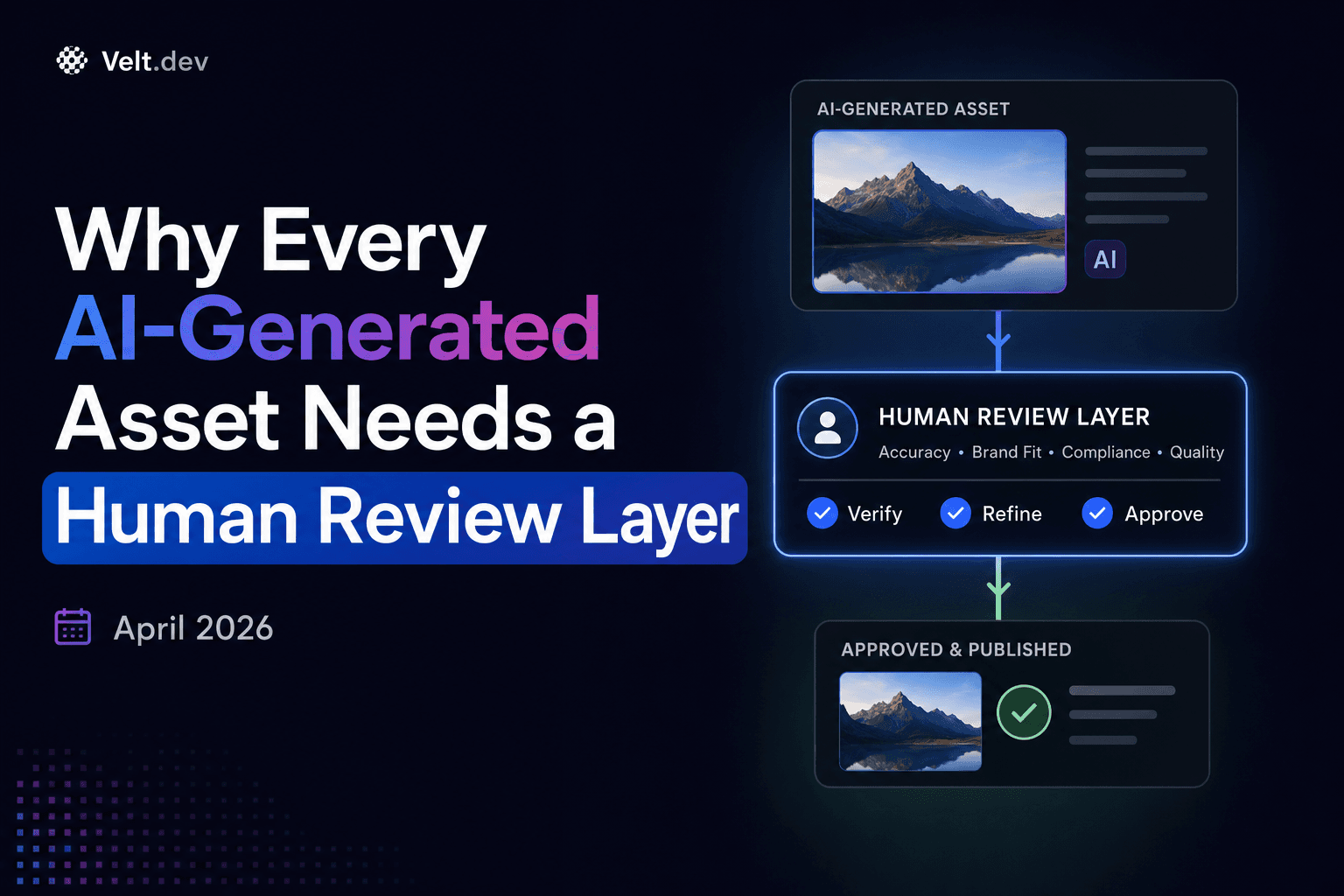
Everyone assumed the hard part was getting AI to generate content that didn't sound like a robot. Turns out the actual problem is verifying that content before it ships. Your AI content quality review process is probably a mix of Slack messages and shared docs, which means there's no record of who reviewed what or when they signed off. What you need is review and approval infrastructure: a structured system for comments, approvals, and audit trails that scales with AI output volume.
TLDR:
- AI generates 10x more content than humans, but review capacity has not scaled with it.
- Hallucination rates exceed 15%, and 47% of enterprise AI users made decisions based on fabricated content.
- Review infrastructure prevents errors from reaching production and provides audit trails.
- Velt embeds review and approval workflows directly into your product with comments, approvals, and audit logs.
The AI Content Explosion Created a Review Bottleneck
The bottleneck in most AI workflows is not generation speed. It is review capacity. AI systems now produce millions of images per day, and the majority of newly created web pages contain AI-generated content. Teams that once shipped dozens of assets per week now generate hundreds, but human reviewers are still working at human speed. The gap is real: generation throughput scaled exponentially while review capacity stayed linear. That mismatch is where things break down. Unverified output gets published, errors slip through, and compliance issues surface after the fact because there is no structured process to catch them before they ship.
According to McKinsey, generative AI could add up to $4.4 trillion in annual value across industries, but that value only materializes when the output is actually trustworthy. What teams actually need is review and approval infrastructure that keeps pace with AI output volume. Right now, most do not have it. They have Slack threads, shared docs, and no audit trail of who reviewed what or when they signed off.
Why AI Output Cannot Be Trusted Without Human Verification
AI outputs look convincing. That's the problem. A language model generates text with the same confident, fluent tone whether the underlying claim is accurate or fabricated, which makes errors genuinely hard to catch on a scan. A misquoted statistic reads just as cleanly as a correct one. A wrong attribution carries the same authoritative register as something grounded in real sourcing.
Even the latest models carry hallucination rates exceeding 15%, and in 2024, 47% of enterprise AI users admitted to making at least one major business decision based on hallucinated content. The failures aren't always dramatic: a subtly wrong number in a sales deck, a slightly off brand claim, a citation that points to a real paper but misrepresents its findings. These errors pass automated checks because those checks don't understand intent. AI can't flag its own uncertainty reliably, which is exactly why a human review layer isn't optional for anything customer-facing or compliance-sensitive.
The Hidden Cost of Not Implementing Review Workflows
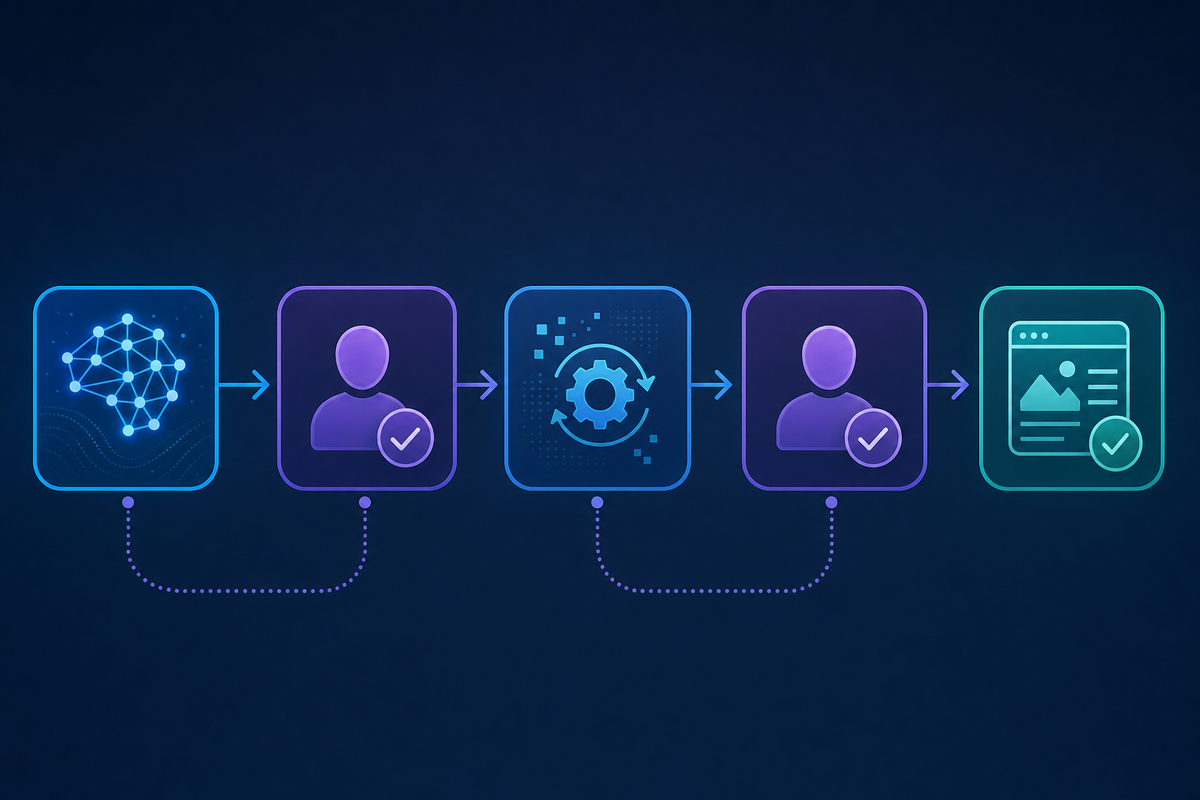
The hidden cost of skipped review workflows is not the errors that get caught. It is everything that slips through unchecked.
Knowledge workers spend an average of 4.3 hours per week verifying AI output. That works out to roughly $14,200 per employee per year in verification overhead alone, and that is when a process exists at all. When it does not, that time is also invisible: no tracking, no accountability, no audit trail. Approvals happen in Slack threads that vanish. Nobody can prove what was reviewed, who signed off, or when.
The indirect costs compound quickly. A factual error in a published sales asset can stall deals. A compliance gap in a financial document can trigger audits. These are not edge cases. They are what happens when review stays informal. Review infrastructure is not overhead you add to a workflow. It is what makes the workflow defensible.
Where to Insert Human Review Checkpoints in AI Workflows
Knowing when to pause an AI workflow and hand off to a human reviewer is where most teams get this wrong. They either review too late (after content is already distributed) or too early (before the AI has done enough useful work). The right checkpoints depend on the asset type and risk level.
Here's where review layers tend to matter most:
- After first-pass generation, before any downstream use (catch factual errors, tone mismatches, or hallucinated citations before they get embedded in documents or sent to customers).
- Before publishing or distribution (a second human pass after any AI editing or reformatting catches regressions introduced in post-processing).
- After AI-assisted personalization (anytime the AI is filling in personalized fields or tailoring copy per audience segment, a reviewer should spot-check a representative sample).
- Before feeding output into another AI system (errors compound when one model's output becomes another's input, so a human gate between pipeline stages limits downstream drift).
Matching Review Depth to Risk Level
Not every asset needs the same scrutiny. A rough internal summary carries less risk than a customer-facing legal disclosure. Matching review depth to consequence keeps teams from burning reviewer time on low-stakes output.
| Asset Type | Risk Level | Recommended Review Layer |
|---|---|---|
| Internal summaries | Low | Async comment thread, no approval gate |
| Marketing copy | Medium | Single reviewer with annotation trail |
| Customer-facing contracts | High | Multi-stage approval with audit log |
| Compliance documents | Critical | Mandatory sign-off with versioned history |
Building this kind of structured review into your AI workflow means the review itself becomes auditable along with the output.
Building Review Infrastructure That Scales With AI Volume
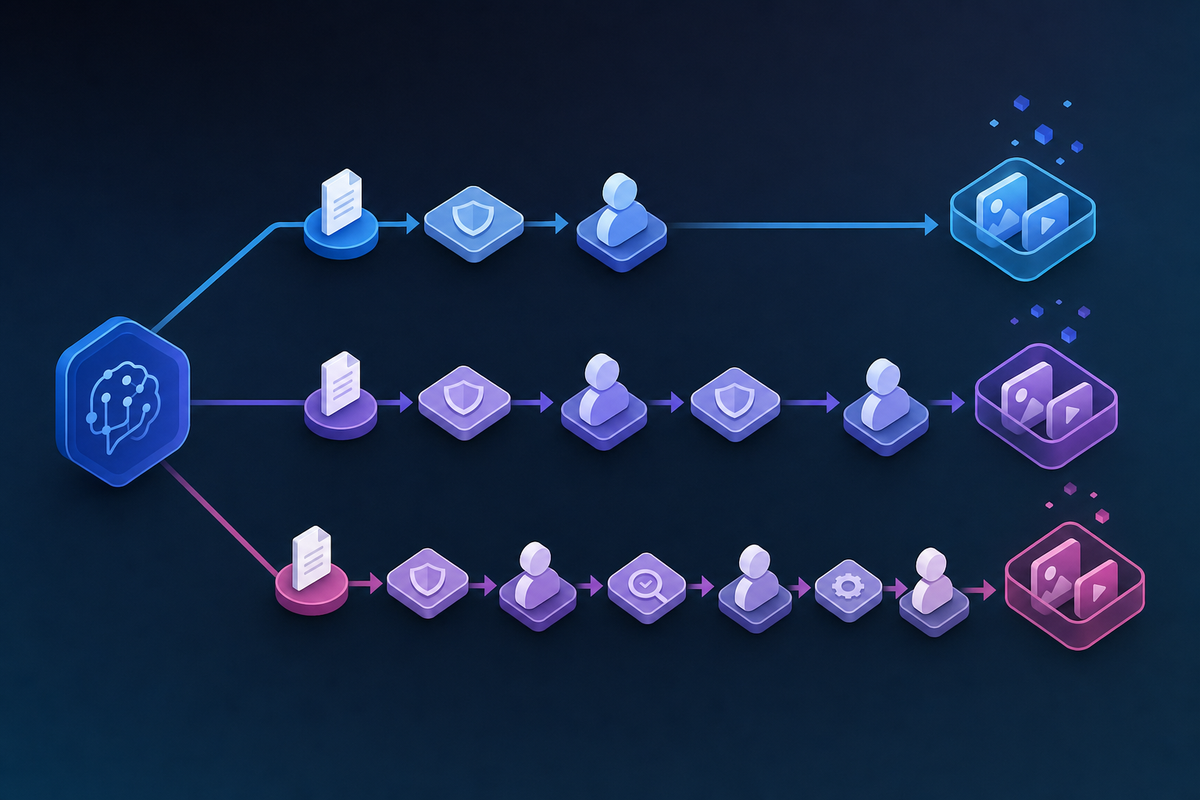
As AI output volumes grow, ad-hoc review processes break down. A single reviewer checking outputs in a shared doc doesn't hold up when your team is generating hundreds of assets per week. Review infrastructure needs to scale with that volume. That means structured workflows where comments, approvals, and status changes are tracked per asset, not buried in Slack threads or email chains.
Confidence-based routing is the design pattern that actually holds up at volume. Not every AI output carries the same risk, so treating them identically wastes reviewer time and buries the things that genuinely need attention.
The routing logic can stay simple:
- Low-confidence or compliance-sensitive output gets a named reviewer and a formal approval gate before it moves forward.
- High-confidence, low-risk output goes through async review or periodic spot-checks, keeping the queue from backing up.
- Internal draft summaries need a comment thread, not a full approval chain.
This keeps human attention focused where it matters, which is the only way review scales without becoming the new bottleneck.
How Velt Embeds Review and Approval Into Your AI Workflow
Velt provides exactly this kind of review and approval infrastructure, with comments, approval workflows, presence, notifications, audit trails, and recording built in. Teams get a consistent review layer across every AI-generated asset, with full visibility into who reviewed what and when.
Velt embeds review and approval infrastructure directly into the product where AI-generated assets live. Review that happens outside the product (in Slack, email, or a separate doc) loses context the moment it leaves. Velt keeps feedback anchored to the exact element being reviewed, whether that's a generated image, paragraph, or visualization. Reviewers leave comments, set approval states, and trigger notifications without switching tabs. Your team gets a full audit trail of every decision made on every AI-generated asset.
How Velt Embeds Review and Approval Into Your AI Workflow
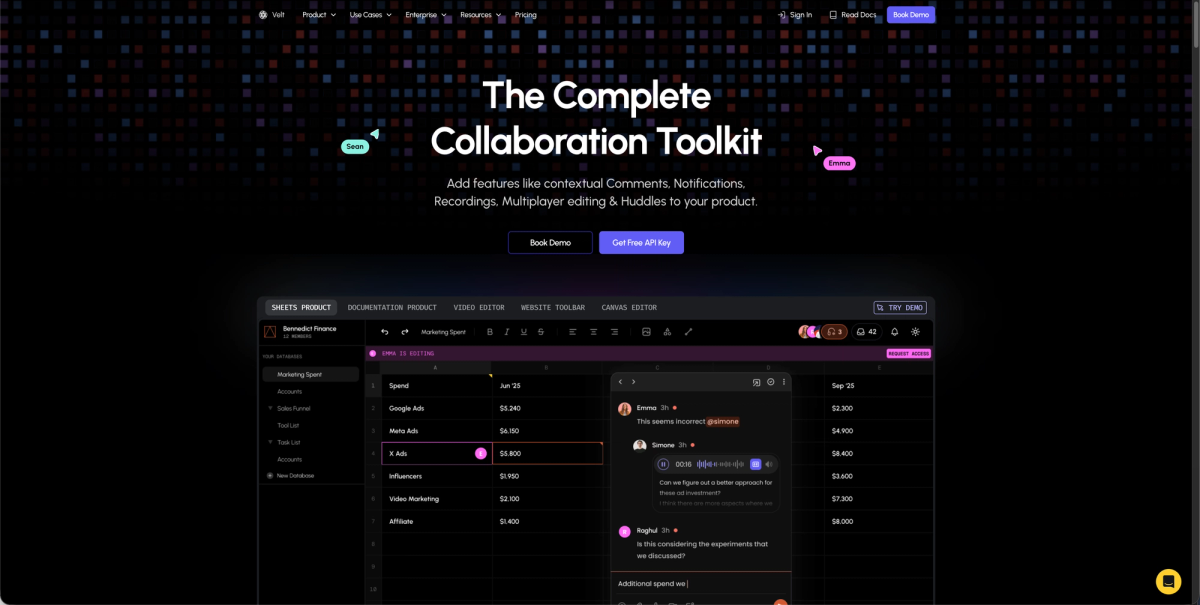
Velt is review and approval infrastructure that slots into the product where AI-generated assets already live. Reviewers annotate specific outputs directly, route content through configurable approval stages, and every decision gets logged with full attribution in Velt's activity trail. No reconstructing who approved what in a Slack thread from three weeks ago.
For teams in compliance-focused industries, that accountability layer is not optional. It is what makes AI output defensible before it reaches production. Velt gives you comments, approval workflows, presence, notifications, audit trails, and recording without building any of it from scratch.
Final Thoughts on Closing the Review Gap in AI Workflows
The bottleneck is not generation speed anymore. It is review capacity, and fixing that means building AI review workflow infrastructure that scales with output volume instead of breaking under it. Velt gives you comments, approvals, presence, notifications, and audit trails without pulling reviewers out of the product where work actually happens. Book a demo to see it in action. Your team already generates AI content at scale, so the review layer should work at that same scale.
FAQ
Can you build an AI review workflow without slowing down production?
Yes. Review infrastructure does not add wait time when it is built into the product where assets already live. Velt embeds comments, approval gates, and audit trails directly in your app, so reviewers annotate specific outputs and route them through configurable stages without switching tabs or waiting on email chains.
What's the difference between automated AI checks and a human review layer?
Automated checks catch formatting errors and broken links. A human review layer catches factual drift, tone mismatches, and hallucinated citations that confidence scores miss entirely. Even high-confidence AI output carries hallucination rates above 15%, which is why both layers matter for anything customer-facing or compliance-sensitive.
How do you route AI outputs to the right reviewer without creating a backlog?
Confidence-based routing is the pattern that scales. Low-confidence or compliance-sensitive outputs get a named reviewer and a formal approval gate. High-confidence, low-risk outputs go through async review or periodic spot-checks. This keeps human attention focused where it actually matters without bottlenecking the queue.
When should you insert human review checkpoints in an AI content workflow?
Insert checkpoints at three stages: after first-pass generation (before downstream use), before publishing or distribution (to catch regressions introduced in post-processing), and after AI-assisted personalization (to spot-check variable fields). Matching review depth to risk level keeps you from burning reviewer time on low-stakes output.
What's the actual cost of skipping review on AI-generated content?
Knowledge workers spend 4.3 hours per week verifying AI output, roughly $14,200 per employee annually. That is when a process exists. Without one, the cost is invisible until an error reaches production: a factual mistake stalls a deal, a compliance gap triggers an audit, or an unsigned disclosure surfaces during diligence. Review infrastructure is not added friction. It is what makes AI output defensible.