

How to Eliminate Content Review Bottlenecks: Complete Guide (April 2026)
Learn how to eliminate content review bottlenecks in your workflow. Complete guide covers the four delay patterns and proven fixes. April 2026.
A content review bottleneck is any point in your production cycle where finished work sits idle waiting on feedback, approval, or revision. It shows up in four recognizable patterns, and the fix is review and approval infrastructure that captures feedback in context, routes it to the right reviewer, and runs approvals in parallel instead of sequence.
Last updated: April 10, 2026
TLDR:
- Content review bottlenecks occur when work sits idle waiting on feedback, not when teams are actively creating
- The four core delay patterns: single-editor dependency, revision loops, sequential chains, and quality ambiguity
- Element-bound comments eliminate version confusion by anchoring feedback to specific DOM IDs, not coordinates
- Parallel approvals cut review time from 9 days to 3 by running non-blocking feedback alongside critical sign-offs
- Velt is a JavaScript SDK that embeds contextual collaboration directly into web apps, preventing tool sprawl
What is a content review bottleneck and why it kills productivity
A content review bottleneck is any point in the production cycle where content sits idle, waiting on feedback, approval, or revision before it can move forward. The content exists. The work is done. But the clock keeps running anyway.
The productivity cost is real and measurable. Research shows senior engineers spend an average of 4.3 minutes reviewing AI-generated suggestions versus 1.2 minutes for human-written code. Teams using AI heavily saw a 91% increase in PR review time despite faster generation speeds. The bottleneck moved downstream instead of disappearing.
Speed up generation and you pile pressure onto the approval stage. Reactive fixes like chasing people on Slack or scheduling another sync rarely work long-term. The bottleneck simply reforms wherever the process has friction.
The four core bottleneck types in content review workflows
Most content review delays trace back to one of four recognizable patterns. Knowing which one is slowing your team down is half the battle.
| Bottleneck Type | Primary Symptom | Root Cause | Solution Approach |
|---|---|---|---|
| Single-Editor Bottleneck | Content stuck in under review status for days, always tied to the same reviewer name | All approvals funnel through one person who becomes the single point of failure | Distribute review authority across multiple qualified reviewers with explicit assignment routing |
| Revision Loop Bottleneck | Three or more revision rounds on a single piece with no clear resolution | Vague feedback without actionable criteria sends creators back to square one repeatedly | Use contextual commenting with specific element-level feedback and defined acceptance criteria |
| Sequential Review Bottleneck | Long elapsed time despite short individual review windows | Artificial dependencies where Reviewer B waits for Reviewer A even when their work is independent | Implement parallel approvals by separating blocking from non-blocking reviews |
| Quality Ambiguity Bottleneck | Content passes with one stakeholder but gets rejected by the next with no audit trail | No defined standards means every reviewer applies personal taste inconsistently | Define quality benchmarks and use read/unread status tracking so all feedback is visible before sign-off |
Single-Editor Bottleneck
Every approval runs through one person. When they're unavailable, everything stalls. Symptom: content sitting in "under review" status for days at a time, always tied to the same name.
Revision Loop Bottleneck
Vague feedback like "make it pop more" sends writers back to square one. The content bounces between reviewer and creator indefinitely. Symptom: three or more revision rounds on a single piece with no clear resolution criteria.
Sequential Review Bottleneck
Reviewer B can't start until Reviewer A finishes. Legal waits on marketing. Marketing waits on legal. Even when each individual review is fast, the chain creates compounding delays. Symptom: long elapsed time despite short individual review windows.
Quality Ambiguity Bottleneck
No defined standards means every reviewer applies personal taste. Approvals become subjective, inconsistent, and slow. Symptom: content that passes review with one stakeholder gets rejected by the next, with no audit trail explaining why.
Diagnostic benchmarks: is your review cycle underperforming?
Before you can fix a review bottleneck, you need to know if one actually exists. Without baselines, slow feels normal until a deadline breaks. Here are a few numbers worth benchmarking against:
- An ideal documentation review cycle time sits below 30 days. If yours is drifting past that, the delay is structural. Async communication compounds the problem: research shows it slows task completion by 20.1 minutes, a 58.8% speed decrease versus real-time methods.
- Your total cycle time per asset shouldn't exceed 30 days
- If your revision round count should regularly hits three or more, you're dealing with a process problem that metrics can help you isolate.
Contextual commenting: eliminate the "which version?" problem
Feedback gets scattered across email threads, Slack messages, doc comments, and recorded walkthroughs. By the time a revision request reaches a creator, the original context is gone. The structural fix is binding feedback directly to the artifact itself. When a reviewer pins a comment to a specific element, section, or timestamp, "change the header" becomes unmistakable instead of ambiguous.
Velt's contextual commenting does this through DOM-aware location binding, tying threads to specific element IDs instead of pixel coordinates. Coordinate-based systems lose their anchoring when layouts reflow. Element-bound comments stay attached to the right component regardless, so reviewers and creators always share the same reference point when a thread opens.
Asynchronous review workflows without the speed penalty
Async gets blamed for slowness, but the real culprit is unstructured async. Scattered feedback across five tools with no clear ownership or deadlines is slow. Structured async, where reviewers have a single place to comment, defined windows to respond, and automatic notification when their turn arrives, can be faster than synchronous review precisely because it removes scheduling overhead. The difference comes down to centralization. When feedback lives in one place, tied directly to the asset, reviewers don't spend time reconstructing context. Check out the Best Commenting SDK for 2025 Ranked for options. They open the thread, see exactly what needs attention, respond, and move on. No meeting needed.
Parallel approvals: breaking the sequential approval chain
Sequential review chains feel logical until you map them out. Legal reviews first, then brand, then the VP. Each stage takes three days. That's nine days minimum for a single asset, and that's if nobody's out sick. The fix isn't rushing individual reviewers. It's questioning which dependencies are real. Legal and brand rarely need each other's input before they can start. They're sequential by habit, not by necessity.
To improve this, you can break your approval flow into two tiers:
- Blocking approvals: sign-offs that genuinely gate the next step, such as compliance, legal, and final publish clearance.
- Non-blocking input: feedback that's valuable but doesn't hold up progress, like brand preference, copy tone, or stakeholder opinions.
Non-blocking reviewers should get access at the same time as blocking ones. Their comments get considered during revision, not before review even starts. That single reorganization can cut a nine-day chain to three. But, assignment routing matters here as well. When each reviewer is explicitly tagged to their scope, parallel review stops feeling chaotic. Everyone knows what they own, what they're not responsible for, and when to expect a response.
Real-time co-editing: when synchronous collaboration beats async
Async works well for structured handoffs, but some sessions are too high-bandwidth for it. When two people are actively debating copy direction, or a designer and writer are iterating on the same landing page in real time, a comment thread creates more friction than it resolves. The back-and-forth just migrates to Slack anyway.
Real-time co-editing earns its place in three specific situations:
- rapid iteration where waiting even an hour compounds delay,
- live disambiguation where a five-second clarification prevents a full revision cycle, and
- final-hour reviews where a locked document creates an artificial queue.
Presence indicators solve that last one directly. When reviewers can see who's actively in the file, they stop stepping on each other. See Real-Time Collaborative Editor Features for more.
Assignment and delegation: routing feedback to the right reviewer
Broadcast feedback requests are where work goes to stall. When a comment says "team, thoughts?" with no named owner, every reviewer assumes someone else will respond first. Days pass. Nothing happens. Explicit assignment, though, breaks that pattern. Naming a specific reviewer on a specific thread converts a passive comment into a tracked task. The assigned person gets notified, the thread appears in their queue, and accountability becomes visible instead of assumed.
An "assigned to me" filter makes this actionable at scale. For React teams, check out Top React Commenting SDKs. Instead of scanning every open thread across a document, reviewers pull up only what's theirs. Triage time drops, and nothing sits unread because it looked like someone else's problem.
Auto-routing by content type takes this even further. Legal copy routes to legal. Brand language routes to brand. Technical specs route to the subject matter expert, not the project manager who forwarded the request. No coordination meeting required.
Read/unread status management: surfacing unreviewed feedback
The approval-complete assumption is one of the most common sources of rework. A reviewer marks a task done. A creator revises based on partial feedback. Then a second reviewer surfaces comments that were already there but never seen. The cycle restarts. Read/unread status tracking, though, closes that gap. When every comment has a visible awareness state, stakeholders stop assuming a thread has been seen just because it has not gotten a response. Unread indicators surface outstanding feedback directly, so nothing gets missed before a sign-off happens.
Velt exposes an unread property on each annotation and provides dedicated unread icon indicators as UI components. Learn How to Customize a Commenting SDK to fit your needs. Teams can build review gates around that state, or use it as a queue signal to confirm every open thread has been acknowledged before the asset moves forward.
Private and scoped feedback: separating internal and client-facing comments
Not all feedback belongs in the same room. An agency reviewing client copy might need to flag an internal concern about pricing strategy without surfacing that note to the client. A compliance team needs to annotate a compliance-sensitive document without their notes appearing in the shared review thread. When internal and external feedback share the same visibility layer, reviewers start self-censoring or moving sensitive comments to Slack, which breaks the single source of truth the review system was supposed to create.
Velt's private comments handle this through three visibility tiers: public, organization-only, and private. A compliance note stays invisible to client reviewers. Internal strategy discussion stays within the org. Only explicitly public threads cross that boundary. For agencies and compliance-heavy teams, internal sign-off and client-facing review can happen in the same asset, in the same workflow, without version-forking or access gymnastics.
How Velt eliminates content review bottlenecks at the SDK level
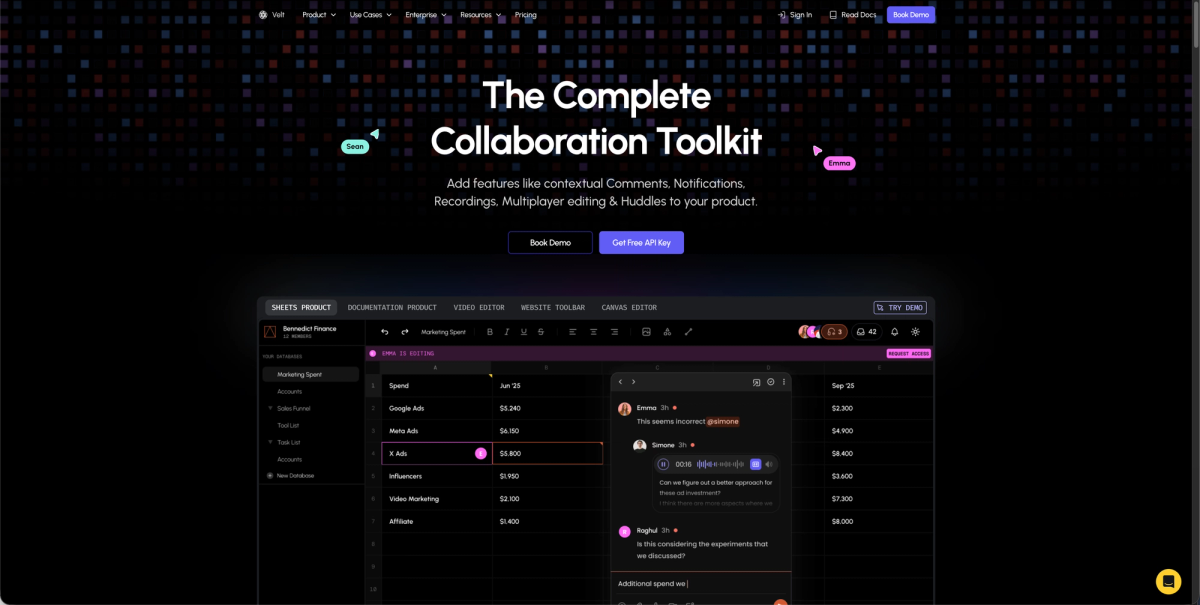
Every bottleneck type covered in this guide shares one root cause: feedback detached from the artifact it describes. That separation creates rework, missed comments, and tool sprawl.
Velt tackles this at the SDK level. Contextual comments bind to DOM element IDs instead of coordinates, so threads stay anchored through layout changes. Organization-level notification configuration means admins set preferences once, not per document. The "assigned to me" filter converts scattered threads into a personal queue. Private visibility tiers keep internal and client-facing feedback in the same asset without mixing them.
The result is a single collaboration layer embedded where content actually lives. No context-switching. No version confusion. Faster cycles, full audit trail.
Final thoughts on speeding up content approvals
Every content review bottleneck traces back to the same root cause: feedback scattered across tools instead of bound to the work. You can't optimize a process that requires people to hunt for context before they can respond. Centralized, contextual comments collapse review cycles without changing how your team actually works. Book a demo if you want to see what structured async review looks like in practice.
FAQ
How do I identify which type of bottleneck is slowing down my review process?
Track two metrics: total cycle time per asset and number of revision rounds. If your cycle time exceeds 30 days or revision rounds consistently hit three or more, you have a process problem. Single-editor bottlenecks show content stuck "under review" with the same person; revision loops produce vague feedback with no resolution criteria; sequential chains show long elapsed time despite fast individual reviews; quality ambiguity results in inconsistent approvals between stakeholders.
When should I use real-time co-editing versus async commenting for content review?
Use real-time co-editing in three situations: rapid iteration where even an hour's delay compounds problems, live disambiguation where a five-second clarification prevents a full revision cycle, and final-hour reviews where a locked document creates an artificial queue. For most structured handoffs and feedback that doesn't require immediate back-and-forth, async commenting is faster because it removes scheduling overhead.
Can internal team feedback and client-facing comments exist in the same review workflow?
Yes, through visibility scoping. Private comments support three tiers: public (visible to everyone with document access), organization-only (visible only to your team), and private (visible only to the author). This lets compliance teams annotate sensitive documents, agencies flag internal pricing concerns, or legal teams add notes without exposing those threads to external stakeholders - all within the same asset and workflow.
What's the difference between blocking and non-blocking approvals in parallel review?
Blocking approvals genuinely gate the next step: compliance, legal, final publish clearance. Non-blocking input is valuable feedback that doesn't hold up progress, like brand preference or stakeholder opinions. Give non-blocking reviewers access at the same time as blocking ones so their comments get considered during revision instead of forcing a sequential chain that artificially extends your cycle time.
How does element-based comment binding prevent feedback from getting lost during layout changes?
DOM-aware commenting ties threads to specific element IDs instead of pixel coordinates. When layouts reflow or components re-render, coordinate-based systems lose their anchoring and comments float to the wrong location. Element-bound comments stay attached to the correct UI component automatically, so reviewers and creators always share the same reference point when opening a thread.