


How to Add an Audit Trail to Your SaaS Product (May 2026)
Learn how to add audit trails to your SaaS product in May 2026. Complete guide covering immutable logging, compliance, and implementation patterns.
Your SaaS product needs an audit trail, and you're staring at weeks of engineering work you didn't budget for. The requirements sound simple at first: log who did what and when. Then you talk to your auditor and realize they want immutable records, cryptographic proof that nothing changed, retention policies that span years, and a UI where users can actually query the logs. Rolling your own means building append-only storage, hash chains, query interfaces, and compliance-ready exports before you've logged a single event that matters. Velt's review and approval infrastructure captures audit trails automatically, so you ship with compliance-ready logging on day one.
TLDR:
- Audit trails log who changed what and when in your app with immutable, tamper-proof records.
- SOC 2, HIPAA, and GDPR require audit logs; regulators expect non-repudiation, beyond basic logs.
- Approval workflows need audit trails tracking every state change, reviewer, and timestamp.
- Velt provides audit trail infrastructure as part of its review and approval SDK.
What an Audit Trail Is and Why Your SaaS Product Needs One
An audit trail is a time-ordered, immutable record of every action taken inside your app. Who changed what, when, and from what previous state. For SaaS products handling approvals, financial data, or multi-user workflows, this isn't optional infrastructure. Regulators expect it. Enterprise buyers ask for it in security reviews. And when something breaks, it's the first thing your support team reaches for.
The gap between "we log some events" and a real audit trail SaaS implementation is wider than most teams expect. A proper audit log is tamper-proof, queryable, and surfaced directly in your UI where users can see it.
Core Components of an Effective SaaS Audit Trail
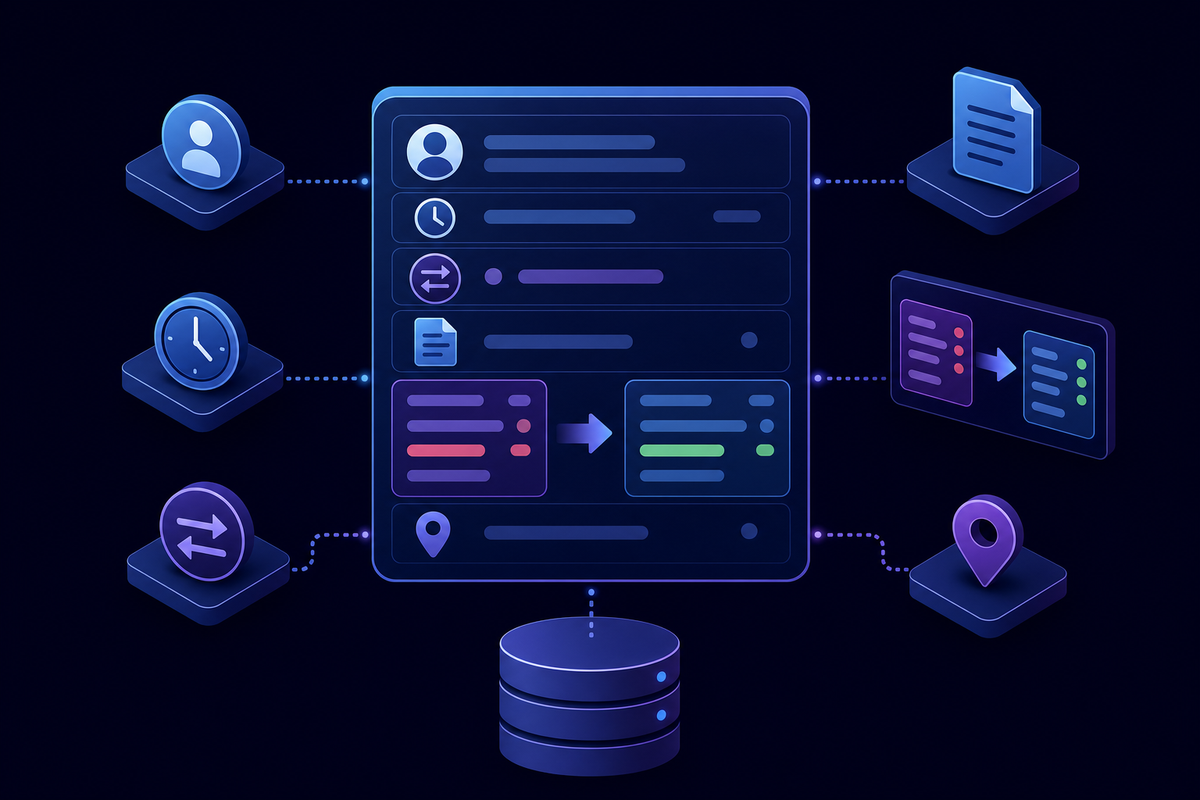
Every useful audit log captures the same core fields. Miss one and you end up with a record that's technically complete but practically useless when an enterprise buyer asks, "who approved this and when?"
The minimum viable event schema:
- User identity (ID, name, role) so you can trace actions back to a specific person, beyond the session.
- Timestamp in UTC with millisecond precision, because ordering matters in approval workflows.
- Action type (created, edited, deleted, approved, rejected) as a controlled vocabulary, not a free-text field.
- Resource identifier that points to exactly what was acted on.
- Before and after state so you can reconstruct what changed, beyond knowing that something changed.
- IP and session context for security investigations.
Schema discipline separates thorough logging from noise. Raw payloads with no structure become unqueryable at scale.
Compliance Requirements Driving Audit Trail Adoption
Regulatory pressure is the most common reason engineering teams get a ticket for "add audit logging" in their sprint. SOC 2 Type II requires audit trails that log access to sensitive data. HIPAA mandates audit controls for any system touching protected health information. GDPR gives users the right to know what happened to their data and when.
The bar has gotten higher. Auditors now ask for tamper-evident logs, beyond basic logging. That distinction matters: a mutable database table isn't going to satisfy a SOC 2 auditor who wants proof nobody quietly deleted a record.
Build this yourself and you're looking at weeks of work.
Building Immutable Audit Logs: Why Tamper Resistance Matters
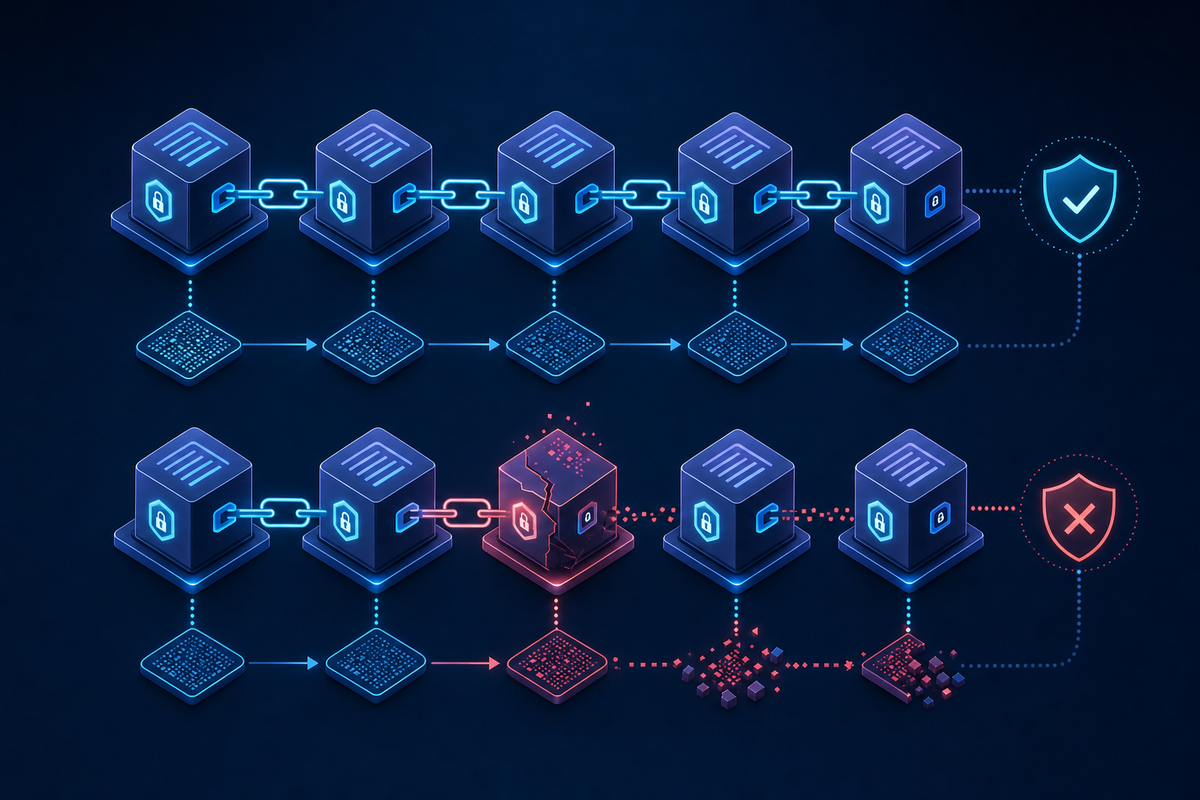
The difference between a log and an audit trail is provability. Regular app logs are mutable rows you can silently edit after the fact. An audit trail has to prove nothing changed since the event was written. Auditors have a name for this property: non-repudiation and three patterns deliver it:
- Append-only storage: INSERT only, no UPDATE or DELETE. A solid starting point, but a DBA with direct database access can still alter records.
- Cryptographic hash chains: each record includes a hash of the previous entry. Alter anything and the entire chain breaks, making tampering detectable.
- WORM storage: AWS S3 Object Lock, Azure Immutable Blob Storage. Modification is blocked at the storage layer, with no override path.
Blockchain-based audit logs come up in these conversations. They're rarely the right call for SaaS. Hash chains plus WORM storage gets you the same non-repudiation at a fraction of the infrastructure cost.
What Events to Track in a SaaS Audit Trail
Most SaaS products need to track three categories of events.
- The first is user actions: logins, logouts, failed authentication attempts, password changes, and permission updates. These are the bread and butter of any access audit.
- The second is data changes: record creation, edits, deletions, and exports. For each change, you want the before state, the after state, who made it, and when.
- The third is workflow events: approval submissions, rejections, status transitions, and comment activity. These matter most in audit trail approval workflow contexts, where a regulator or internal reviewer needs to reconstruct a decision.
Technical Implementation Patterns for Audit Trails
Audit trail architecture breaks down into three patterns: event sourcing, change data capture, and append-only storage with optional hash chaining. Each has real tradeoffs worth knowing before you write a line of code.
Event Sourcing vs. Change Data Capture
Event sourcing logs intent: "user approved document." Change data capture (CDC) logs state diffs at the database level. CDC is easier to retrofit onto an existing app, but it misses application-level context like who triggered an action or why. Event sourcing gives you richer logs but requires architectural buy-in upfront.
Where Immutability Actually Lives
Append-only tables in Postgres get you most of the way there. For stricter compliance needs, consider write-once object storage or cryptographic hash chaining so records can't be altered without detection.
| Implementation Approach | Time to Ship | Immutability Model | Compliance Readiness | Query Interface | Maintenance Burden |
|---|---|---|---|---|---|
| Custom Build (Event Sourcing) | 6-12 weeks for basic implementation, additional time for UI and query tooling | Requires manual implementation of append-only storage, hash chains, or integration with WORM storage services | Schema and retention policies must be designed and validated against audit requirements | Build your own API endpoints, filtering logic, and UI components to surface records | Ongoing maintenance for schema migrations, storage scaling, and compliance updates |
| Custom Build (Change Data Capture) | 2-4 weeks to retrofit CDC onto existing database | Database-level logging with append-only tables, limited tamper protection without additional work | Captures state diffs but misses application context like user intent and workflow state | Raw database records require transformation layer to become queryable by business users | CDC pipeline maintenance, handling schema changes, filtering noise from high-frequency events |
| Velt SDK | Same day integration, audit logging starts automatically with VeltProvider setup | Immutable by design, records cannot be edited or deleted after creation | Pre-built for SOC 2 and compliance use cases, captures user identity, timestamps, and full state context | REST API and built-in UI components for filtering by document, user, or time range | No maintenance required, updates and compliance features ship automatically |
Performance and Scalability Considerations
Synchronous audit logging is the fastest way to add latency you didn't budget for. Every event that writes to the database inline with the user's request adds round-trip time. At low volume it's invisible. At scale, it compounds. The fix is straightforward, though: decouple logging from the request path. Write events to an in-memory queue or message broker (Kafka, SQS, Redis Streams), then flush asynchronously. Users get fast responses; your audit system gets everything it needs, slightly delayed.
Two patterns worth building in early:
- Batching: group writes into bulk inserts on a configurable interval instead of one INSERT per event. Velt's activity log system uses configurable debounce timing for exactly this reason.
- Storage tiering: keep hot recent events in a queryable store and archive older data to cheap object storage. In practice, the vast majority of compliance queries target recent activity instead of records from years prior, so there's no reason to pay primary database pricing for data that rarely gets touched.
High-frequency events like presence changes and cursor movements can overwhelm a log table fast. Sample or debounce these instead of writing every tick.
Audit Trail Storage and Retention Best Practices
Logs are only as trustworthy as the infrastructure storing them. A few decisions made early in your architecture will determine whether your audit trail holds up during a compliance review or falls apart under scrutiny.
Storage Options
Where you store logs shapes both durability and query performance. Most teams land on one of three approaches:
- A dedicated append-only table in your primary database works well for smaller products where audit queries run infrequently. A Postgres table with an INSERT-only policy and a
CHECKconstraint blocking updates is a solid starting point. Index on(document_id, created_at)and you can answer most compliance queries without a separate store. The tradeoff: audit queries compete with your production workload for I/O, and at millions of rows per day, table bloat becomes a real problem. - A separate time-series or columnar store (TimescaleDB, ClickHouse, BigQuery) scales better once log volume grows into the millions of rows. Columnar compression cuts storage costs on repetitive event data, and time-range queries that would crawl on a row store run in seconds. The cost is additional overhead: you now manage a second database, a write pipeline between them, and schema consistency across both.
- An immutable log service with write-once semantics gives you the strongest tamper-evidence story for compliance-heavy industries. AWS CloudTrail, Azure Monitor, or a purpose-built audit log SaaS stores events in WORM-style storage where deletion is blocked at the infrastructure layer. You get non-repudiation without building it yourself, but you also hand off query flexibility and accept per-event pricing that compounds fast at scale.
Retention Policies
How long you keep records depends on your compliance obligations. SOC 2 doesn't mandate a specific retention period, but 12 months is a common baseline that most auditors expect to see; your auditor may ask for more depending on the scope of your controls. HIPAA requires six years for certain documentation under §164.316(b)(2)(i), measured from the date of creation or the last effective date. Build your retention periods into the schema from day one so you're not migrating data later.
Soft deletes with a hard expiration job are a clean pattern here. You mark records inactive, but they stay queryable until the retention window closes.
Approval Workflow Audit Trails: Tracking Review and Sign-Off
Generic audit logs capture system events. Approval workflows demand something more specific: every state transition needs a named decision-maker, a timestamp, and the context that existed at the moment of sign-off. When a financial document moves from "pending" to "approved," the audit trail should answer who approved it, what version they reviewed, whether objections were raised before sign-off, and whether any escalation steps were skipped. Without that chain of custody, you have a record that something changed, not a record of the decision itself.
Three scenarios make this concrete:
- Compliance audits: regulators reviewing FP&A approvals or legal signoffs need an unbroken chain from draft to final decision.
- Dispute resolution: "who approved this and when" needs an exact answer, not an approximation from someone's memory.
- Operations reviews: if an approval took 14 days, the log should show where it stalled and who was responsible.
Content production, financial planning, and legal tools all share this pattern. The approval state is the artifact. Everything else is context.
Adding Audit Trail Infrastructure with Velt
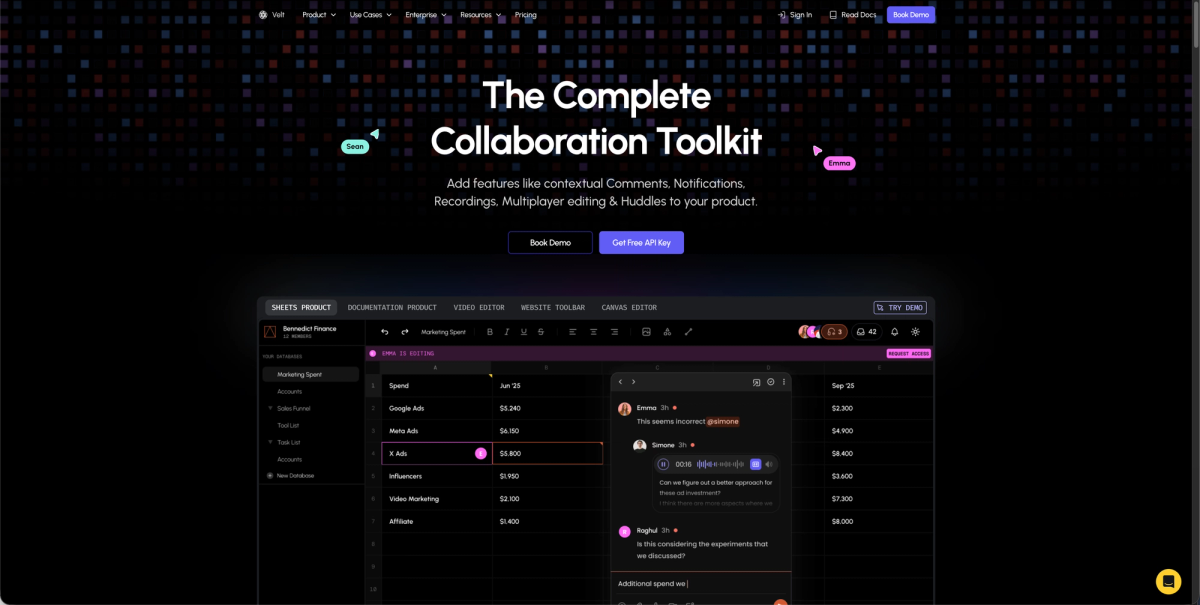
Velt ships audit trail infrastructure as part of its review and approval infrastructure, so you're not bolting logging on after the fact. Every user action, comment, approval state change, and annotation gets recorded automatically with a timestamp, user identity, and document context. The setup is minimal. Add the VeltProvider, wrap your app, and Velt starts capturing events. You can query the audit log programmatically, filter by document or user, and surface records directly in your UI.
Velt stores logs as immutable records. Entries can't be edited or deleted after the fact, which matters for compliance use cases like SOC 2 or internal controls.
Final Thoughts on Audit Logging for Compliance
The gap between basic event logging and a compliance-ready audit trail SaaS system is bigger than most teams expect. You need immutability, retention policies, and queryable records that auditors will actually accept. Book a demo to see how Velt handles this without the engineering overhead.
FAQ
Audit trail SaaS vs custom logging infrastructure?
Velt ships immutable audit trails out of the box as part of its review and approval infrastructure, capturing every comment, approval state change, and user action automatically. Custom logging requires weeks of engineering work to build append-only storage, schema discipline, queryable APIs, and UI components to surface the records.
How do I build an immutable audit log SDK into my SaaS product?
Add Velt's SDK to your app, wrap your component tree with the VeltProvider, and audit logging starts automatically. Every user action gets recorded with timestamp, user identity, resource context, and before/after state. The logs are immutable by design and queryable via REST API or surfaced directly in your UI.
What's the difference between audit trail approval workflow tracking and regular event logs?
Approval workflow audit trails capture decision context, beyond state changes. You get who approved what version, what objections were raised before sign-off, and whether escalation steps were followed. Regular event logs tell you something changed. Approval audit trails tell you who decided and what they reviewed.
Can I add audit trails without slowing down my app?
Yes. Write audit events to an in-memory queue or message broker like Kafka or SQS, then flush asynchronously. Users get fast responses while your audit system captures everything, slightly delayed. Velt uses configurable debounce timing for high-frequency events to prevent log table bloat.
When should I use hash chains vs append-only storage for audit logs?
Append-only storage prevents accidental edits but a DBA with database access can still alter records. Hash chains make tampering detectable since each record includes a hash of the previous entry. For strictest compliance, combine hash chains with WORM storage like AWS S3 Object Lock where modification is blocked at the infrastructure layer.