

Best Collaboration SDKs in 2026: Ranked by Features and Performance
Compare the best collaboration SDKs in 2026. Review features, pricing, and performance of top platforms like Velt, Liveblocks, and Tiptap for February 2026.
Most developers waste weeks assessing collaboration platforms because the marketing sites all claim to offer real-time features, but the actual capabilities vary wildly. Some give you a full suite of components like comments, presence, and notifications that work across your entire app. Others provide messaging infrastructure where you'll build every collaboration feature from scratch. We broke down five leading SDKs to show you exactly what ships ready to use and what requires custom development work.
TLDR:
- Collaboration SDKs add real-time features like commenting, multiplayer editing, and presence to apps without months of custom development.
- Velt provides 25+ components with DOM-aware positioning, permission inheritance, and 45+ data regions on a 99.999% SLA.
- Liveblocks and Tiptap require building your own folder structures and permission logic for multi-document apps.
- Velt bills per Monthly Active Collaborator (users who actually collaborate) vs. per-room pricing that scales with document count.
- Velt offers Agent Skills that let AI coding assistants implement features through prompts without reading docs.
What is a Collaboration SDK?
A collaboration SDK is a developer tool that lets you embed real-time collaborative features into your web or mobile app. Instead of spending months building commenting systems, live cursors, or notification infrastructure from scratch, you drop in an SDK that provides pre-built APIs and UI components for these capabilities. These SDKs handle the backend infrastructure like WebSockets, conflict resolution, and data sync while providing frontend components such as comment threads, presence indicators, and notification panels that you can customize to match your app's design. Common features include in-app commenting and annotations, multiplayer editing where multiple users can edit the same content simultaneously, live presence indicators showing who's online, cursor tracking, and notification systems that alert users to mentions or updates.
How We Ranked Collaboration SDKs
We assessed collaboration SDKs based on publicly available documentation, pricing structures, and architectural disclosures. Given that collaboration software spending is projected to grow substantially over the next decade, selecting the right SDK has long-term implications for your product roadmap. Our criteria focused on six key dimensions:
- Feature completeness: Does the SDK provide a full suite of collaboration capabilities (commenting, presence, multiplayer editing, notifications) or just low-level primitives that require custom development?
- Architecture approach: Is it a high-level framework that understands your app's hierarchy and permissions, or a primitive that leaves folder structures and cross-document features to you?
- Enterprise readiness: What security standards, compliance certifications, data residency options, and SLA commitments does it offer?
- Developer experience: How extensive is the documentation? Can you integrate quickly, or does it require weeks of custom backend work?
- Pricing model: Does billing align with user value (active collaborators) or infrastructure usage (open connections/rooms)?
- Flexibility: Can you customize UI components, self-host data, and integrate with different frameworks?
Best Overall Collaboration SDK: Velt
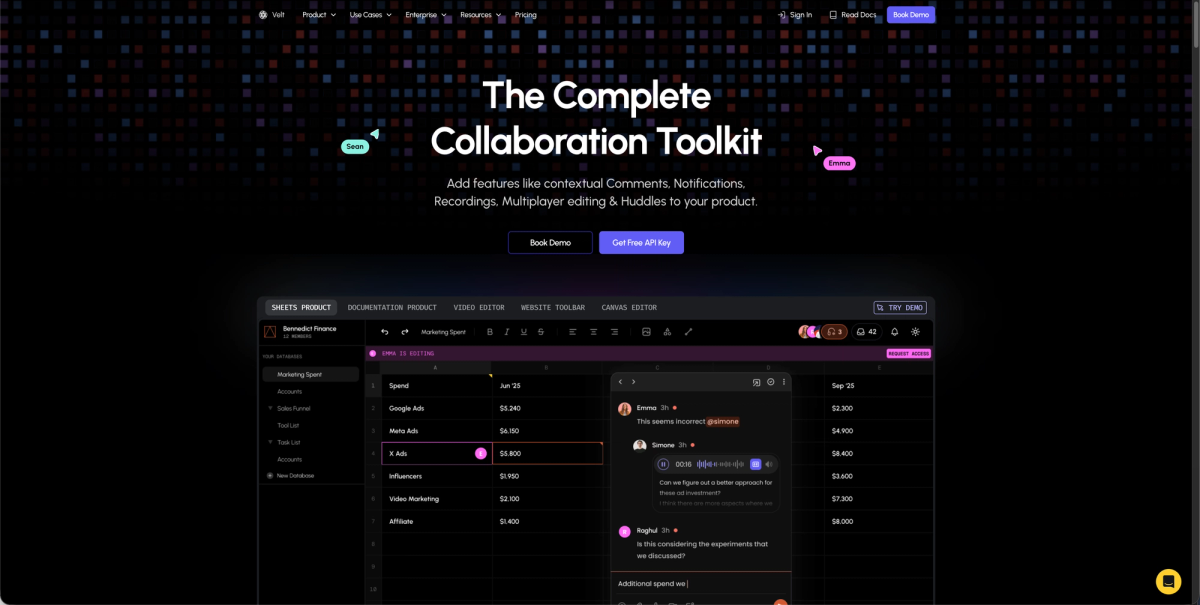
Velt is a collaboration SDK designed for B2B SaaS applications that need real-time features without long development cycles. The platform provides over 25 pre-built components including contextual in-app comments with DOM-aware positioning, multiplayer editing through CRDT technology, real-time presence indicators, voice and video huddles, screen recording with AI transcription, and a unified notification system that aggregates activity across your entire application.
The architecture operates as a high-level framework instead of a primitive, meaning it understands your application's hierarchy and permissions from day one. Velt supports Organizations, Folders, and Documents using Google Drive-style permission inheritance, which eliminates the need to build folder structures and permission logic yourself. The SDK includes Agent Skills that allow AI coding assistants to implement Velt features through prompts without reading documentation.
Key Features
Velt ships with contextual in-app comments and annotations that bind directly to specific data IDs instead of fragile x/y coordinates. This DOM-aware location system prevents UI drift where comments might float to the wrong place after layout updates or window resizing. The platform provides real-time presence and co-editing capabilities that display when other users are active and allow multiplayer editing of content with visible cursors and selections.
The SDK includes audio/video and screen recording functionality that provides Loom-style recording capabilities integrated directly in your application. Users can record their screen, voice, or webcam to share detailed feedback or walkthroughs asynchronously, with automatic transcription and AI-generated summaries. The huddles feature offers Slack-style audio or video chat functionality that can be launched within the application for quick live collaboration or support.
Velt's notification system keeps users informed of collaboration events through @mentions and alerts, with support for email or Slack/Teams notifications. These notifications are unified across documents, meaning users see activity across the entire organization in a global inbox instead of checking individual files. The platform integrates AI to auto-tag and categorize comments, generate summaries of long comment threads or recordings, and provide a contextual AI copilot for intelligent edits.
Analytics and activity insights provide logs showing which users viewed comments or participated, when they did so, and overall engagement metrics. The security model offers a dual-mode approach to authorization with sync mode for simpler setups or a real-time permission provider where the backend remains the absolute source of truth. Permission changes take immediate effect without waiting for token refreshes, and native inheritance cascades permissions from Organization to Folder to Document levels.
Limitations
Velt requires using their managed hosting infrastructure for the real-time components, though data self-hosting is available for compliance needs. The framework approach means less granular control compared to building custom implementations on top of primitives, though this tradeoff eliminates months of backend development work.
The SDK focuses on collaboration features for web applications, so teams building native mobile apps or highly specialized real-time experiences outside of standard collaboration patterns may need to assess whether the pre-built components align with their specific requirements.
Bottom Line
Velt works best for teams building multi-document B2B SaaS applications like project management tools, CRM platforms, analytics dashboards, or design software where users need to collaborate across complex organizational structures. Product teams who want a complete collaboration suite that ships ready to use without custom backend development will find the framework approach valuable. Engineering teams building applications with folders, workspaces, and permission hierarchies benefit from Velt's native understanding of organizational structures, while those building single-canvas experiences with simpler permission models might consider alternatives.
Liveblocks
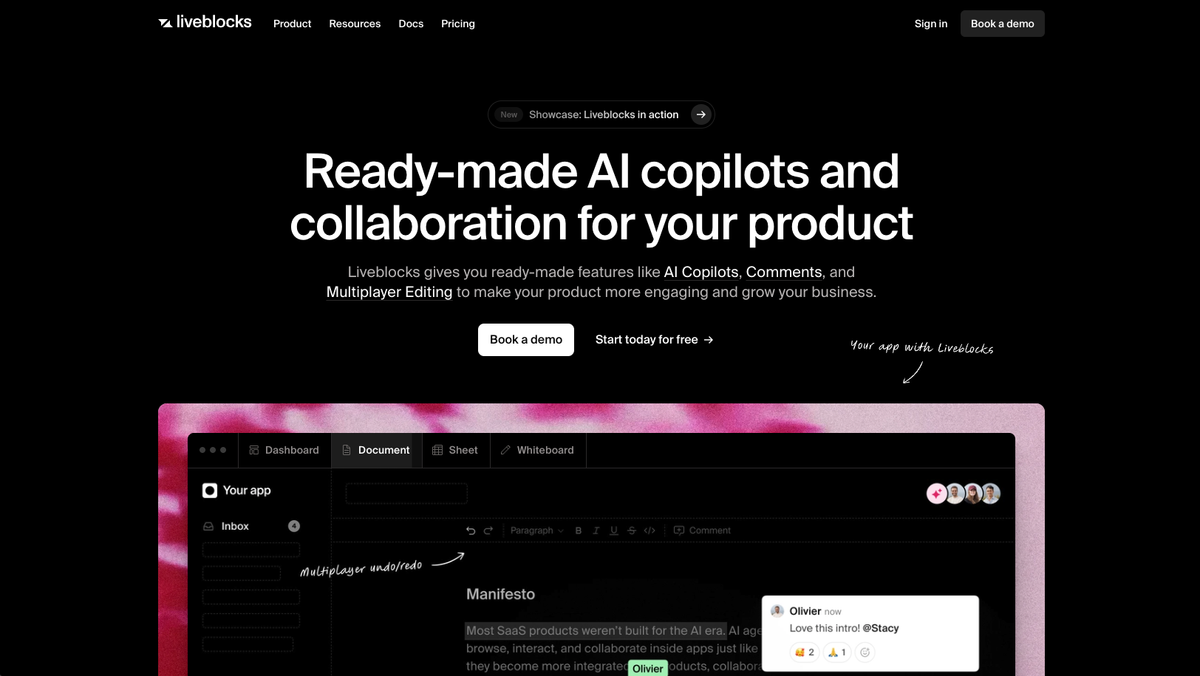
Liveblocks provides real-time infrastructure built on room-based primitives where each collaborative session operates as an isolated socket connection. The SDK includes presence tracking, storage primitives for shared state, and a Comments API, but requires developers to build their own folder hierarchies and permission inheritance logic. Liveblocks works well for single-canvas apps like whiteboards or simple document editors where the experience lives within one collaborative session.
Key Features
- Real-time presence and cursor tracking with WebSocket infrastructure for showing who's online
- Storage primitives for shared state synchronization across multiple users
- Comments API with basic threading functionality for leaving feedback
- Notification system for collaboration events like mentions and replies
- Yjs-based CRDT for conflict-free multiplayer editing
Limitations
- No native support for hierarchical data models or folder structures across multiple documents
- Requires custom engineering for multi-document B2B apps to build permission cascading and cross-room features
- Per-room pricing model charges whenever someone opens a document, even without collaboration activity
- Limited to 2 data regions compared to broader geographic coverage from enterprise-focused competitors
- JWT-based permissions don't update in real-time when user roles change mid-session
Bottom Line
Liveblocks is best used for teams building single-canvas applications like whiteboards, design tools, or simple document editors where collaboration happens within one isolated session. Development teams with strong infrastructure expertise who want granular control over custom implementation and don't need cross-document features like unified inboxes or hierarchical permissions will find the most value in this approach.
Tiptap
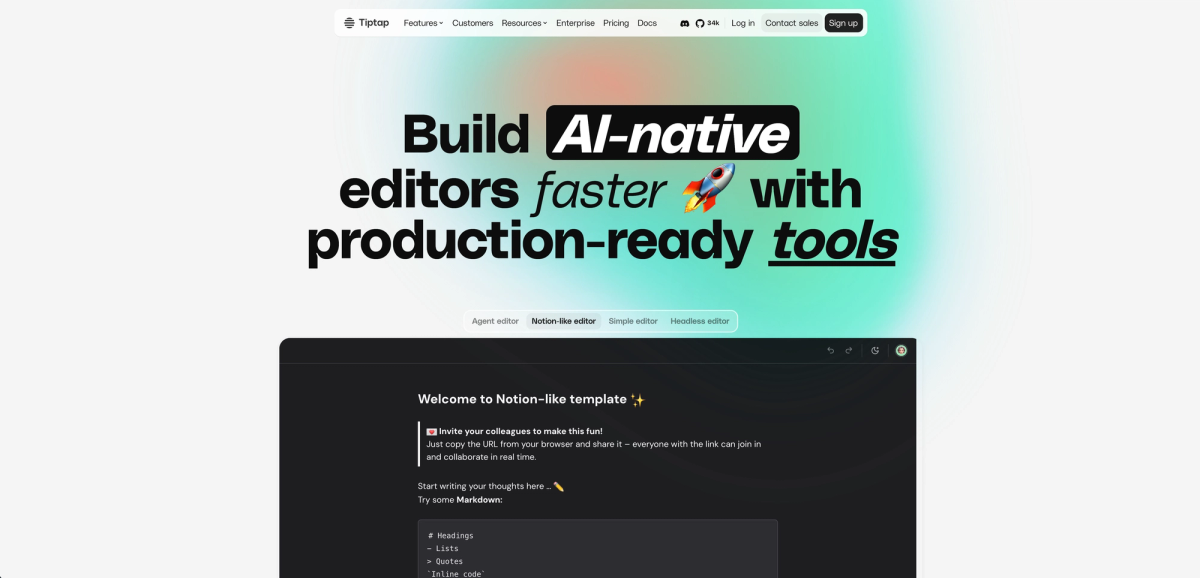
Tiptap is a text editor framework that offers a cloud sync service for rich text editing. Tiptap Cloud focuses on document-level collaboration within the editor component itself, not application-wide collaborative features. The service provides real-time synchronization for text content but lacks broader collaboration tools like presence indicators or cross-app notifications.
Key Features
- Rich text editor with collaborative editing via Yjs for real-time synchronization across multiple users working on the same document
- Real-time synchronization for text content that handles conflict resolution and maintains document consistency
- Basic commenting within editor context, allowing users to leave feedback directly on text selections
- AI-powered editing features scoped to text, including content suggestions and automated formatting
- Extensible architecture that allows developers to build custom editor extensions and plugins
Limitations
- No real-time cursors or presence indicators outside the editor component
- Lacks cross-application notification systems for collaboration events
- Does not provide data self-hosting options for customers with compliance requirements
- Limited to text editing use cases without support for other content types or collaboration modes
- Requires separate solutions for features like video huddles, screen recording, or unified activity feeds
Bottom Line
Tiptap is best used for development teams building text-heavy apps like document editors or content management systems where collaboration needs are limited to the editing surface. Product teams who need only rich text editing capabilities with basic real-time synchronization and don't require broader collaboration features across their entire application will find this solution appropriate.
Ably
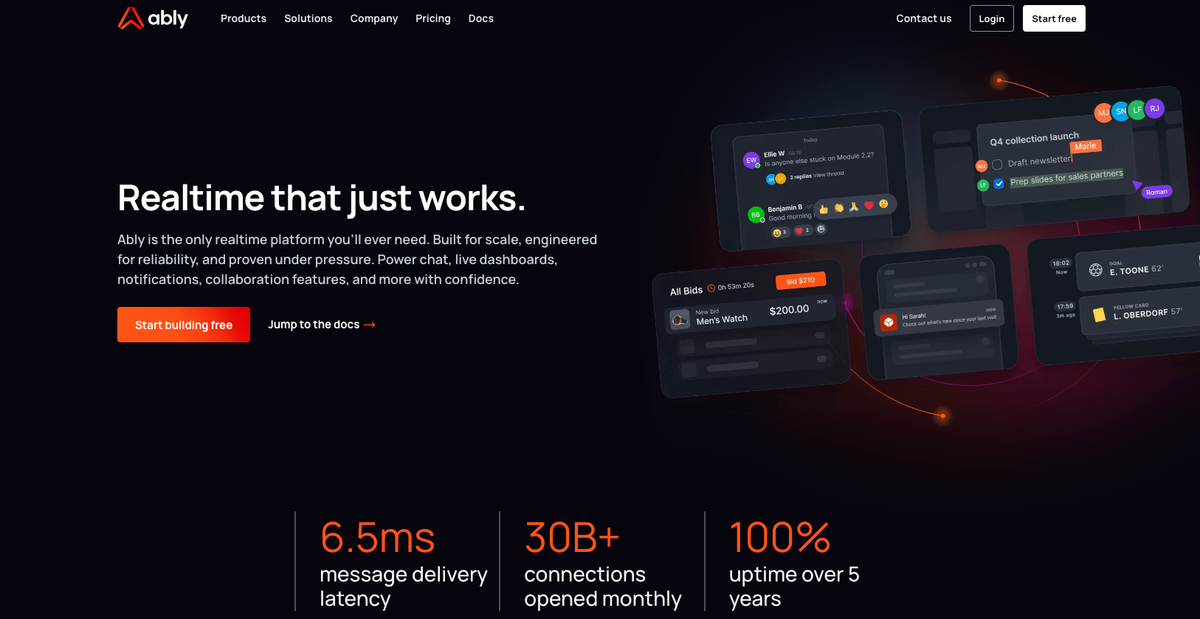
Ably is a real-time messaging infrastructure that powers WebSocket connections at scale, serving over a billion devices monthly. While powerful, it provides the underlying transport layer for real-time data delivery. Developers must build all collaboration features on top of it themselves.
Key Features
- Pub/sub messaging infrastructure with guaranteed delivery for reliable real-time communication
- WebSocket and HTTP streaming protocols for flexible connection management across devices
- Global edge network for low-latency connections across multiple regions
- SDKs for multiple programming languages and frameworks to support diverse tech stacks
- Built-in connection state recovery and automatic reconnection handling for resilient applications
Limitations
- No pre-built collaboration features like comments, presence, notifications, or editing components
- Requires building custom real-time features from scratch on top of the messaging layer
- No UI components provided, meaning all user-facing elements must be developed in-house
- Lacks native support for collaborative data structures like CRDT for conflict resolution
- Does not include permission inheritance or hierarchical data models for multi-document applications
Bottom Line
Ably is best used for engineering teams with strong infrastructure expertise who want to build custom real-time features from scratch and need only the reliable messaging transport layer without any pre-built UI components. Development teams building highly specialized real-time applications where existing collaboration SDKs don't fit their unique requirements will find this low-level approach most suitable.
Knock
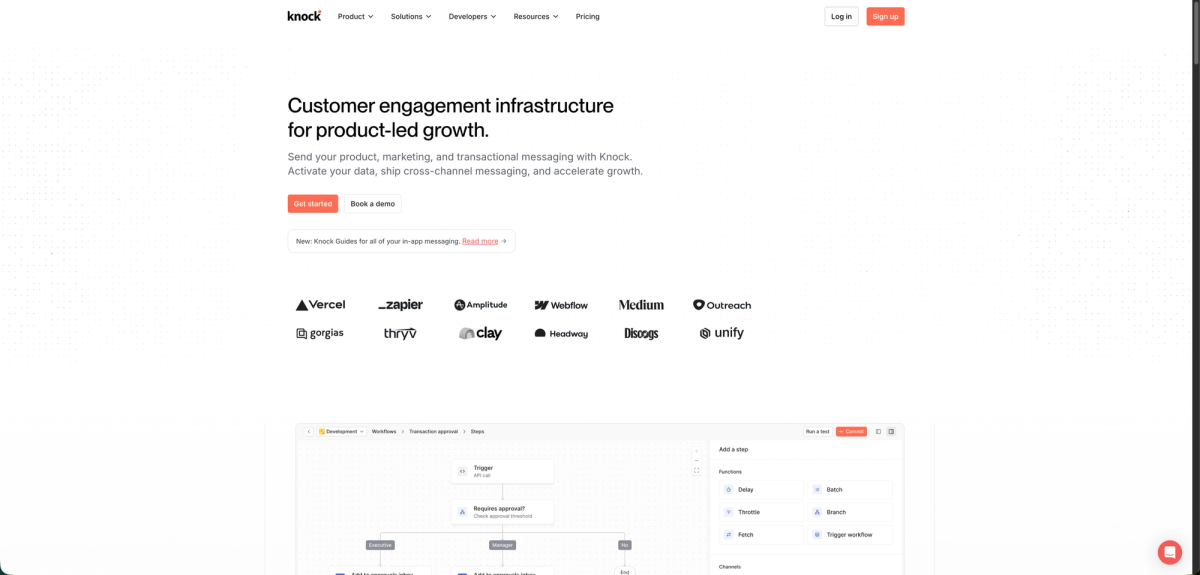
Knock is a notification infrastructure provider that offers APIs and components for building cross-channel notification experiences. Unlike Velt's complete collaboration stick, Knock focuses exclusively on notification workflows and delivery systems without real-time collaborative features like commenting or presence.
Key Features
- Workflow-based notification routing across email, SMS, push, in-app, and Slack channels with customizable triggers
- Batch and digest functionality to prevent notification fatigue by grouping related alerts
- User preference management API that lets end-users control notification frequency and channels
- Template system with variable support and localization for multi-language notification content
- Notification activity logs and analytics to track delivery rates and user engagement
Limitations
- No collaborative features like in-app commenting, multiplayer editing, or presence indicators
- Lacks real-time synchronization infrastructure for collaborative document editing
- Does not provide video/voice communication tools or screen recording capabilities
- No native support for hierarchical data models or permission inheritance across organizational structures
- Requires separate solutions for core collaboration features, meaning you'll need multiple vendors to build complete collaborative experiences
Bottom Line
Knock works for product teams focused exclusively on notification delivery systems who need workflow-based routing for transactional alerts, marketing messages, and user preferences. Engineering teams building notification-heavy products like SaaS dashboards or mobile apps who don't need real-time collaboration features will find this notification-first approach suitable. However, teams building collaborative B2B applications will need to integrate additional SDKs for commenting, presence, and multiplayer editing features.
Feature Comparison Table of Collaboration SDKs
When assessing collaboration SDKs for your app, comparing feature sets helps identify which solution matches your technical requirements. Each SDK takes a different approach to real-time collaboration, from focused rich-text editing tools to full-stack collaboration suites. The table below breaks down key capabilities across five leading options:
| Feature | Velt | Liveblocks | Tiptap | Ably | Knock |
|---|---|---|---|---|---|
| In-App Comments | Yes | Yes | Editor only | No | No |
| Multiplayer Editing (CRDT) | Yes | Yes | Yes | No | No |
| Real-Time Presence | Yes | Yes | No | No | No |
| Video Huddles | Yes | No | No | No | No |
| Screen Recording | Yes | No | No | No | No |
| Notification System | Yes | Yes | No | No | Yes |
| Permission Inheritance | Yes | No | No | No | No |
| Data Self-Hosting | Yes | No | No | No | No |
| DOM-Aware Location Binding | Yes | No | No | No | No |
| Agent Skills for AI Integration | Yes | No | No | No | No |
| Pricing Model | Per Collaborator | Per Room | Per Document | Per Message | Per Event |
Why Velt is the Best Collaboration SDK
Velt solves the core challenge B2B SaaS teams face: shipping real-time features without months of backend work. The unified collaboration market will hit $145 billion by 2032, making this a long-term architectural choice. Where Liveblocks requires building folder trees and permissions yourself, Velt handles app hierarchy from day one. Where Tiptap focuses only on editors, Velt spans your entire app. Where Ably and Knock solve narrow infrastructure problems, Velt ships 25+ components that work together. With 63% of teams citing integration complexity as their biggest barrier, billing by active collaborators keeps costs predictable as your document library grows.
Final Thoughts on Finding Your Collaboration SDK
Most B2B apps need the same collaboration features, but building them yourself means reinventing solved problems. The best collaboration SDK for your team depends on whether you want infrastructure primitives or ready-to-ship components. If your roadmap includes comments, notifications, and real-time editing across multiple documents, compare setup time against your actual shipping timeline. Grab a demo to see what's possible without writing backend infrastructure.
FAQ
How do I choose the right collaboration SDK for my app?
Start by identifying your scope: if you need only rich-text editing, Tiptap works. For full-stack collaboration (comments, presence, notifications, recordings), choose Velt. If you're building a single-canvas whiteboard and want to code custom features yourself, consider Liveblocks or Ably.
Which collaboration SDK is better for multi-document B2B apps with complex permissions?
Velt handles hierarchical apps with folders and permission inheritance out of the box. Liveblocks requires you to build folder trees, cross-document search, and permission cascading yourself. Expect months of backend work for multi-document products.
What's the difference between billing per collaborator versus billing per room?
Billing per collaborator (Velt) charges only when users perform collaboration actions. Billing per room (Liveblocks) charges whenever someone opens a document, even if they never comment or edit. In B2B apps, document counts grow 20x faster than user counts, making room-based pricing more expensive at scale.
Can I self-host collaboration data to meet compliance requirements?
Velt supports data self-hosting, allowing you to store collaboration data in your own cloud while Velt manages the real-time infrastructure. Liveblocks keeps all data on their infrastructure. Ably and Knock offer global infrastructure but don't provide data isolation in your environment.
How long does it take to implement a collaboration SDK?
Velt ships with pre-built UI components and can be integrated in hours to days. Liveblocks provides primitives requiring weeks to months of custom development for features like notifications and permission systems. Ably and Knock are infrastructure layers requiring you to build all collaboration features from scratch.