


Knock Alternatives: Best Notification APIs (January 2026)
Compare top Knock alternatives for notification APIs in 2026. Discover Velt's unified SDK combining notifications with comments, presence, and real-time collaboration features.
You're researching Knock competitors because the orchestration layer solves one problem but creates others. Knock manages when and how to send notifications, but you still need separate accounts with SendGrid, Twilio, and Firebase. Each provider requires its own configuration, testing, and maintenance. The real friction shows up when your roadmap includes collaboration features like contextual comments, real-time presence, or threaded discussions. Knock's inbox displays alerts, but if users need to discuss content or leave feedback tied to specific UI elements, you're integrating another tool or building it yourself. Let's compare notification SDKs that remove the middleware dependency and platforms that combine notifications with collaboration infrastructure.
TLDR:
- Knock routes notifications across channels but requires separate SendGrid, Twilio, and Firebase accounts for delivery.
- Velt combines notifications with contextual comments, real-time presence, and video recording in one SDK.
- Novu offers open-source notification infrastructure with self-hosting options for teams with engineering resources.
- Knock charges by message delivered while Velt bills only when users actively collaborate, not for connections.
- Velt provides a JavaScript SDK for SaaS apps needing collaboration features beyond basic notification routing.
What is Knock and How Does it Work?
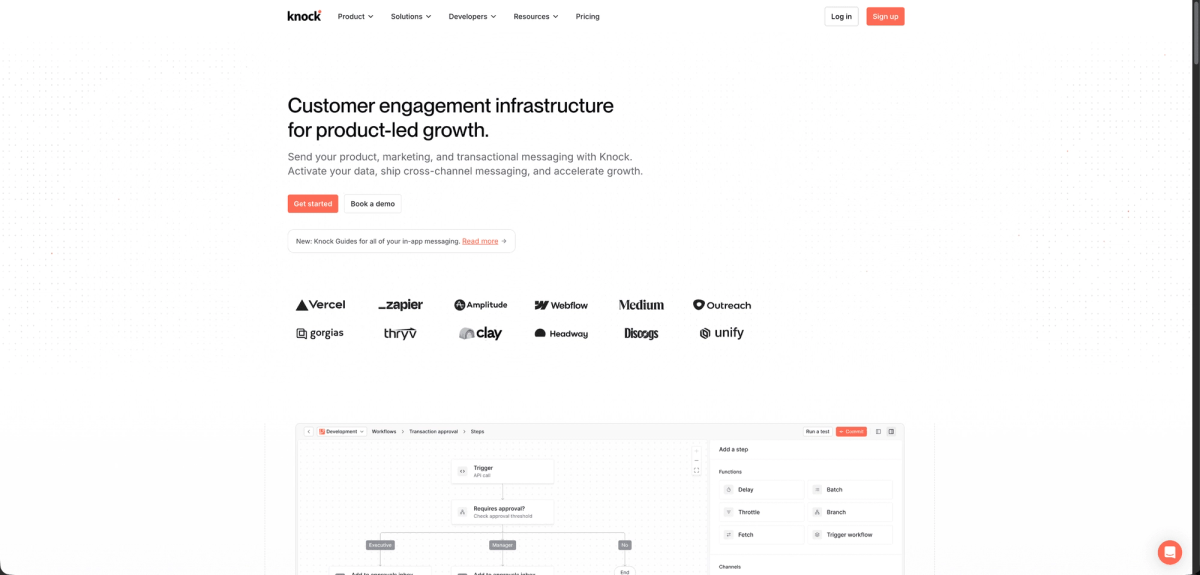
Knock is a notification orchestration API that routes messages across multiple channels from a single workflow. Instead of building separate integrations for email, SMS, push notifications, and in-app alerts, you define notification logic once and Knock handles the distribution.
The core of Knock is its workflow engine. You create triggers in your codebase that fire when specific events occur, like a user completing a purchase or a comment being added. Knock then processes these triggers through configurable workflows where you set batching rules, throttling limits, and delivery preferences. According to research, this orchestration layer helps teams avoid building custom notification infrastructure from scratch. The push notification SDK market alone reached $969 million in 2024 and is expected to grow to $1.46 billion by 2031 at a 6.1% CAGR, showing strong demand for specialized notification infrastructure.
Knock doesn't actually deliver messages itself. It acts as a routing layer that connects to downstream providers like SendGrid for email, Twilio for SMS, and Firebase for push notifications. You still need accounts and relationships with these third-party services. Knock manages the logic of when and how to send, but the actual transmission happens through your existing provider contracts.
The system targets engineering teams at startups and tech companies who need transactional notifications across multiple touchpoints. Knock focuses specifically on the orchestration problem instead of attempting to be an all-in-one notification delivery service.
Why Consider Knock Alternatives?
Knock's workflow engine handles batching, throttling, and multi-channel routing from a single trigger. Its preference management gives end users control over notification delivery, while the template system centralizes message content across channels. For teams routing transactional alerts through existing provider infrastructure, Knock provides value.
But, the architectural constraint is that Knock functions as middleware, not a delivery service. You still need separate accounts with SendGrid for email, Twilio for SMS, and Firebase for push. Each integration requires configuration, testing, and maintenance. When a provider has an outage or API changes, you manage that relationship directly. The hosted inbox displays transactional alerts but lacks contextual collaboration features. If you need comments tied to specific UI elements, real-time presence indicators, or threaded discussions anchored to your app's content, Knock's inbox isn't built for that use case.
Teams assess alternatives when they need more than message routing. If you're building features where users collaborate on documents, annotate dashboards, or discuss specific content in context, you need engagement infrastructure beyond notification delivery.
Best Knock Alternative in January 2026: Velt
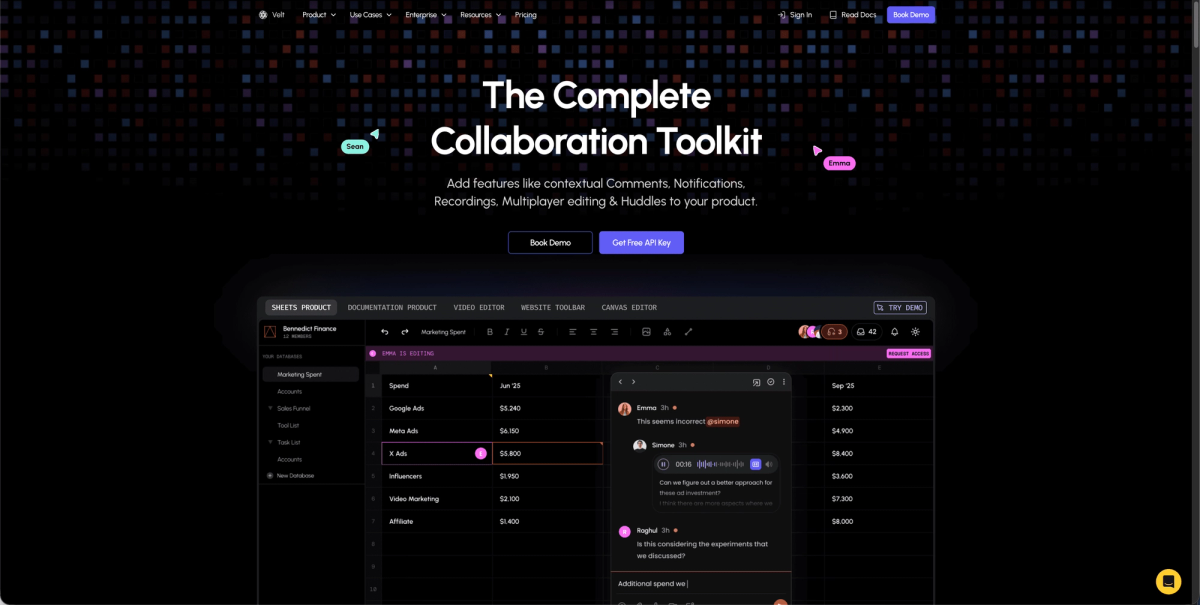
Velt is a JavaScript SDK that combines notifications with a complete collaboration layer including contextual comments, real-time presence, video recording, and live editing. The platform handles document hierarchy and permission inheritance natively, eliminating the need to coordinate multiple provider integrations. Velt delivers notifications as part of an engagement infrastructure instead of as a standalone routing service.
Key Features
- Single SDK combining notifications, comments, presence, recordings, and real-time editing without third-party provider dependencies
- Document hierarchy with native permission inheritance that cascades from Organization to Folder to Document level
- Contextual notifications tied directly to comments, mentions, and activity on specific UI elements or documents
- Data self-hosting with 45+ region support, SOC 2 Type II compliance, and HIPAA BAA availability
- Per-collaborator pricing that bills only when users actively engage with collaboration features
Limitations
- Does not support SMS or push notifications natively, focusing instead on in-app and email channels
- Requires adopting the full collaboration framework instead of just notification routing capabilities
- May be overbuilt for teams needing only basic transactional notification delivery
- Not ideal for simple single-room or ephemeral notification use cases
Bottom Line
Best for SaaS applications where notifications are part of broader collaboration workflows, including products with contextual commenting, multi-document structures, or in-app feedback loops. Teams building collaborative analytics tools, project management platforms, design review software, or any product where users need to discuss content and receive alerts in context will benefit most from Velt's unified approach to engagement infrastructure.
Novu
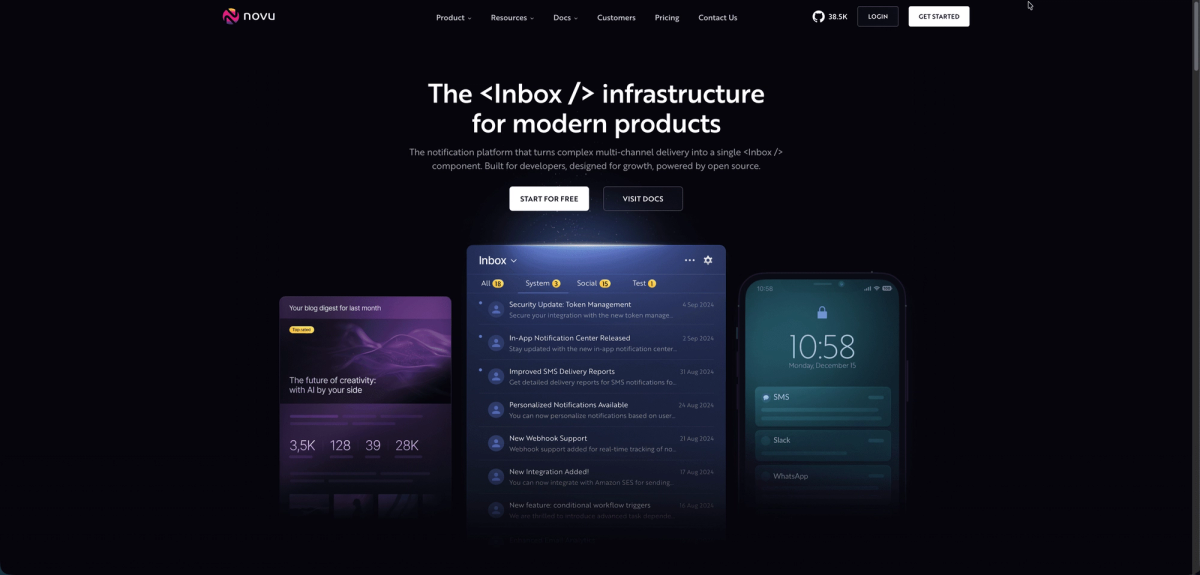
Novu is an open-source notification infrastructure for managing notifications across in-app, email, chat, push, and SMS channels. The system provides workflow automation, digest features for consolidating updates, and preference management. Unlike Velt's collaboration-first approach, Novu focuses specifically on notification delivery workflows with the option to self-host the entire infrastructure.
Key Features
- Open-source infrastructure with MIT license allowing full code access and customization
- Multi-step workflow engine with batching and digest capabilities for consolidating notifications
- Pre-built inbox components for React, Vue, and Angular frameworks
- Self-hosting option for complete infrastructure control and data sovereignty
- Integration with multiple notification providers across email, SMS, push, and chat channels
Limitations
- Self-hosted approach introduces maintenance overhead and requires dedicated engineering resources
- Focuses solely on notification delivery without collaboration features like contextual comments or real-time co-editing
- Requires managing relationships with third-party providers for actual message delivery
- Steeper learning curve for teams without experience managing open-source infrastructure
- Limited out-of-the-box UI components compared to full-featured collaboration platforms
Bottom Line
Best for teams that value open-source flexibility and want to self-host their notification infrastructure, or organizations with engineering resources to customize and maintain an open-source solution. Development teams at tech companies who need full control over their notification stack and have the capacity to manage infrastructure will benefit most from Novu's approach.
Courier
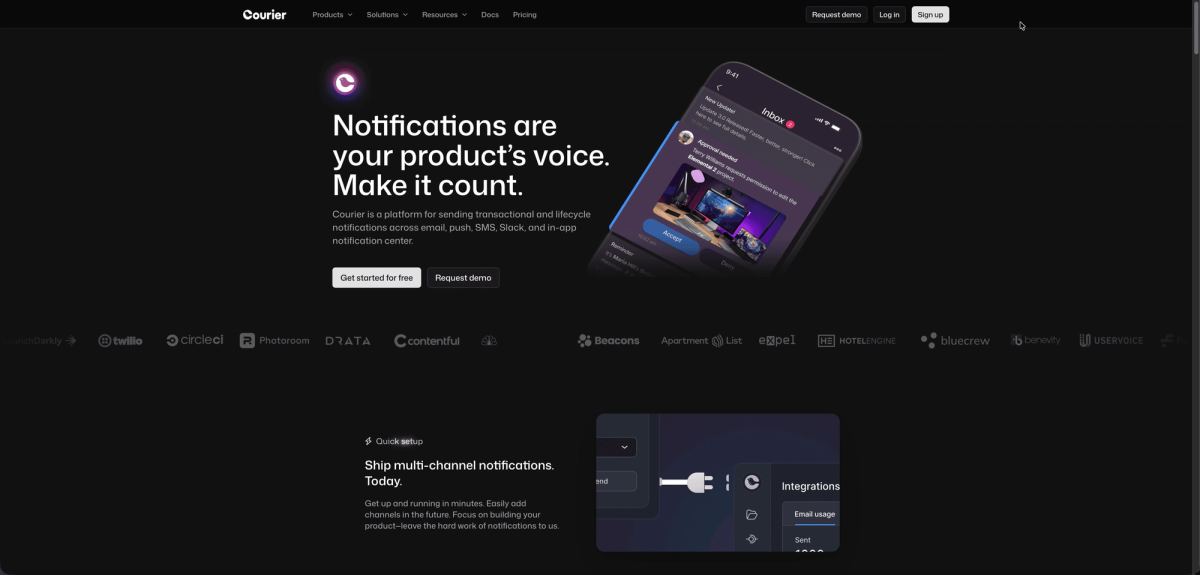
Courier sends transactional and lifecycle notifications across email, push, SMS, Slack, and in-app notification centers. The platform centralizes multiple channels in one API for developers and provides a web studio for non-technical users to design notification templates and flows. Courier functions as middleware that routes messages through third-party providers instead of delivering them directly.
Key Features
- Drag-and-drop notification designer for creating templates without code
- Pre-built inbox components for iOS, Android, React Native, Flutter, and JavaScript
- Visual workflow builder with A/B testing and analytics capabilities
- Integration with 50+ notification providers across multiple channels
- No-code interface allowing design and growth teams to modify templates independently
Limitations
- Functions as middleware requiring separate accounts with third-party providers like SendGrid and Twilio
- Lacks collaboration features beyond basic notifications such as contextual comments or presence
- Setup complexity increases with each additional provider integration needed
- Does not include real-time co-editing or video recording capabilities
- Requires managing multiple vendor relationships for actual message delivery
Bottom Line
Best for organizations where design and growth teams need to create and modify notification templates without engineering involvement, or companies requiring multi-channel notification routing with visual workflow management. Marketing-driven SaaS companies and product teams that favor template flexibility and non-technical user access will benefit most from Courier's no-code approach to notification orchestration.
Feature Comparison: Knock vs Top Alternatives
This table compares key capabilities across Knock, Velt, and the leading alternatives to help teams assess which solution meets their requirements.
| Feature | Knock | Velt | Novu | Courier |
|---|---|---|---|---|
| In-app notifications | Yes | Yes | Yes | Yes |
| Email notifications | Via third-party | Yes | Yes | Yes |
| SMS notifications | Via third-party | No | Yes | Yes |
| Push notifications | Via third-party | No | Yes | Yes |
| Contextual comments | No | Yes | No | No |
| Real-time presence | No | Yes | No | No |
| Video recording | No | Yes | No | No |
| Workflow automation | Yes | Yes | Yes | Yes |
| Pre-built UI components | Yes | Yes | Yes | Yes |
| User preferences | Yes | Yes | Yes | Yes |
| Document hierarchy | No | Yes | No | No |
| Permission inheritance | No | Yes | No | No |
| Data self-hosting | No | Yes | Yes | No |
| Open source | No | No | Yes | No |
| Pricing model | Per message delivered | Per active collaborator | Per notification | Per notification |
Knock and Courier function as routing middleware that requires third-party provider integrations for message delivery. Novu offers similar workflow orchestration with the option to self-host the infrastructure. Velt combines notifications with collaboration features like contextual comments, presence, and recording capabilities. The system handles document hierarchy and permission inheritance natively.
Why Velt is the Best Knock Alternative
Knock handles notification orchestration, but teams often need notifications because users are collaborating in their app. When someone comments on a dashboard or assigns a task, the notification is just the alert. The real value is in the conversation and context.
Velt treats notifications as one part of a complete engagement layer. You get contextual comments that anchor to UI elements, live presence, video recording for async feedback, and notifications tied directly to those interactions. This eliminates integrating Knock for notifications, another vendor for comments, and building custom presence logic.
Knock requires configuring workflows, managing provider credentials for SendGrid and Twilio, and building your own comment and collaboration UI. Velt ships with pre-built components for comments, notifications, presence, and recordings that work together out of the box. The SDK understands your document structure and permissions, so notifications automatically inherit the right access controls.
Velt works for teams shipping collaborative SaaS products where users need to discuss content, review work, and stay informed in context. If your roadmap includes commenting, feedback loops, or multi-user coordination, you need infrastructure beyond message routing. Velt delivers that in a single SDK with pricing tied to collaboration value instead of infrastructure usage metrics.
Final Thoughts on Selecting Notification Infrastructure
Most teams start with notifications and quickly realize they need collaboration features too. Notification SDKs like Knock handle the routing layer, but they don't give you contextual comments, presence, or the engagement tools users expect in modern apps. Velt combines all of that in one integration, so you're building features instead of managing vendor relationships. Choose based on your full product vision, not simply your immediate notification needs.
FAQ
When should you consider moving away from Knock?
If you need collaboration features like contextual comments, real-time presence, or video recording alongside notifications, Knock won't cover those use cases. Teams also switch when managing multiple third-party provider integrations (SendGrid, Twilio, Firebase) becomes too complex or when they want a single SDK that handles both notifications and in-app engagement.
What features should you focus on when comparing notification alternatives?
Look for whether the solution delivers messages directly or requires third-party integrations, if it includes collaboration features beyond basic alerts, how it handles permission inheritance across documents, and whether pricing scales with actual user collaboration or infrastructure metrics like connections and rooms.
How does Velt's notification system differ from Knock's workflow engine?
Knock routes notification triggers through workflows to third-party delivery providers, requiring separate integrations for each channel. Velt includes notifications as part of a collaboration SDK where alerts tie directly to comments, mentions, and activity on specific documents or UI elements, with delivery handled natively without external provider dependencies.
Can you self-host notification infrastructure with these alternatives?
Novu offers full self-hosting as an open-source solution, giving you complete infrastructure control. Velt supports data self-hosting where collaboration data lives in your cloud while the SDK manages the infrastructure. Knock, Courier, and Tiptap don't provide self-hosting options.
What's the main difference between notification orchestration and collaboration infrastructure?
Notification orchestration routes alerts across channels based on triggers and workflows, but doesn't handle the interactions that generate those alerts. Collaboration infrastructure includes the comments, presence, recordings, and discussions that create notification-worthy events, with alerts as one component of the engagement layer.