

What Is the Difference Between Review Infrastructure and a Collaboration SDK? (April 2026)
Learn the difference between review infrastructure and collaboration SDKs for B2B products. Compare approval workflows vs real-time sync. April 2026.
Last updated: April 22, 2026
When you're choosing between review and approval infrastructure and a collaboration SDK, you're really choosing between two different data models. Collaboration SDKs sync state across connected clients using flat room structures. Velt moves work through approval states using hierarchical permissions and immutable audit trails. Without those review primitives, workflows break: feedback gets lost in Slack, approvals happen in reply-all emails, and nobody knows which version actually got sign-off. Both are collaboration tools, but they solve fundamentally different problems.
TLDR:
- Review infrastructure handles formal approvals with audit trails; collaboration SDKs sync real-time edits
- Collaboration SDKs require you to build approval states, permission cascading, and audit logging yourself
- Velt ships review workflows with native approval states, immutable audit logs, and hierarchical permissions
- Liveblocks fits multiplayer canvases; Velt fits B2B products requiring formal sign-off and compliance tracking
- MAC pricing charges only active collaborators (~20% of total users), not all connected users
What Review Infrastructure Actually Means
Review infrastructure is the layer of a software product that handles the complete lifecycle of getting work formally reviewed, approved, and signed off. With 61% of companies integrating AI-driven productivity features like automated action items and meeting summaries by end of 2026, structured review processes matter more than ever. Beyond commenting.
Actually approved, with a traceable record of who said yes, when, and why.
That distinction matters more than it sounds. General collaboration tools let people talk around work. Review infrastructure makes decisions happen on the work itself. The required components are specific: contextual commenting anchored to the artifact being reviewed, configurable approval workflows with defined states, and immutable audit trails that log every action for accountability.
Think about what breaks down when review infrastructure doesn't exist in a product. Feedback lives in Slack threads. Approvals are a reply-all email. Nobody knows if version three or version four was the one that got sign-off. In industries like finance or healthcare with compliance requirements, that's more than annoying. It's a compliance failure waiting to happen.
What Collaboration SDKs Are Designed to Solve
Collaboration SDKs are developer toolkits built around one core problem: how do multiple people work on the same thing at the same time without stepping on each other? The primitives they expose reflect that goal. Live cursors showing where someone else is. Real-time document sync so edits don't conflict. Presence indicators so you know who's in the room.
The mental model is synchronous. Two people, same document, same moment. Collaboration SDKs handle the underlying infrastructure that makes that possible: WebSockets, CRDTs for conflict resolution, and room-based state management. Liveblocks is the clearest example of this category. It gives you the engine. What you build with it is up to you.
That's the tradeoff baked into the design. Collaboration SDKs are intentionally low-level. They don't prescribe what "done" looks like, what an approval state means, or how decisions get recorded. Those concerns fall outside their scope. You get the real-time sync layer. The review logic, the approval states, the audit trail? You wire those up yourself.
For certain use cases, that's exactly right. Building a Figma-style canvas, a multiplayer whiteboard, or a custom sync engine? A collaboration SDK gives you the flexibility to do it your way. The tradeoff is the engineering overhead of building everything above the socket layer from scratch.
The Core Architectural Difference Between Review and Collaboration
State Machines vs. Sync Engines
A collaboration SDK is a sync engine. It keeps shared state consistent. A review system is a state machine. Work enters as a draft, moves through review rounds, and exits as approved or rejected. Those are different problems requiring different infrastructure.
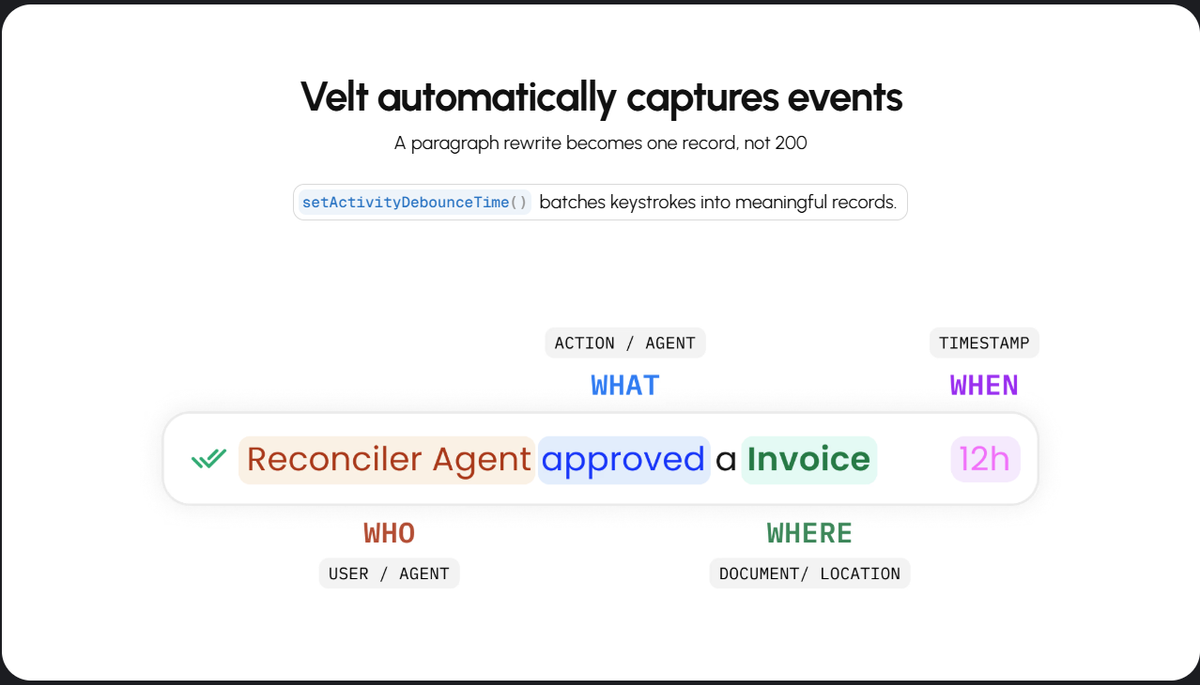
With Velt, approval workflows are first-class objects. A comment thread can be open, assigned, or resolved. An approval can be pending, approved, or rejected. Every transition is logged to an immutable audit trail with a user ID and timestamp. None of that logic exists in a raw collaboration SDK because the SDK has no concept of "approved." You'd have to build it yourself.
Hierarchy vs. Flat Rooms
The permission models reflect this divergence clearly.
Flat room models work when every document is independent. When you're building entity-heavy SaaS where a document lives inside a folder inside a workspace inside an organization, you need permissions to cascade. Otherwise, you're manually syncing access control across thousands of rooms. That's not a small problem.
Review infrastructure assumes work is nested in organizational context. Collaboration SDKs assume work is isolated to a session. Both assumptions are valid. They just produce very different architectures.
| Dimension | Review Infrastructure (Velt) | Collaboration SDK (Liveblocks) |
|---|---|---|
| Data model | Recursive: Org → Folder → Doc | Flat: Tenant → Room |
| Permission model | Inherited, cascading | Per-room JWT tokens, static |
| Approval states | Native, configurable | Not offered |
| Audit trail | Built-in, immutable | Not offered |
| DOM awareness | Element-bound, prevents UI drift | Requires custom coordinate math |
| Glue code | Out of the box (global inbox, notifications) | Manual build required |
| Data sovereignty | 45+ regions | 2 regions |
When Building Multiplayer Experiences Matters More Than Review
Not every product needs approval workflows. Some need pure real-time sync, and for those, a collaboration SDK is the right call.
Multiplayer whiteboards and creative canvas apps are the clearest examples. Users aren't moving work through review stages. They're drawing, editing, and building together in real time. Presence indicators and conflict resolution matter far more than audit trails. Liveblocks is built for exactly this. If your core use case is a shared canvas where multiple users manipulate objects simultaneously, that's where a sync engine wins.
The same logic applies to presence-only features. If you need live cursors and nothing else, adding review infrastructure is overkill.
When Formal Approval Workflows Become Critical
Some workflows can't treat approval as a reply in a thread. When decisions carry legal, financial, or regulatory weight, you need structured sign-off baked into the product itself.
The clearest cases:
- Financial documents requiring multiple reviewers before release, with each action timestamped and attributed to a specific user
- Healthcare or compliance content where every edit must be logged for audit purposes
- Sales collateral that can't go out without brand and legal sign-off across departments
- Supply chain or logistics plans where a bad call has real-world consequences
In these scenarios, a general collaboration SDK leaves you responsible for building RBAC, approval state machines, and audit logging yourself. Velt ships all of it as review and approval infrastructure, so those requirements do not turn into a separate build sprint.
The Hidden Costs of Infrastructure-Only Solutions
When weighing build vs. buy, the real question is whether you want to spend the next six months building UI components. Infrastructure-only tools hand you primitives: the socket layer and sync engine. They don't prescribe a sidebar, notification bell, inbox, or comment composer. Someone still has to build those.
That someone is your engineering team. The list compounds fast:
- Comment UI with threading, mentions, and rich text editing
- A global inbox aggregating notifications across documents
- Permission-aware visibility controls that respect your access model
- Approval state UI with assignment dropdowns and resolution tracking
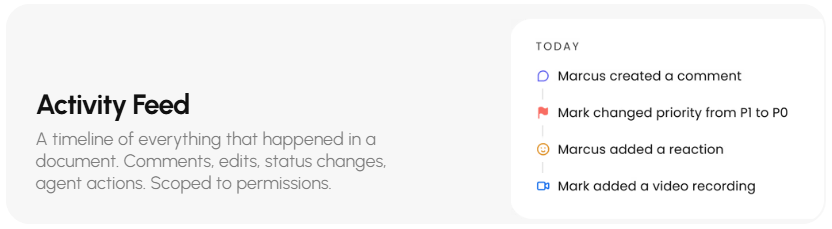
- Audit trail components surfaced directly in the app
Each item looks like a feature. It's actually a project. Velt sits firmly in the frontend-complete category, shipping the UI alongside the review logic. Prebuilt comment composers, sidebar panels, and notification inboxes ship out of the box. You can customize all of them through 115+ UI primitives, meaning you connect components instead of architecting them from scratch. For most B2B SaaS teams shipping review and approval features, faster wins.
How Data Sovereignty Requirements Impact Your Choice
For teams in industries with compliance requirements, data residency is a hard constraint. Healthcare data under HIPAA, financial records under SOC 2, government information with jurisdictional requirements: these determine where data lives and how it's secured.
Velt lets you self-host collaboration data in your cloud, whether that's AWS S3, GCS, Azure Blob, or on-prem. Instead of building custom routing logic, pass a config object to point the infrastructure at your own endpoints:
import { VeltProvider, VeltDataProvider } from '@veltdev/react';
import { AppRouter } from './AppRouter';

export default function App() {
  return (
    <VeltProvider apiKey="YOUR_API_KEY">
      <VeltDataProvider
        config={{
          url: 'https://api.yourdomain.com/velt-storage',
          headers: { 'Authorization': 'Bearer YOUR_TOKEN' },
          activity: true,
          recorder: true
        }}>
        <AppRouter />
      </VeltDataProvider>
    </VeltProvider>
  );
}
If your product sells into enterprise accounts with strict security review processes, this matters at the procurement stage.
Velt's Review and Approval Infrastructure for B2B Products
The choice between a collaboration SDK and review infrastructure comes down to the core action you need users to take. If you are building a multiplayer whiteboard, Figma clone, or any unconstrained canvas where users manipulate objects simultaneously, Liveblocks is the right tool. You need a fast, flexible sync engine to handle real-time state.
If you are building B2B software (whether for content production, financial planning, supply chain operations, or analytics), the core action is usually a decision.
Review is a blocking step in these workflows. Getting it wrong has compliance and business consequences. Automated compliance workflow software can reduce manual compliance work by 82%, turning 40-hour processes into 5-minute automations with audit trails documenting every compliance action automatically.
Review is a blocking step in these workflows. Getting it wrong has compliance and business consequences. In these scenarios, you don't just need users connected at the same time. You need structured approval states, configurable permissions, and immutable audit trails.
Velt is review and approval infrastructure built exclusively for this second category. It handles the complete review layer, frontend and backend, so your engineers stay focused on your core product.
Final Thoughts on Review Workflows vs Collaboration Features
The right tool depends entirely on whether you're syncing a canvas or moving work through approval states. Collaboration SDKs handle real-time multiplayer experiences. Review infrastructure handles structured decision workflows with audit trails, hierarchical permissions, and approval routing built in. If your product needs formal sign-off processes, Velt ships everything so you're not building review logic for the next quarter. Book a demo to talk through your specific workflow.
FAQ
What's the actual difference between review infrastructure and a collaboration SDK?
Review infrastructure manages formal approval workflows, decision tracking, and audit trails for work that needs sign-off. Collaboration SDKs handle real-time synchronization so multiple people can edit the same thing simultaneously without conflicts. The first is a state machine moving work through defined stages; the second is a sync engine keeping shared state consistent.
Can I use Velt if I'm building a multiplayer whiteboard or design tool?
No, Liveblocks is the better choice for that use case. Velt is built for B2B products that need structured review workflows, approval states, and decision accountability. If your core feature is a shared canvas with real-time object manipulation, a collaboration SDK focused on sync primitives fits better.
What's the build cost if I use a backend-only collaboration SDK instead of Velt?
You'll spend engineering time building the comment UI, notification inbox, approval state machine, permission inheritance logic, and audit trail components. Each item is a contained project, but together they represent quarters of capacity. Velt ships 115+ prebuilt UI primitives covering the full review surface, so that frontend work stays off your backlog.
When does approval infrastructure become a compliance requirement?
When decisions carry legal, financial, or regulatory weight. Financial documents requiring timestamped multi-reviewer sign-off, healthcare content needing edit logs for audit purposes, and sales collateral requiring cross-department approval before publication all require structured workflows baked into the product. Email threads and Slack replies don't meet those requirements.
How does MAC pricing compare to MAU or MAR models?
MAC (Monthly Active Collaborator) charges only for users who performed collaboration actions during the month. A user who views documents without commenting doesn't count. In practice, MACs run roughly 20% of total active users. MAU models charge for every connected user regardless of activity, and MAR (Monthly Active Room) pricing scales with document count instead of users.