

Why Review Tools Like Email and chat Apps Create Content Review bottlenecks (and what actually works) April 2026
Learn why email and chat apps create review bottlenecks and what review infrastructure solves in April 2026. Get anchored feedback and approval tracking.
Last updated: April 24, 2026
You can write a blog post in four hours and watch it sit in review for twelve days because nobody knows whose turn it is, what's already been resolved, or which version is current. That's what happens when content review bottlenecks run through tools that weren't built for review work. Chat threads decay. Email creates feedback silos. Comments float without context. The tools everyone defaults to can't anchor feedback, track approvals, or create audit trails. What breaks the bottleneck isn't working harder. It's switching to review and approval infrastructure designed for the job.
TLDR:
- Review bottlenecks now cause longer delays than content creation itself.
- Slack and email scatter feedback across threads with no anchoring or audit trail.
- Context switching between review tools drains 20% of cognitive capacity per switch.
- Velt embeds review infrastructure directly into products with anchored comments and tracked approvals.
The Hidden Cost of Content Review Bottlenecks
Content gets stuck in review, not creation. A blog post takes four hours to write and twelve days to approve. A four-step approval process adds twelve business days minimum, assuming zero revision rounds.
AI changed how fast teams produce content. It did not change how fast teams review it. When a writer produced one asset a week, a slow review process was an inconvenience. Now that same writer produces ten, the backlog becomes a content review bottleneck that stalls entire publishing schedules.
The math is unforgiving. Four approval stages at three days each means nearly three weeks before anything ships. Multiply that across five writers producing five assets weekly, and you're sitting on a backlog with no structural fix in sight.
Human review capacity is finite. AI output is not. That gap is where deadlines pile up and schedules collapse.
Why Slack Was Never Built for Structured Reviews
Slack is genuinely great at fast, informal communication. The problem is that review work is structured, sequential, and needs a paper trail. Slack has none of those properties by design.
When feedback lives in a channel, it decays. A commenting SDK binds comments directly to content. A comment posted Monday about a specific headline is buried under 200 messages by Wednesday. Finding it means scrolling, searching, or asking someone to re-explain feedback they already gave.
The deeper issue is anchoring. Slack has no way to tie a comment to the specific thing being reviewed. "The second paragraph feels off" means nothing without the paragraph next to it. Reviewers paste screenshots, share links, describe locations in prose. Every workaround adds friction and ambiguity.
There's also no approval state. You can't look at a channel and know what's been signed off versus what's still open. Instead you get:
- Reactions used as pseudo-approvals (does a thumbs-up mean "I read it" or "approved to publish"?)
- Follow-up messages asking "are we good on this?"
- Duplicate feedback from reviewers who missed earlier comments
Slack solves communication. Fixing a content review bottleneck requires review infrastructure, where every comment is anchored, every approval is tracked, and nothing gets lost in the feed.
Email Creates Review Black Holes
Email might be worse than Slack for review workflows, and that's saying something.
The core problem is isolation. When you email a draft to three reviewers, each inbox becomes its own silo. Reviewer A and Reviewer B can both respond with conflicting feedback, neither aware the other has already weighed in. You now have to merge two separate threads while managing a third reviewer who replied to the wrong version entirely.
Version control collapses fast. Someone forwards an older draft. Someone else edits inline and sends back a Word attachment. Now you have three documents floating across four inboxes with no clear record of which is current.
Approval status is the final casualty. There's no shared view of who has signed off. The only way to know is to search your inbox, cross-reference replies, and hope nothing slipped to spam. That's not a review process. It's archaeology.
Context Switching Drains 40% of Your Team's Productive Time

The tool-switching alone is exhausting. The average employee moves between apps and websites nearly 1,200 times a day. When review workflows scatter across Slack, email, Google Docs comments, and whatever project tracker your team uses, every feedback loop becomes a five-tab exercise.
Each switch carries a real cognitive tax. Approximately 20% of cognitive capacity is lost during a context switch, and it takes over 20 minutes to fully recover focus after an interruption. For reviewers juggling live work alongside approval requests, that math compounds fast.
This is where the content review bottleneck stops being a scheduling problem. It becomes a productivity drain baked into your team's daily rhythm. Approvals slow down not because people are careless, but because the tools keep pulling them out of the work itself.
The Audit Trail Gap That Compliance Teams Fear
97% of Chief Audit Executives have listed regulatory compliance as a top priority in their 2026 audit plans. For teams in finance, healthcare, or legal, that pressure lands directly on review workflows. Regulators don't want your Slack export. They want timestamped, attributed, tamper-proof records of who reviewed what, when, and what they decided.
Email and Slack can't provide that. Messages get deleted. Threads get archived. Approvals live as informal replies with no binding record. If a compliance audit asks you to reconstruct a decision timeline from six months ago, good luck tracing it across inboxes and DMs. Thread management SDKs maintain structured records automatically.
The risk scales with the stakes. A missed approval record in a compliance-driven content workflow isn't a scheduling problem. It's a liability.
Review and Approval Infrastructure: A Different Category Entirely
Review infrastructure is a distinct category. Not a project tracker. Not a chat tool. Something built directly for commenting with structured feedback and formal sign-off.
There are four capabilities that actually matter here. Full customization means teams can adapt these to their exact workflow:
| Capability | Velt | Slack | |
|---|---|---|---|
| Comment Anchoring | Binds to specific DOM elements via data IDs. Stays attached as layouts reflow. | No anchoring. Reviewers describe locations in prose or paste screenshots. | No anchoring. Feedback lives in inbox threads with no connection to content location. |
| Approval Tracking | Programmatic workflows with trackable states. Sign-off is recorded with timestamps. | No approval state. Emoji reactions stand in as pseudo-approvals with ambiguous meaning. | No shared approval view. Status requires cross-referencing reply threads across inboxes. |
| Audit Trail | Immutable logs timestamp every comment, edit, and approval automatically. | No audit trail. Messages can be edited or deleted with no tamper-proof record. | No audit trail. Threads can be deleted or forwarded selectively. Decision timelines are unrecoverable. |
| Version Awareness | Comments stay anchored across versions. Feedback doesn't orphan when content is rewritten. | No version awareness. Comments become meaningless after the section they reference is rewritten. | Version control collapses. Reviewers work on different drafts with no record of which is current. |
Bolting review onto communication tools doesn't solve the content review bottleneck. It redistributes it across more inboxes. The category mismatch is the problem. Velt is review and approval infrastructure, built to sit inside the product where work actually happens.
How Velt Solves What Slack and Email Can't
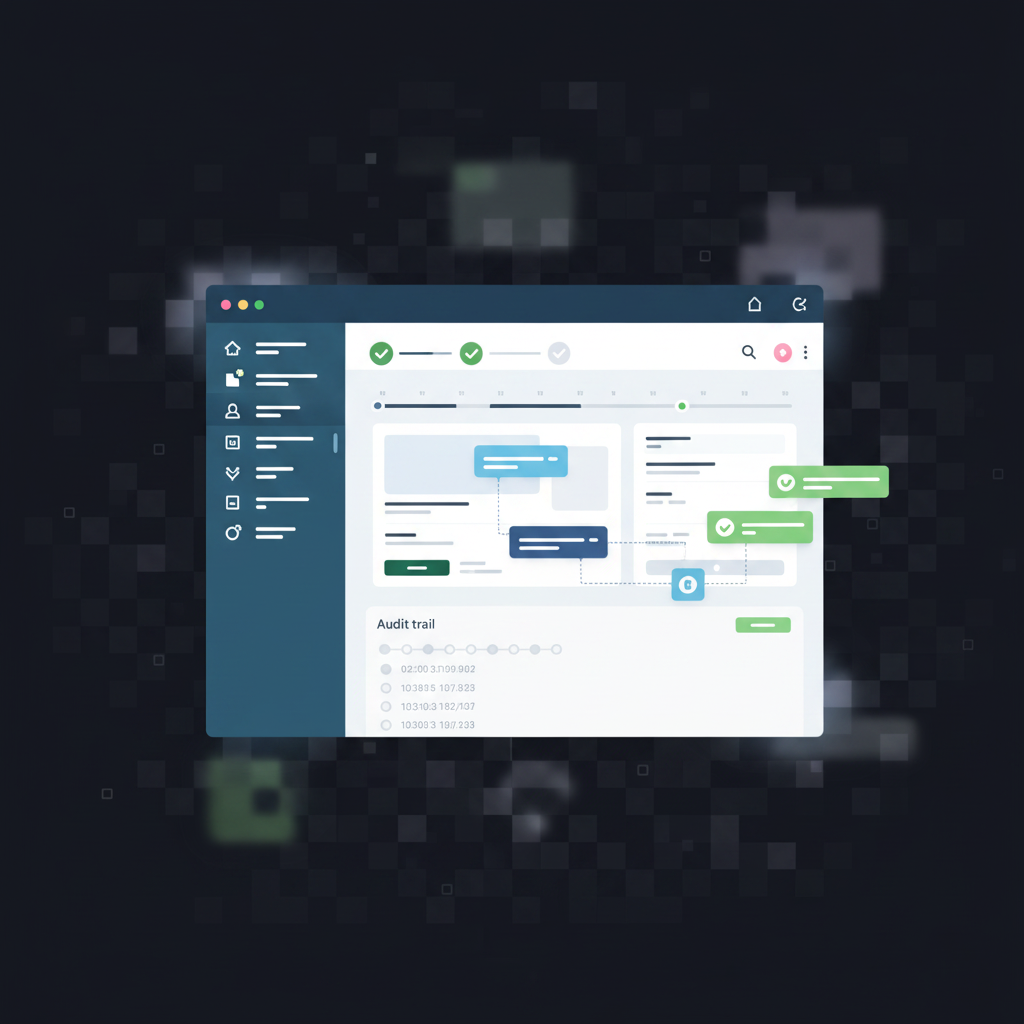
Velt embeds review and approval infrastructure directly into the product where work happens. No tab switching, no inbox archaeology, no ambiguous emoji approvals.
Comments bind to specific DOM elements via data IDs, not pixel coordinates. How to customize a commenting SDK depends on your specific content types and review patterns. When a reviewer flags a paragraph or a dashboard widget, that comment stays anchored to the exact element even as layouts reflow. The feedback is self-locating.
Approval workflows track state programmatically. Reviewers are assigned, sign-off is recorded, and nothing ships without a traceable decision. Activity logs timestamp every action automatically, creating an immutable record that compliance teams can actually use.
Real-time presence means reviewers see who's in a document without sending a "did you get a chance to look at this?" message. Review rounds get shorter because coordination overhead drops.
Stensul cut email review cycles from 8 days to 3 after integrating Velt. That's what happens when review infrastructure replaces communication tools trying to do a job they weren't built for.
Final thoughts on fixing what slows content down
You can't solve a content review bottleneck by working harder in tools that scatter feedback across channels and inboxes. Review infrastructure exists as a category because communication tools fundamentally can't anchor comments, track approval states, or create audit trails. When you embed that infrastructure where work happens instead of bolting review onto chat apps, publishing schedules stop collapsing under their own coordination weight. Book a demo to see the difference.
FAQ
Can you fix a content review bottleneck without replacing Slack or email?
Yes, but you need to add review-specific tooling that lives where the work happens. Slack and email can stay for general communication, but review workflows need context anchoring, approval tracking, and audit trails that those tools can't provide.
Slack vs email for content approvals?
Both fail at the same core problems: no comment anchoring to specific content elements, no approval state tracking, and no audit trail. Email is worse because it creates isolated silos where reviewers can't see each other's feedback, leading to conflicting comments across separate threads.
How do you track who approved what when feedback lives in Slack threads?
Thumbs-up reactions are ambiguous (does it mean "I read this" or "approved to publish"?), and messages can be edited or deleted with no immutable record of the original decision.
What causes most revision rounds in content review workflows?
Context-free feedback. When a comment like "fix the third bullet" gets posted in Slack without anchoring to the actual content, creators have to guess which version, which section, and whether the feedback still applies after earlier edits. The round trip to clarify intent adds days to every review cycle.
When should you use review infrastructure instead of project management tools?
When feedback needs to be anchored to specific content elements and approval decisions need audit trails. Project trackers handle task assignment but can't bind comments to the exact paragraph, widget, or dashboard element being reviewed. Velt provides DOM-aware comment anchoring, programmatic approval workflows, and timestamped activity logs that turn every review decision into a traceable record.