

How to Add Human Review to AI-Generated Output (June 2026)
Learn how to add human review to AI-generated output with review workflows, inline comments, and approval infrastructure. Complete guide for June 2026.
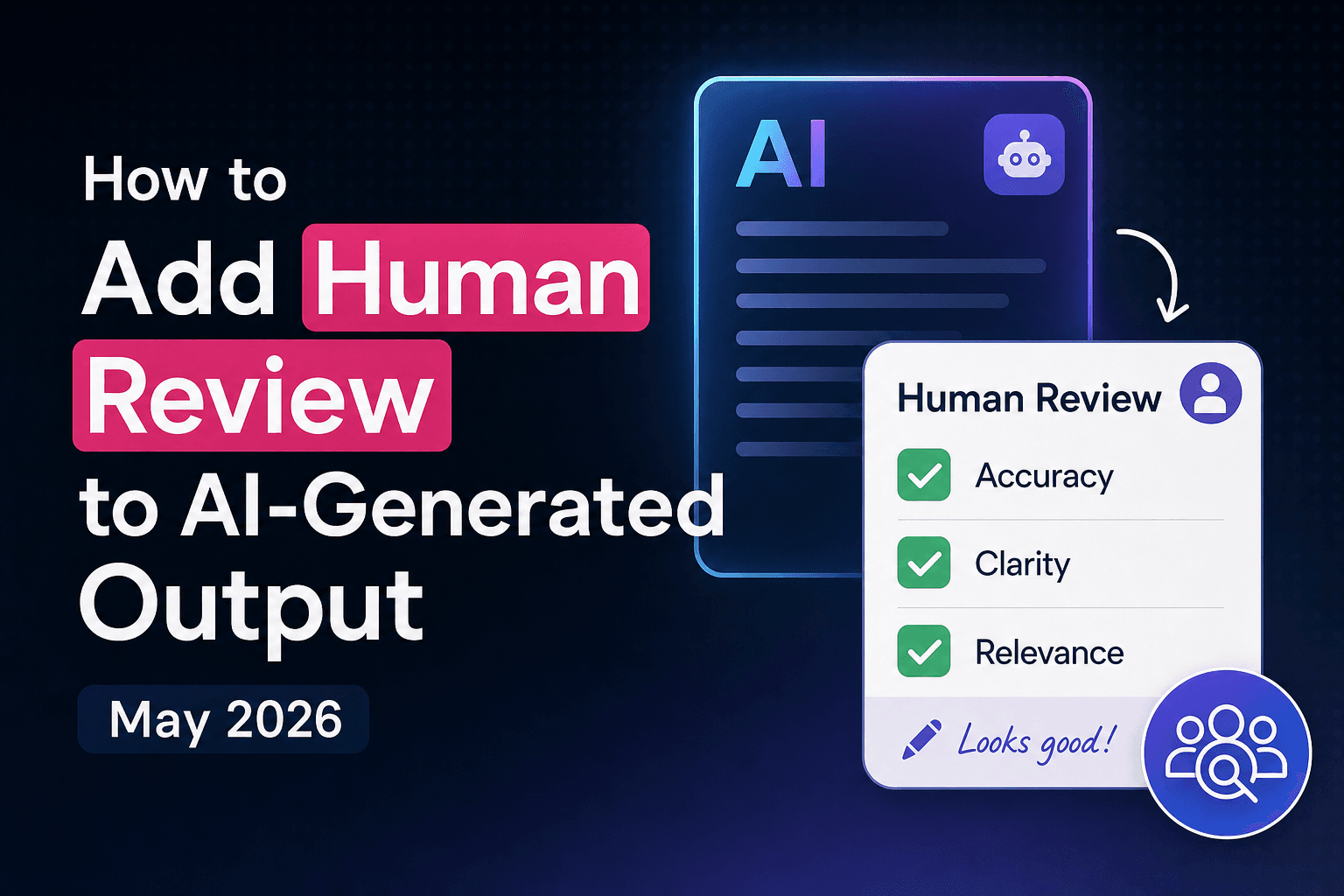
Everyone wants faster content production, so AI writes the first draft. Then someone has to review AI-generated output to make sure it's actually correct. Factual errors, tone mismatches, outdated information, or legal disclaimers that got quietly dropped all show up when a human reads carefully. Skip that step and you're shipping content that sounds confident but might be completely wrong. Review infrastructure turns probabilistic AI output into something you can actually publish.
TLDR:
- AI-generated content fails predictably with factual hallucinations, outdated information, tone mismatches, and compliance gaps that sound confident but are wrong.
- Match review depth to risk level: single reviewer for internal drafts, structured checklist review for customer-facing copy, multi-approver workflows with full audit trails for legal and compliance documents.
- Build review infrastructure with inline comments anchored to specific content elements, defined approval states, clear ownership routing, and audit trails that log every review action.
- Velt provides review and approval infrastructure as an SDK that ships inline commenting, approval workflows, and audit logs without custom backend logic.
Why Human Review of AI Output Is Non-Negotiable
AI gets things wrong. Not always, not even often in some domains, but enough that shipping AI-generated content without a human checkpoint is a real risk. Factual errors slip through. Tone goes off. Regulatory language gets softened in ways that create liability. A confident-sounding answer can be completely fabricated. A Nature study on AI hallucinations found distinct categories of errors including false news events, academic misinformation, and health-related inaccuracies.
The stakes vary by context. A hallucinated product description costs you a customer return. A hallucinated legal clause costs you a lawsuit. But across the board, the pattern holds: AI output reflects probabilities, not verified truth, and human review is what closes that gap.
There's also a trust problem. Users who catch an obvious AI error once tend to distrust the whole product. Building a review step into your workflow closes that gap between AI probabilities and verified output. It's about maintaining the credibility of everything your product produces.
Where AI Output Fails Most Predictably
Some failure modes show up repeatedly across production deployments:
- Factual hallucinations, where the model generates plausible-sounding but incorrect information, particularly in domains with sparse or contested training data.
- Tone and brand misalignment, where output is technically correct but sounds nothing like your product's voice.
- Regulatory and compliance gaps, where legally sensitive language gets paraphrased in ways that strip out required specificity.
- Outdated information, since models have training cutoffs and won't know about recent changes.
Human review catches all of these. The question is how to build that review step without it becoming a bottleneck.
Common AI Output Errors That Require Human Detection
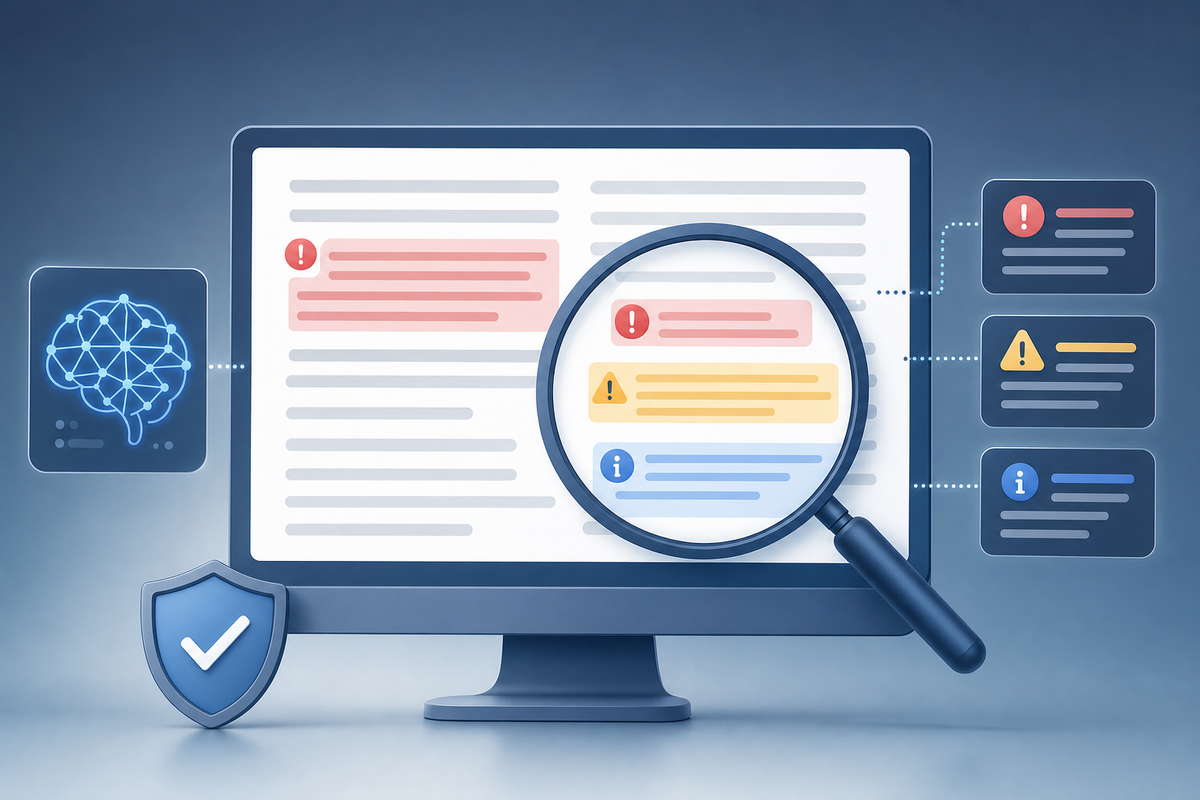
AI gets a lot right. But it fails in ways that are hard to catch at a glance, and those failures concentrate in five recurring error types: hallucinations, outdated information, tone mismatches, missing nuance, and brand inconsistency.
Here are the error types that consistently slip through without a human in the loop:
- Factual hallucinations: The model states something confidently that is simply wrong. Wrong dates, wrong attribution, wrong statistics. The writing sounds authoritative, which makes the error harder to spot.
- Outdated information: AI training data has a cutoff. Any content touching recent events, pricing, regulations, or competitive positioning may be stale the moment it's generated.
- Tone and context mismatches: The output may be technically accurate but pitched at the wrong audience, too casual for a compliance document or too stiff for a customer-facing email.
- Missing nuance: AI tends to flatten complexity. Legal disclaimers get softened, edge cases get dropped, and safety caveats disappear when the model optimizes for clean, readable prose.
- Brand inconsistency: Voice guidelines, terminology preferences, and style rules aren't reliably applied, especially across long documents or multiple generations.
None of these errors are obvious without someone who understands the subject matter reading the output carefully. That's what makes a structured review process worth building instead of treating as optional.
Setting Up a Review Workflow for AI-Generated Content
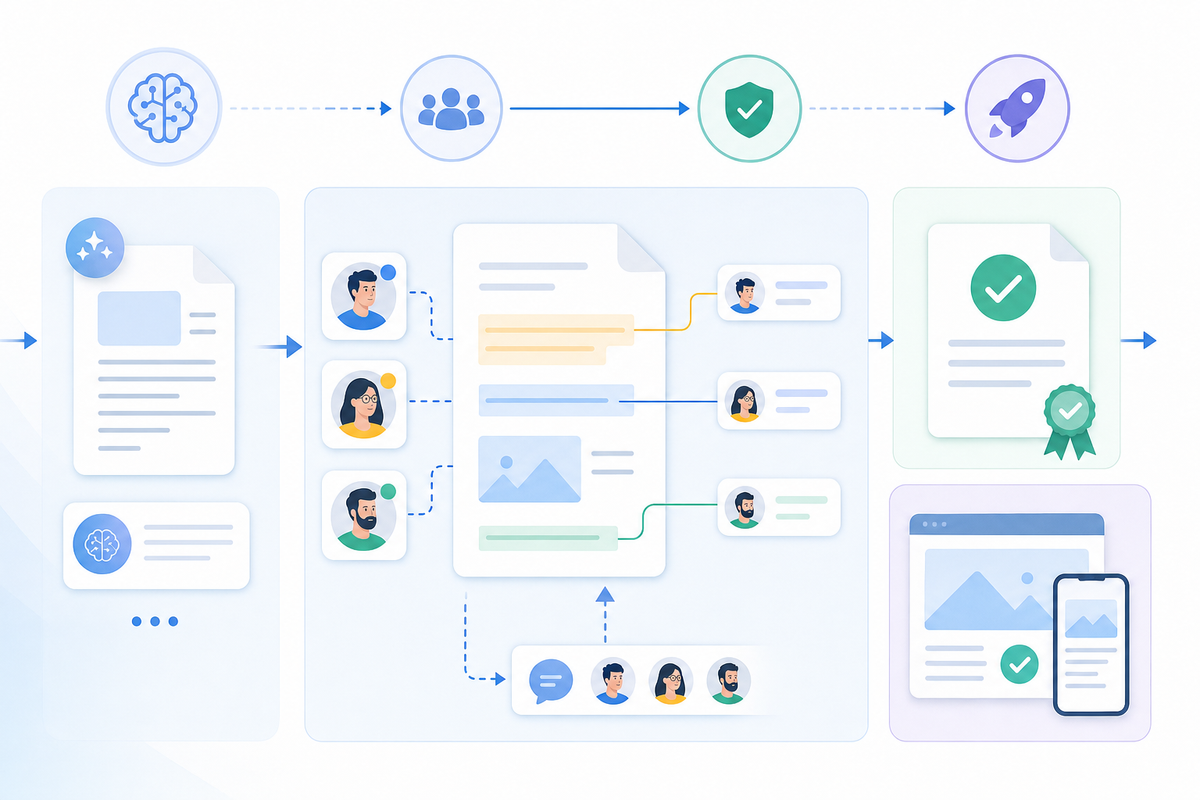
When AI generates a draft, a report, or a recommendation, someone still needs to sign off. The question is how you structure that sign-off so it doesn't become a bottleneck or, worse, get skipped entirely. A well-designed review workflow for AI output has a few non-negotiable components. According to content quality assurance frameworks, best practices include defining quality standards, building review checklists, and assigning clear ownership before content ships.
The core pieces you need
Before picking tools, get clarity on what your workflow actually requires:
- A way to anchor feedback to specific content, not leave general comments in Slack or email threads that lose context the moment the conversation moves on.
- Clear ownership at each stage, so reviewers know what they're responsible for approving and authors know whose sign-off they're waiting on.
- A defined escalation path for flagged content, covering what happens when a reviewer catches something that needs more than a quick edit.
- An audit trail that records who reviewed what, when, and what decision was made. This matters for compliance, but it also matters for improving your AI outputs over time.
Mapping the stages
Most AI review workflows follow a similar shape, even if the specifics vary by team:
| Stage | Who acts | What happens |
|---|---|---|
| Generation | AI system | Output is created and surfaced for review |
| Triage | Author or team lead | Content is checked for obvious errors before routing |
| Substantive review | Subject matter expert | Accuracy, tone, and logic are reviewed |
| Approval | Designated approver | Content is formally signed off or sent back |
| Publish or action | Author | Approved output goes live or gets acted on |
Getting this structure in place before choosing tooling saves a lot of rework later.
What to Check During Manual Review
Run through these areas on every review pass to catch the failure modes that matter:
- Factual accuracy: AI systems confidently state things that are wrong. Cross-check any specific claims, statistics, dates, or named entities against authoritative sources before the output ships.
- Tone and brand alignment: The output may be grammatically correct but still sound off for your audience. Ask whether a real person at your company would have written it this way.
- Logical consistency: AI can contradict itself across paragraphs without flagging it. Read the full output as a connected argument, sentence to sentence.
- Completeness: Check whether the output actually answered the original prompt. Partial responses that trail off or sidestep the core question are common.
- Bias and fairness: AI outputs can reflect skewed assumptions about groups, roles, or scenarios. A quick read with that lens catches most surface-level issues before they become problems.
- Sensitive content: Depending on your domain, outputs touching legal, medical, financial, or personal data need a higher bar before approval.
Not every output needs equal scrutiny. A low-stakes internal summary gets a lighter pass than a customer-facing document or a compliance filing. Review depth should match the risk level of what's being published.
Balancing Speed with Review Depth
Not every AI output carries the same risk. A draft blog post getting a factual detail wrong costs you a quick correction. A compliance document with a hallucinated regulatory citation costs you much more. That gap is why review depth should scale with stakes, not default to the same process for everything. The practical way to think about it is a tiered model:
- Low-stakes output (internal drafts, brainstorming notes, first-pass summaries): a lightweight spot-check is enough. One reviewer, async, no formal approval chain needed.
- Medium-stakes output (customer-facing copy, product descriptions, automated reports): structured review with a defined checklist and at least one sign-off before publish.
- High-stakes output (legal documents, financial disclosures, medical content, compliance filings): full human review with multiple approvers, version history, and an audit trail you can produce on demand.
Matching Review Workflows to Output Type
| Output Type | Risk Level | Suggested Review Depth |
|---|---|---|
| Internal drafts, notes | Low | Spot-check, single reviewer |
| Customer-facing copy | Medium | Checklist review, one sign-off |
| Legal or compliance docs | High | Multi-approver, full audit trail |
| Automated data reports | Medium-High | Domain expert review, version control |
The trap is applying heavy process uniformly. That slows down low-risk work and burns reviewer attention on things that don't need it, leaving less capacity for the content where mistakes actually matter. Calibrate the process to the output, and your reviewers spend their time where it counts.
Build Review Infrastructure Into Your AI Workflow
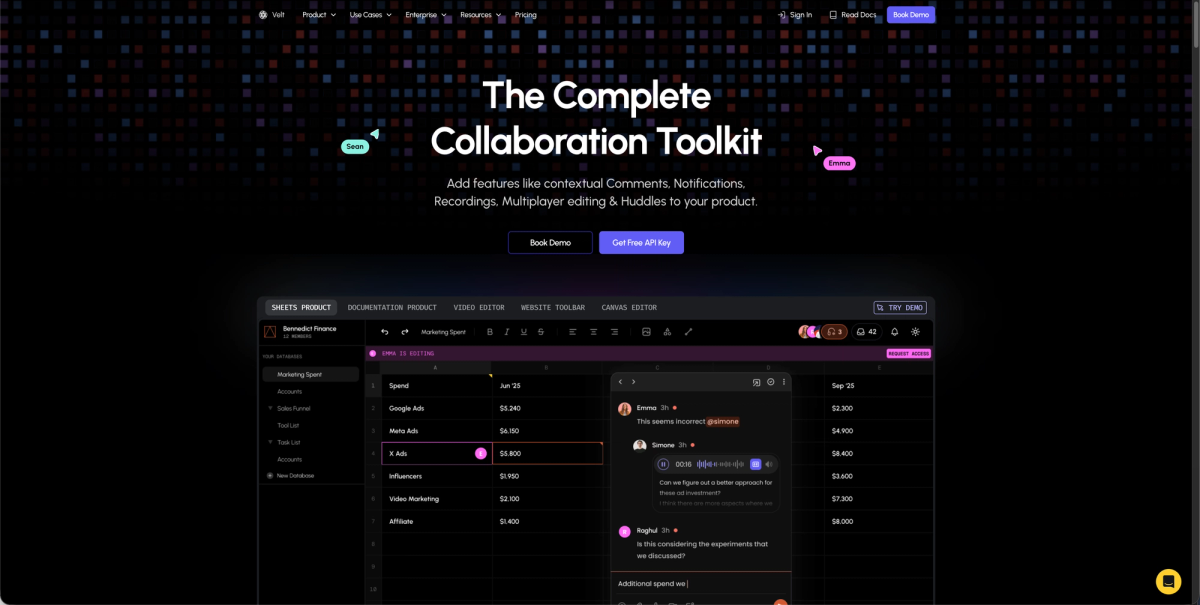
Velt is built specifically for this problem. It's review and approval infrastructure that slots into AI workflows without requiring you to wire up commenting, approval states, or audit trails from scratch.
The core idea is simple: every piece of AI-generated output gets a review layer attached to it. Reviewers can leave inline comments anchored directly to the content element being discussed, approve or reject with tracked status changes, and resolve threads once issues are fixed. The whole review cycle is visible and auditable, not buried in Slack or email.
Here's what that looks like in practice across the pieces that matter most:
- Inline commenting tied to specific content elements, so feedback never loses context. A reviewer flagging a hallucinated stat pins the comment to exactly that sentence, not a vague "see paragraph 3" in a separate doc.
- Approval workflows with defined states (pending, approved, rejected, needs revision) that give teams a clear signal on what's cleared and what's not before any AI output goes live.
- Audit trails that log every review action with timestamps and user attribution, which matters for compliance-sensitive content or industries with strict compliance requirements.
- Presence indicators so reviewers know when someone else is already looking at the same output, cutting down on duplicate feedback.
Velt ships this as an SDK you integrate into your existing app. You're not migrating to a new tool; you're adding review infrastructure directly where your AI output already lives.
Final Thoughts on Making AI Review Work at Scale
You can't review everything with the same rigor, and you shouldn't try. Match review depth to risk level, give reviewers the right tools to flag what matters, and make the whole process auditable without turning it into a bottleneck. Velt handles review infrastructure so your team focuses on the content, not the tooling. AI output only works when someone's actually signing off on it.
FAQ
Can you build a review workflow without custom backend logic?
Yes. Velt provides the approval states, assignment routing, and audit trail infrastructure out of the box, so you can add formal sign-off processes to AI-generated content without writing backend approval logic yourself.
What's the difference between reviewing low-stakes and high-stakes AI output?
Low-stakes output (internal drafts, summaries) needs a quick spot-check by one reviewer with no formal approval chain. High-stakes output (legal documents, compliance filings, financial disclosures) requires structured multi-step review with defined approvers, version history, and a full audit trail you can produce on demand.
How do you catch AI hallucinations during manual review?
Cross-check any specific claims, statistics, dates, or named entities in the AI output against authoritative sources before publishing. Hallucinations are the most common error type and they sound confident, which makes them harder to spot without deliberate fact-verification.
Should I review all AI-generated content the same way?
No. Review depth should scale with the risk level of what's being published. A factual error in an internal draft costs you a quick correction; the same error in a compliance document creates legal liability. Match the rigor of your review process to the stakes of the output.
What makes inline comments better than Slack for AI output review?
Inline comments anchor feedback directly to the specific content element being discussed, so context never gets lost when the conversation moves on. Slack threads disconnect the feedback from the artifact, making it harder to track what was flagged, what was fixed, and who approved the final version.