

Why AI Agents Need Human Approval Before Taking Action (June 2026)
Learn why AI agents need approval layers before executing actions. Build review workflows that match risk to oversight intensity. June 2026 guide.
When was the last time you reviewed what your AI agent actually did before it executed? If the answer is never, you're not alone. Agentic AI systems have moved past drafting. They're filing tickets, sending messages, and adjusting budgets in real time. And when they misread context or act on outdated data, the cost compounds fast. An AI agent approval layer isn't a bottleneck. It's review and approval infrastructure that routes high-stakes actions through human oversight before they go live, while letting routine tasks proceed without friction. Without it, you're relying on a model's confidence score to decide what's safe to execute. That's not oversight. That's hope.
TLDR:
- AI agents acting without human review create risks that scale fast: organizations deploying agents at scale report repeated incidents of unintended actions with measurable business impact.
- Build approval checkpoints that match risk to review intensity using a four-tier framework: autonomous for low-stakes tasks, single or multi-stakeholder approval for high-consequence actions.
- Choose human-in-the-loop (pre-approval) for irreversible actions like payments or contracts, human-on-the-loop (async monitoring) for high-volume recoverable tasks.
- Compliance-grade audit trails capture the agent's proposed action, approver identity, approval timestamp, any edits made, and final state, proving a qualified human authorized the decision.
- Velt provides review and approval infrastructure for AI workflows: comments anchored to exact elements, approval states, audit trails, and notifications ship out of the box.
What AI Agent Approval Actually Means (And Why It Matters Now)
When an AI agent takes action on your behalf, something has to decide whether that action is safe to execute. That's what an AI agent approval layer is: a defined checkpoint where a human (or a higher-authority system) reviews what the agent intends to do before it actually does it.
The urgency here is real. Agentic AI systems are no longer writing draft emails for you to send. They're sending them. They're filing tickets, adjusting budgets, and triggering downstream workflows without waiting to be asked twice.
Organizations deploying AI agents at scale consistently report unintended actions with measurable business impact, incidents that multiply as agent throughput grows. Gartner's agentic AI project forecast, with inadequate risk controls cited as one of the three primary drivers, putting governance infrastructure on the critical path for any production AI deployment.
Where Approval Fits in an Agentic Workflow
An agentic AI approval workflow isn't a single button. It sits across several decision points:
- Before irreversible actions: sending a message, deleting a record, or executing a payment all warrant a review gate because they can't easily be undone once the agent fires.
- Before high-stakes decisions: budget changes, contract modifications, or anything touching compliance-sensitive data should require a human to sign off, with more than a confidence score from the model.
- At escalation boundaries: when an agent hits a task outside its defined scope, it should pause and route to a reviewer instead of improvising.
Getting these checkpoints right is what separates a useful AI agent from a liability.
The Cost of AI Agents Operating Without Approval

Without a human review layer, AI agents create risks that multiply across every action they take. A single misconfigured instruction can propagate through hundreds of downstream operations before anyone notices.
Agentic systems already handle consequential tasks: sending emails, executing trades, updating customer records, and triggering downstream processes. When those agents act on flawed reasoning or misread context, the damage spreads before anyone catches it. A 2024 RAND report found that AI systems can exhibit goal misgeneralization in out-of-distribution scenarios, meaning agents confidently pursue the wrong objective.
The failure modes are predictable:
- An agent approves a vendor payment that a human reviewer would have flagged as a duplicate, because the duplicate check lived in a system the agent couldn't query.
- A content agent publishes a draft containing outdated pricing, because no approval step existed to catch it before the post went live.
- A compliance agent files a report using stale regulatory data, with no audit trail showing who or what signed off.
Each scenario shares the same root cause: the agent had authority to act without a structured checkpoint for human review.
Human oversight built into the workflow isn't friction. It's the mechanism that keeps agentic AI approval decisions traceable, correctable, and defensible.
Shadow AI and the Approval Gap
When AI agents operate without formal approval checkpoints, employees often find workarounds that bypass whatever governance exists. They connect agents directly to production systems, grant broad permissions to get the job done faster, and share credentials across teams. This is shadow AI: unsanctioned agentic activity that IT and security teams can't see, audit, or stop.
The approval gap is the space between what an AI agent is capable of doing and what a human has actually reviewed and signed off on. In most early deployments, that gap is enormous. Agents can send emails, modify records, trigger payments, and call external APIs, all without a single checkpoint requiring a human to confirm the action was intended.
This isn't a hypothetical risk. A Salesforce survey of more than 14,000 workers across 14 countries found that 55% of workers using generative AI at work were using unapproved AI tools, highlighting the prevalence of “shadow AI” in organizations. When agents act autonomously at scale, the damage from misconfigured instructions compounds fast.
Why the Gap Widens Over Time
Without a structured human review process, three patterns tend to appear:
- Scope creep in permissions: agents get granted broader access incrementally, each expansion feeling minor in isolation, until the cumulative footprint is far larger than anyone intended.
- Audit trail gaps: when agents act without checkpoints, there's no record of who reviewed what or when, which creates serious problems during compliance audits or incident investigations.
- Alert fatigue workarounds: teams that do implement approval steps often use blunt tools like email threads or Slack messages, which reviewers learn to approve reflexively without reading carefully.
A proper agentic AI approval workflow closes this gap by making human review built into agent workflows, not an afterthought bolted on after something goes wrong.
Human-in-the-Loop vs. Human-on-the-Loop: Choosing the Right Oversight Model
Not all AI oversight works the same way, and the difference matters more than most teams realize. Two models dominate how teams think about human review in agentic systems, and picking the wrong one creates real problems.
Human-in-the-Loop
In this model, a human must approve an action before the AI executes it. The agent pauses, surfaces a decision, and waits. Nothing happens until someone signs off. This fits high-stakes, low-frequency actions well: high-stakes actions like contracts and transfers. The cost of a wrong action outweighs the friction of waiting.
Human-on-the-Loop
Here the AI acts immediately, but a human monitors the output and can intervene after the fact. This works for high-volume, lower-risk tasks where speed matters and mistakes are recoverable. Think content drafts, data enrichment, or internal ticket routing.
Oversight Model Side-by-Side Comparison
| Oversight Model | When Agent Acts | Human Role | Best For |
|---|---|---|---|
| Human-in-the-loop | After approval | Approve or reject before execution | High-stakes, irreversible actions |
| Human-on-the-loop | Immediately | Monitor and override after execution | High-volume, recoverable tasks |
The right choice depends on reversibility and consequence. An AI agent approval workflow doesn't have to be one or the other across the board. Most production systems use both: strict pre-approval gates for sensitive operations, async monitoring for routine ones. The goal is matching oversight intensity to actual risk, not applying a blanket policy that either slows everything down or leaves critical actions unguarded.
Risk-Based Approval Workflows: A Four-Tier Framework
Not all AI agent actions carry the same consequences. Sending a routine status update is fundamentally different from approving a $50,000 vendor payment or modifying production database records. A flat approval policy that treats every action identically creates two equally bad outcomes: either you bottleneck harmless tasks with unnecessary human review, or you rubber-stamp high-stakes decisions that deserved real scrutiny.
A tiered approach cuts through this problem. Here's a practical framework for calibrating approval requirements to actual risk level.
Tier 1: Autonomous (No Approval Required)
Low-stakes, fully reversible actions where the cost of a mistake is negligible and no downstream system depends on the output being correct. Read-only operations, internal status updates, draft generation, and routine notifications fall here. The qualifying condition is low consequence: a wrong action either gets caught before anyone acts on it, or correcting it takes less effort than a review cycle would have.
The agent acts immediately and logs what it did. No approval step, no queue, no wait. That speed is the point. Routing a read-only data pull or an internal ping through a human reviewer doesn't improve the outcome, it just adds latency for no gain.
The key requirement is that the log actually captures something useful. An entry that says "agent completed task" tells you nothing when you're debugging unexpected behavior downstream. The log should record what the agent did, what data it read, and what output it produced. Without that, Tier 1 collapses into a blind spot. The agent acts without review and leaves no usable record for anyone trying to understand what happened.
Tier 2: Notify and Proceed
The agent acts immediately, but a human gets a real-time notification so they can catch and reverse a bad action before downstream systems pick it up. This works because the action is technically reversible and the window for intervention is short but predictable. A calendar invite can be deleted. A CRM field update can be overwritten. A tag applied to a support ticket can be removed without consequence.
The key requirement here is that the notification carries enough context to act on. A bare "agent updated a record" message is useless. The reviewer needs to see which record, what changed, and what the agent's reasoning was. Without that, Tier 2 collapses into Tier 1 in practice, because nobody intervenes on a notification they can't parse in three seconds.
Tier 3: Approve Before Acting
A human must sign off before execution. This applies to anything where the cost of a wrong action outweighs the cost of a short delay: contract generation, customer-facing communications, budget reallocations, API calls to third-party services with real financial or legal consequences. The agent queues the action, surfaces the proposed output, and waits. Nothing moves until someone signs off.
The qualifying condition is consequence that's hard to reverse quickly. A contract sent to a vendor can be withdrawn, but the relationship impact is immediate. A customer email that goes out with wrong pricing creates support load, refund pressure, and eroded trust. These actions are technically reversible in a database sense, but the real-world damage starts the moment they execute.
The key requirement is that the approval surface shows the reviewer enough to make a real decision. The agent's proposed output needs to be visible in full, not summarized. The reviewer should see the exact contract clause, the specific email copy, or the dollar amount being reallocated, alongside whatever data the agent used to generate it. An approval prompt that says "agent wants to send a customer email" is insufficient. Reviewers who can't evaluate the action in context approve reflexively, which makes the gate meaningless. Without enough information in the approval request, Tier 3 becomes a checkbox, not a checkpoint.
Tier 4: Multi-Stakeholder Approval
High-consequence actions requiring sign-off from more than one person, often across different roles: regulatory filings, large financial transactions, production infrastructure changes, or any action where a single approver doesn't have the full authority or context to authorize it alone. Sequential approval chains apply when each reviewer's decision depends on the prior one. Parallel chains apply when different stakeholders need to sign off independently on different aspects of the same action.
The qualifying condition here isn't just risk level. It's accountability scope. Some actions touch multiple domains simultaneously: a large vendor contract has both legal and financial exposure. A production database migration has both security and reliability implications. A single reviewer in either case is approving outside their full area of authority. Multi-stakeholder approval isn't about adding friction; it's about matching approval authority to actual decision scope.
The key requirement is that each approver in the chain sees what's relevant to their role, not a generic approval request. A finance approver needs to see the payment amount, the vendor, and the budget line it draws from. A legal approver needs to see the contract clause and the jurisdiction. Routing the same undifferentiated context to every approver wastes time and produces rubber-stamp approvals. Full audit trails at every step aren't optional at this tier: they're the mechanism that proves each qualified person reviewed their portion of the decision before the action executed.
| Tier | Risk Level | Approval Type | Example Actions |
|---|---|---|---|
| 1 | Minimal | None | Read data, generate drafts, send internal pings |
| 2 | Low | Notify only | Update CRM records, send calendar invites |
| 3 | Medium-High | Single approver | Contract generation, customer emails, budget moves |
| 4 | Critical | Multi-stakeholder | Regulatory filings, large transactions, infra changes |
The right framework doesn't slow agents down across the board. It reserves human attention for decisions where judgment actually changes the outcome.
Building Approval Workflows That Humans Will Actually Use
The gap between a technically correct approval workflow and one engineers actually wire up is usually friction. If triggering a review requires a separate API call, a custom UI, or a Slack message that someone might miss, teams skip it. The workflow exists on paper; the agent acts without review in practice. Useful approval layers share a few properties:
- They surface in context, where the work is already happening, so reviewers don't need to context-switch into a separate tool to understand what they're approving.
- They capture a clear record of who approved what and when, which matters both for debugging agent behavior and for audit requirements downstream.
- They time out or escalate gracefully when a reviewer doesn't respond, so agents aren't blocked indefinitely waiting on human input.
- They expose enough context about the proposed action that a reviewer can make a real decision instead of rubber-stamping something they don't fully understand.
What This Looks Like in Practice
Most teams starting from scratch wire approval flows into Slack or email and call it done. That works for low-volume, low-stakes decisions. As agent throughput grows, reviewers get buried, context collapses into a wall of notifications, and approval becomes a bottleneck instead of a safeguard. The better approach anchors review directly to the artifact the agent is acting on. A proposed database write surfaces inline next to the record. A drafted customer email shows the full thread for context. Reviewers see exactly what's changing and why, approve or reject with one action, and the agent continues.
That's the design target: low friction for reviewers, full traceability for the team, and no single point of failure when humans are slow to respond.
Audit Trails That Prove Compliance (Beyond Logging Events)
When an AI agent takes action on your behalf, a log entry saying "action completed" isn't enough. Regulators, auditors, and your own security team need to know who approved what, when they approved it, and what information they had at the time of approval.
That's a fundamentally different requirement from event logging.
What a Compliance-Grade Audit Trail Actually Contains
Most logging systems record outcomes. A compliance-grade audit trail records decisions, including the full context that surrounded each one. For agentic AI workflows, that means capturing:
- The agent's proposed action and the reasoning it surfaced to the human reviewer
- The identity of the approver, verified at the moment of approval instead of inferred later
- A timestamp tied to the approval event itself, not the downstream action
- Any edits or overrides the reviewer made before approving
- The final state of whatever the agent acted on
Without that chain, you can show that something happened. You can't show that a qualified human reviewed and authorized it before it did.
Why This Matters for AI-Specific Compliance
New AI governance frameworks in the EU and US ask more than whether humans were in the loop. They ask whether oversight was meaningful and documented. An approval layer that captures reviewer identity, decision context, and outcome state gives you the record to answer that question with evidence instead of assertion.
Velt: Review and Approval Infrastructure for AI-Assisted Workflows
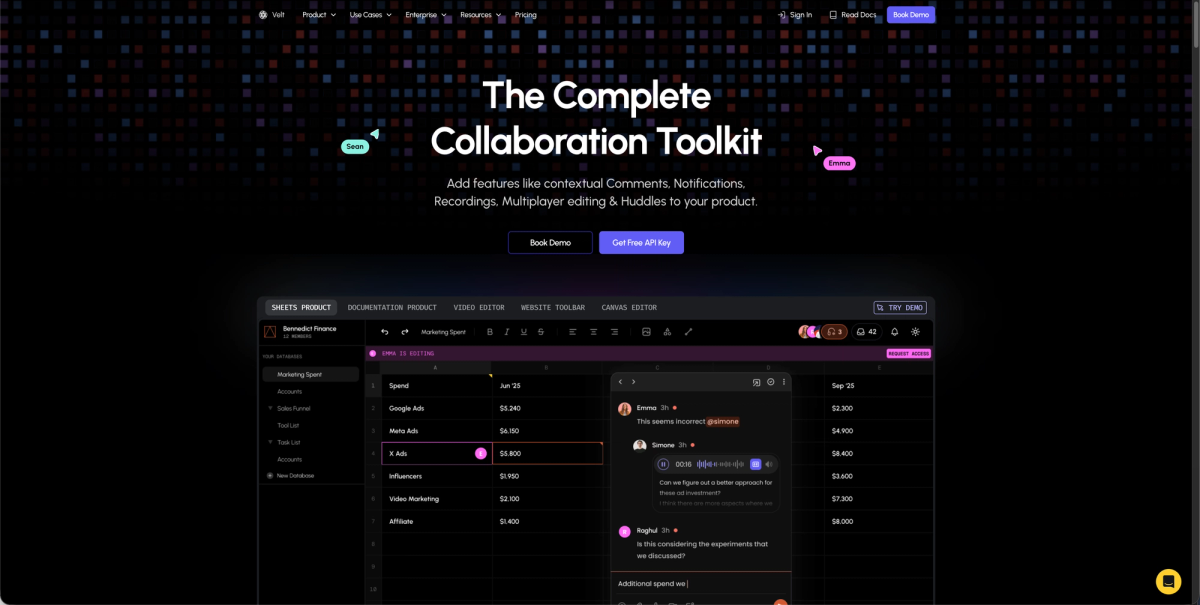
Velt is built for the review and approval infrastructure layer that AI-assisted workflows need. Where most tools treat human review as an afterthought, Velt ships it as a first-class feature: comments, approval workflows, presence, notifications, audit trails, and recording are all included out of the box. For agentic AI workflows, you get a structured approval layer without building one yourself. An AI agent proposes a change, that change surfaces to the right reviewer with full context, the reviewer approves or pushes back, and every decision gets logged in an audit trail automatically.
Here's what that looks like in practice:
- Reviewers see AI-generated actions anchored to the exact element being changed, not a separate thread in Slack with no context.
- Approval states are tracked per action, so nothing moves forward until a human signs off.
- Audit trails capture who approved what and when, which matters for compliance-sensitive workflows.
- Notifications route to the right people without manual coordination.
Teams building on Velt ship AI agent review workflows in 3 days or less, compared to the 4 to 6 weeks it takes to engineer the same infrastructure from scratch. The review infrastructure is already assembled. You wire it to your agent's output and go.
Final Thoughts on Approval Workflows That Scale With AI Agents
AI agents are handling real work now, which means the approval layer stops being a nice-to-have and starts being the difference between agents you trust and agents you turn off. The right oversight model matches risk to review intensity without bottlenecking everything. Book a demo to see how Velt ships approval workflows, audit trails, and human review infrastructure that developers actually use. Your agents move faster when the checkpoints are already built.
FAQ
Should I use human-in-the-loop or human-on-the-loop approval for AI agents?
It depends on whether the action is reversible and what happens if the agent gets it wrong. Use human-in-the-loop (pre-approval) for irreversible actions like financial transfers, contract generation, or anything touching compliance-sensitive data. Use human-on-the-loop (async monitoring) for high-volume, recoverable tasks where speed matters and mistakes can be fixed without major consequence.
Why is human review required when using AI agents?
AI systems can exhibit goal misgeneralization in out-of-distribution scenarios, meaning they confidently pursue the wrong objective. Human review catches context the model missed, stops actions based on outdated data, and creates the audit trail you need when regulators ask who authorized a decision.
How do I set up audit logs and traceability for AI agent actions in production?
Capture the agent's proposed action and reasoning, the approver's verified identity, the approval timestamp, any edits made before approval, and the final state of what the agent acted on. An immutable log with these five elements proves a qualified human reviewed and authorized the action before it executed.
Can I add human review to AI workflows without slowing everything down?
Surface approval requests in context where reviewers are already working, not in a separate tool they have to check. Set timeouts and escalation paths so requests don't block indefinitely. The right design treats review as part of the workflow, not an external bottleneck.
Can I self-host AI agent approval data for compliance?
Yes. Velt supports data self-hosting via DataProviders, so you can store all approval state, audit logs, and collaboration data in your own cloud infrastructure while still using Velt's review and approval infrastructure. This matters for HIPAA, SOC 2, and compliance-driven industries where every approval decision must live in systems you control.