

Approval Workflows for Regulated Software: Drop the Email Chains (July 2026)
Compliance failures cost $4M per incident. In July 2026, regulated software teams are replacing email chains with in-app approval workflows that hold up to audits.

Your software team probably has an approval process. The question is whether that process would survive an audit, or whether you'd spend the days before one manually stitching together email threads to prove who reviewed what. Teams in pharma, financial services, healthcare, and legal tech face this problem constantly. Their workflows touch external requirements beyond internal preferences, and an auditor asking to reconstruct six months of approval decisions won't accept a forwarded inbox thread as evidence.
The gap is structural. Email, Slack, and shared docs weren't built to produce tamper-evident, version-locked records. They produce noise. When an FDA inspector or SOX auditor asks who approved version 3.2 of a disclosure and when, the answer can't come from memory or inbox archaeology. It needs to come from a system that recorded the decision at the moment it happened. An in-app approval compliance workflow built on review and approval infrastructure fixes this at the source, not after the fact.
TLDR:
- Email chains fail FDA 21 CFR Part 11, SOX, and HIPAA requirements because they can't produce a tamper-evident, version-locked audit trail.
- Compliant in-app approval workflows require role-based access, immutable audit logs, structured review states, and in-context comments.
- Compliance failures cost organizations an average of $4 million per incident, and "we used email" is not an acceptable audit trail.
- When selecting approval workflow software, focus on immutable audit depth, role-based access that maps to your org, and stack integration.
- Velt is review and approval infrastructure that captures every approval action, comment, and state change inside your app with automatic audit logging.
What Approval Workflows Mean in Compliance-Governed Software
In industries with compliance requirements, an approval is more than a sign-off. It's a legal record. Whether you're shipping a medical device labeling update, publishing a financial disclosure, or releasing a compliance-gated SaaS feature, every change needs a documented chain of custody: who reviewed it, what version they saw, and when they approved it.
That's what approval workflows do in this context. They're not task trackers. They're compliance infrastructure.
The gap between "someone said yes over email" and "we have a timestamped, auditable record of who approved version 3.2 of this document" is the gap regulators care about.
What a Compliant Approval Workflow Actually Requires
Most teams don't realize how many discrete requirements sit inside a single approval event until an audit surfaces the gaps. A compliant review workflow for compliance-bound software typically needs:
- A clear assignment of reviewers by role, so there's no ambiguity about who had authority to approve a given artifact.
- Version locking at review time, so the record reflects exactly what the approver saw, not a later revision.
- Timestamped status transitions, capturing when a review moved from pending to approved or rejected.
- A rejection and re-review path, because a compliant workflow has to account for changes after feedback, beyond happy-path sign-offs.
- An immutable audit trail that can be exported or surfaced during an inspection without manual reconstruction.
None of this is exotic. But holding it together inside email threads and shared docs is where teams consistently fall short.
Why Email Chains Fail Compliance Approval Requirements

Email creates a paper trail, but not the right kind. In compliance-heavy industries, approval workflows need more than a thread of replies: they need verifiable, timestamped records that auditors can actually parse. Email chains don't deliver that.
The core problems are structural:
- Approvals get buried in reply threads, making it impossible to confirm who signed off on what version of a document without manually reconstructing the chain. Review tools like email create these bottlenecks by design.
- Version control breaks down when reviewers work off attachments that have already been superseded, producing conflicting feedback on different drafts simultaneously.
- There's no enforceable sequencing. A junior reviewer can technically "approve" before a required senior sign-off has occurred, and nothing in the email workflow stops it.
- Audit trails are incomplete by default. Forwarded threads, BCC'd stakeholders, and replies sent from personal devices create gaps that compliance officers can't account for.
Software teams in finance, healthcare, and legal tech face a harder version of this problem. Their approval workflows must satisfy external requirements on top of internal preferences. FDA 21 CFR Part 11, SOX, and HIPAA all have specific expectations around electronic signatures, access controls, and records integrity. Email satisfies none of them reliably.
The result is that teams spend hours before each audit reconstructing approval histories from inboxes, forwarded threads, and Slack messages. That's not a minor inconvenience. Research shows knowledge workers already spend 28% of their workweek managing email. In compliance-heavy contexts, the overhead compounds because every gap in the record is a potential compliance finding.
The Regulatory Environment Shaping Approval Workflow Requirements
Industries with strict compliance requirements don't get to improvise their approval processes. FDA 21 CFR Part 11, SOC 2, HIPAA, and FCA regulations each carry specific requirements around who approved what, when they approved it, and whether that approval can be reconstructed later during an audit. Miss one of those requirements and you're looking at findings, fines, or worse.
The pressure has grown. Research shows that compliance failures cost organizations an average of $4 million per incident, and regulators have made clear that "we used email" is not an acceptable audit trail.
What this creates, practically speaking, is a set of non-negotiable workflow requirements that most teams are trying to meet with tools that were never built for it.
Core Components of a Compliant In-App Approval Workflow
Four approval workflow components separate a compliant in-app approval workflow from a loosely connected collection of buttons and status fields.
Role-Based Access and Permission Scoping
Not every reviewer should see every asset. A compliant workflow ties approval permissions directly to organizational roles, so a junior analyst can comment but not approve, while a compliance officer holds final sign-off authority. This prevents unauthorized state changes and creates a defensible access log.
Immutable Audit Trails
Every approval action gets timestamped and recorded against a specific user identity. Who approved what, and when, becomes queryable, with no manual reconstruction from memory required.
Structured Review States
Drafts move through defined review states: submitted, under review, approved, rejected, revision requested. Each transition is explicit, logged, and visible to all stakeholders in real time.
In-Context Commenting
Feedback attached directly to the asset under review keeps discussion traceable. Comments anchored to specific elements mean auditors can see exactly what concern prompted a revision, and why it happened.
Audit Trails in Compliance-Governed Approval Workflows: What Actually Gets Logged
When auditors review a software release, they go beyond asking "was this approved?" They want to know who reviewed it, when, what version they saw, and whether anything changed after sign-off. Email chains can't answer those questions reliably. In-app approval workflows can, because every action is captured at the source.
Here's what a well-structured audit trail in SaaS actually records in compliance-heavy environments:
- Reviewer identity and role at the time of approval: an authenticated record, not a name in a CC field that could belong to anyone with inbox access.
- Exact timestamp of each status change, from draft submission to final sign-off, with no gaps that require manual reconstruction.
- The specific document version each reviewer acted on, so you can prove no one approved a draft that was quietly edited afterward.
- Any comments or objections raised inline, preserved in context, not buried in a separate email thread.
Regulators under FDA 21 CFR Part 11, EU Annex 11, and SOC 2 Type II all require tamper-evident records. An in-app workflow writes those records continuously, not retroactively.
Approval Workflow Requirements Across Compliance-Governed Industries
Compliance-governed industries don't treat approvals as a courtesy step. They're a compliance requirement, and the paper trail behind every decision can determine whether an audit goes smoothly or a product gets pulled from the market.
The specifics vary by industry, but the pattern holds across the board.
How Requirements Differ by Sector
In life sciences, FDA electronic records guidance requires that electronic records include attributable, legible, contemporaneous, and audit-ready approval signatures. In financial services, SOX and FINRA rules require that material changes to reporting or disclosures pass through documented review chains before publication. In healthcare, HIPAA-adjacent workflows often require role-gated access controls tied directly to approval state.
What these frameworks share is a demand for three things:
- A clear record of who approved what, tied to a verified identity, not a forwarded email thread
- A timestamped sequence showing when each review occurred and in what order
- Evidence that no content was altered after approval was granted
Email chains fail all three. Forwarded threads get trimmed. Attachments get renamed. Reply-all chains branch into parallel conversations with no authoritative record of which version was actually signed off.
In-app approval workflows built into the content itself solve this by binding approval state to a specific document version, capturing reviewer identity at the moment of action, and writing the sequence to an immutable audit log. Learn more about keeping approval workflows in your product, not a bolted-on separate tool.
In-App Approval Workflows vs. Email Chains: A Direct Comparison
Teams in compliance-heavy industries assessing manual review vs automated review options tend to look at the same six dimensions before making a call. Previous sections covered specific log fields and component requirements in detail; this view shows how each gap compounds when multiplied across a real review cycle.
| Component | Email Chain | In-App Workflow |
|---|---|---|
| Access control | None | Role-scoped permissions |
| Audit trail | Reconstructed manually | Timestamped, immutable log |
| Review states | Implied by thread position | Explicit, enforced transitions |
| Feedback context | Attached files, free text | Anchored to specific elements |
| Regulator readability | Low | High |
How to Select Approval Workflow Software for Compliance-Heavy Environments
When selecting approval workflow software for a compliance-heavy environment, the criteria go beyond feature checklists. The wrong choice can leave your team exposed during an audit or force a costly rebuild six months in.
Here are the factors that separate tools built for compliance from those that aren't:
- Audit trail depth matters more than surface-level logging. You need a record of who approved what, when, and in what context: a full audit chain, not a bare timestamp. Look for immutable logs tied to specific document states.
- Role-based access controls should map to your actual org structure. Generic permission systems break down fast when you have external reviewers, legal sign-off steps, and internal stakeholders all touching the same asset.
- In-app approval workflows keep the entire decision record inside the product. See our review infrastructure guide for how this works end to end.
- Integration with your existing stack determines whether compliance data stays consistent. A standalone approval tool that doesn't connect to your document storage or identity provider creates reconciliation problems.
- Configurability over rigid templates. Compliance requirements vary widely across industries, and a workflow locked to a specific step count or approval structure will need workarounds the moment your process changes.
The short version: if an auditor asked you to reconstruct every approval decision made in the last 18 months, could your current tooling do it without pulling data from three different sources?
Velt Brings Review and Approval Infrastructure to Compliance-Bound SaaS Teams
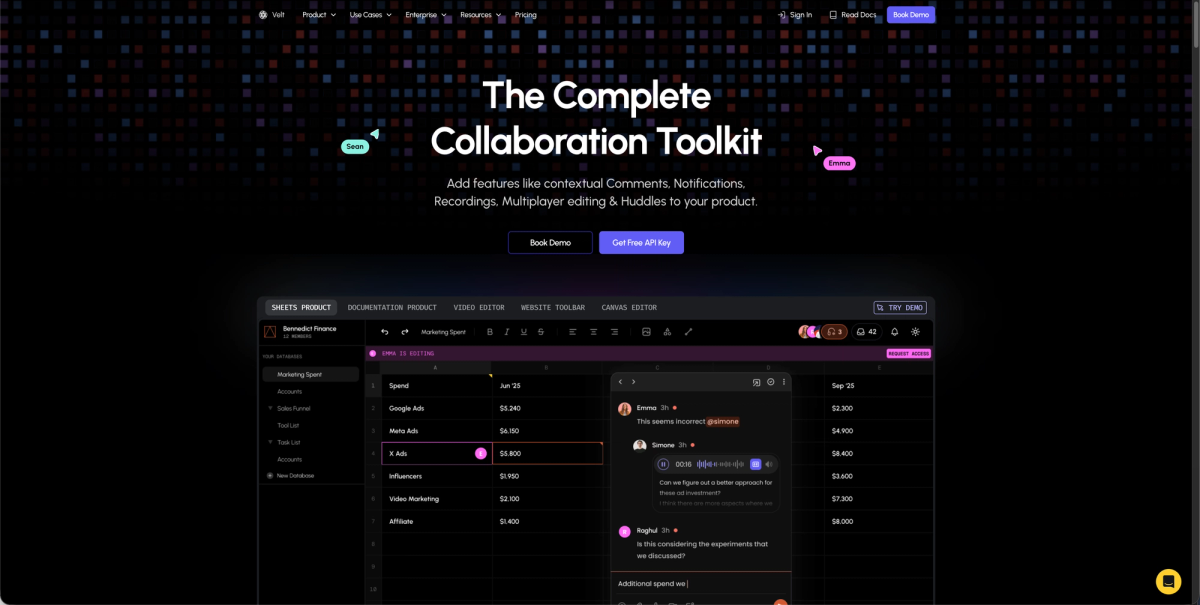
Velt is built as review and approval infrastructure for teams that can't afford gaps in their audit trail. For compliance-bound SaaS teams, that means every review action, comment, and approval decision gets captured, timestamped, and tied to a specific user, all inside your app.
Here's what that looks like in practice:
- Approval states are tracked at the component level, so reviewers sign off on specific content blocks, not entire documents. Every state change is logged automatically.
- Comments are bound to the exact UI element under review. When layouts reflow, threads stay anchored. No lost context.
- Audit trails write themselves. Every annotation, approval, and rejection is stored with user identity and timestamp, ready for compliance export.
- Role-based access controls let you scope review permissions by team, project, or regulatory context, so only the right people can approve the right content.
- Notifications route to the right reviewer inside the app, cutting the back-and-forth that typically spills into email.
Velt integrates into your existing SaaS product without displacing it, including approval workflows in React apps. Your compliance team stays in the tool they already use. Your audit data stays in your infrastructure. And your engineering team ships review workflows in days, not the months a custom build would require.
For teams in finance, healthcare, or any other sector where review accountability is non-negotiable, Velt gives you the review and approval infrastructure to meet that bar without rebuilding your product from scratch.
Final Thoughts on Approval Workflow Requirements in Compliance-Governed Industries
Getting approval workflows right in compliance-heavy environments comes down to one question: can you reconstruct every decision, in order, without pulling from three different inboxes? If the answer is anything other than yes, your current process has a gap worth fixing before an auditor finds it. In-app approval workflows make that reconstruction automatic, no manual assembly needed. See how Velt handles this for teams in finance, healthcare, and similar sectors.
FAQ
What is an in-app approval workflow in compliance-governed software?
An in-app approval workflow is a structured review and sign-off sequence built directly into the software where the content or record lives, so every reviewer action gets logged automatically against a specific user, document version, and timestamp. Each step produces a tamper-evident record without requiring manual reconstruction from inboxes or chat threads. In compliance-governed industries like pharma, finance, and medical devices, this is how you prove to auditors that your review process was followed correctly.
Should I use email chains or in-app approval compliance tools for compliance-governed review processes?
Use in-app approval compliance tools. Email scatters approval records across individual inboxes, has no enforceable sequencing, and can't confirm which document version a reviewer actually saw, which means reconstructing an audit trail before an inspection takes hours of manual work. In-app review workflows write every action to an immutable log at the moment it happens, so the audit trail reflects what actually occurred, not whatever you can piece together afterward.
How do I choose approval workflow software for a compliance-heavy environment?
Start with audit trail depth: you need immutable, queryable logs tied to specific document versions, with far more than bare timestamps. Then check whether role-based access controls map to your actual org structure (external reviewers, legal sign-off steps, and internal stakeholders often touch the same asset), and whether approval state data integrates with your existing identity and records management systems. If an auditor asked you to reconstruct every approval decision from the last 18 months, your current tooling should be able to produce that without pulling data from three different sources.
What does a compliant review workflow in compliance-governed software actually need to capture?
At minimum: the reviewer's authenticated identity and role at the time of approval, the exact document version they acted on, a server-side timestamp for each status transition, the sequence of approvals relative to other reviewers, and any inline feedback or change requests made during review. Some frameworks like FDA 21 CFR Part 11 and EU Annex 11 also require evidence that no content was altered after sign-off, which is why version-locking at review time matters as much as the log itself.
Can I add in-app approval workflows to an existing compliance-bound SaaS product without rebuilding it?
Yes. Velt's review and approval infrastructure embeds into your existing app without displacing it, so approval states, reviewer assignments, and audit trail data live within your product's data layer. Teams in pharma, finance, and similar industries can add structured review workflows with role-based access controls and automatic audit logging in days, connecting to whatever records management or compliance reporting systems they already run.